Struck-By Hazards
Updated 2026-07-23
In this bundle Manual Handling & Body Mechanics
Print-ready PDF
Download this talk as a print-ready PDF, available in 4 languages.
Almost everything on a construction site is either moving or waiting to move. Loads swing, vehicles back up, materials get lifted overhead, tools sit near edges, and saws throw fragments. This Struck-By Hazards Toolbox Talk (Safety Talk / Tailgate Talk) is about the hazard created by that constant motion — and about the fact that in most struck-by fatalities, the worker never saw it coming.
Here is the distinction that carries this whole talk: with falls, the hazard is where you are. You control your exposure by controlling your own position. With struck-by, the hazard is where something else is going, and it is moving faster than your reaction time. You cannot dodge a load that swings, a plank that drops four floors, or a truck reversing behind you. So struck-by prevention is never about being alert — it is about position and separation. Stay out of the line of fire, and make sure nothing can enter the space you are standing in.
How dangerous are struck-by hazards in construction?#
Struck-by is one of OSHA's Focus Four, and the research shows why. According to CPWR, the Center for Construction Research and Training, analyzing BLS data, Focus Four hazards caused 65 percent of construction fatalities between 2011 and 2021 — 6,900 of 10,700 deaths (CPWR Data Bulletin, March 2023).
Within that, struck-by carries a specific and often misunderstood weight:
- An average of 165 construction workers died from struck-by injuries every year between 2011 and 2021 (CPWR, from BLS Census of Fatal Occupational Injuries).
- Transport vehicles were the most common cause of fatal struck-by injuries, accounting for 48 percent in 2020 (CPWR). Not falling tools — vehicles.
- Struck-by is the leading cause of non-fatal construction injuries, accounting for 53.1 percent of non-fatal Focus Four injuries (167,300 cases) and 21.5 percent of all non-fatal construction injuries between 2011 and 2020 (CPWR, from BLS Survey of Occupational Injuries and Illnesses).
That last figure is the one crews underestimate. More construction workers are injured by being struck than by any other single cause. The trend is improving — the fatal struck-by rate fell 27.8 percent between 2011 and 2021 — but the exposure remains daily and universal.
OSHA struck-by requirements#
There is no single "struck-by standard." The requirements sit across several parts of 29 CFR 1926, which is part of why this hazard gets less structured attention than falls:
- Falling object protection — 1926.501(c). When employees are exposed to falling objects, each must wear a hard hat, and the employer must implement toeboards, screens, guardrail systems, canopies, or barricades to keep objects from falling.
- Head protection — 1926.100. Employees working in areas where there is a possible danger of head injury from impact, falling or flying objects, or electrical shock must be protected by protective helmets.
- Motor vehicles — 1926.601. Vehicles must have service brakes, an audible warning device (horn), and, where the view to the rear is obstructed, either a reverse signal alarm audible above the surrounding noise level or an observer signalling that it is safe to back up.
- Material handling equipment — 1926.602. Earthmoving equipment with an obstructed rear view must not be used in reverse unless it has a reverse signal alarm audible above the surrounding noise, or is backed up only when an observer signals it is safe.
- Signs, signals, and barricades — 1926.200. Warning signs, barricades, and traffic control devices must be provided where hazards exist.
On USACE and NAVFAC projects, EM 385-1-1 applies and is more restrictive in several places, particularly for drop zones and work-zone traffic control.
What are the four types of struck-by hazards?#
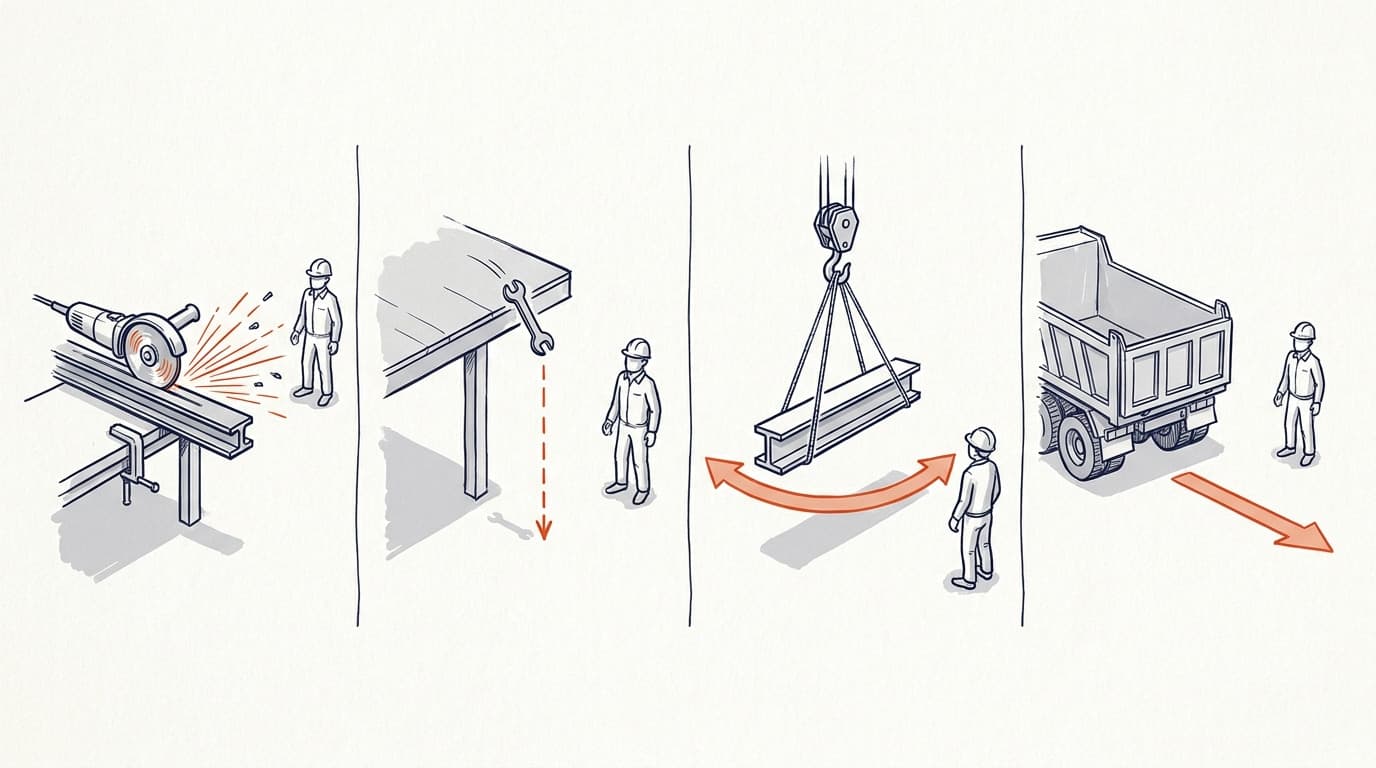
OSHA classifies struck-by incidents into four types, and each has a different control:
Struck-by flying object. Something ejected under power or pressure — grinder wheel fragments, nail gun misfires, cut-off pieces from a saw, compressed air debris, or a snapped rigging component. Flying objects travel fast enough that eye and face protection is often the only thing between the worker and permanent injury.
Struck-by falling object. Anything dropped from above — tools, material, offcuts, fasteners. A wrench dropped several storeys carries lethal energy on impact. This is the category toeboards, debris nets, and hard hats address, and the workers at risk usually never went near the elevated work.
Struck-by swinging object. Loads on a crane or hoist, material being carried by equipment, pipe or steel being manoeuvred, and anything under tension that can spring back. Swinging loads pin workers against fixed structures, and the arc of a suspended load is far wider than most people judge.
Struck-by rolling object. Vehicles, mobile equipment, and anything on wheels or that can roll. This is the category that kills most often, because it includes reversing trucks, moving excavators, and workers on foot in a live traffic area.
How do we prevent struck-by incidents?#
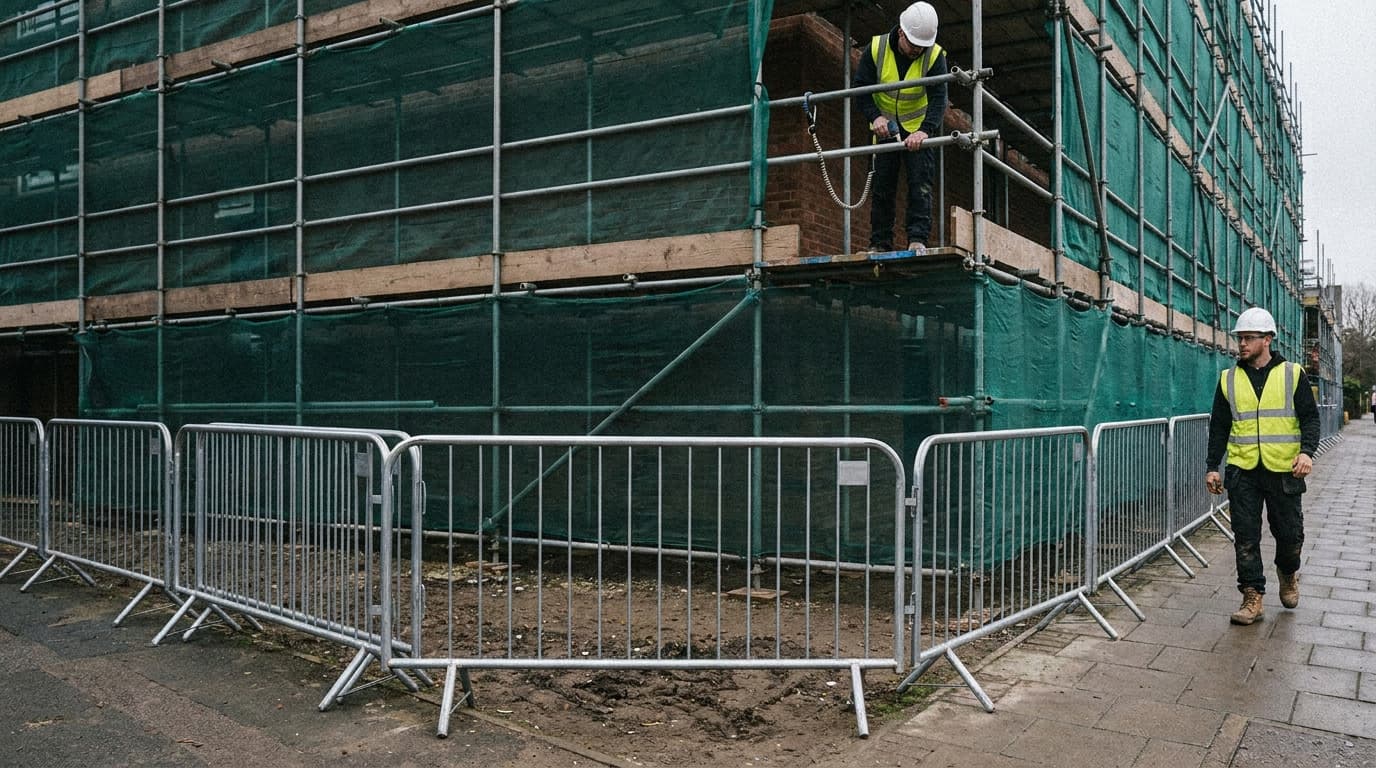
Control the drop zone. Establish physical barricades below any overhead work and keep people out. Not tape as a marker — a barricade with a controlled entry point. Toeboards on elevated platforms, debris nets or screens where material could pass through, and tool tethers where dropping is credible.
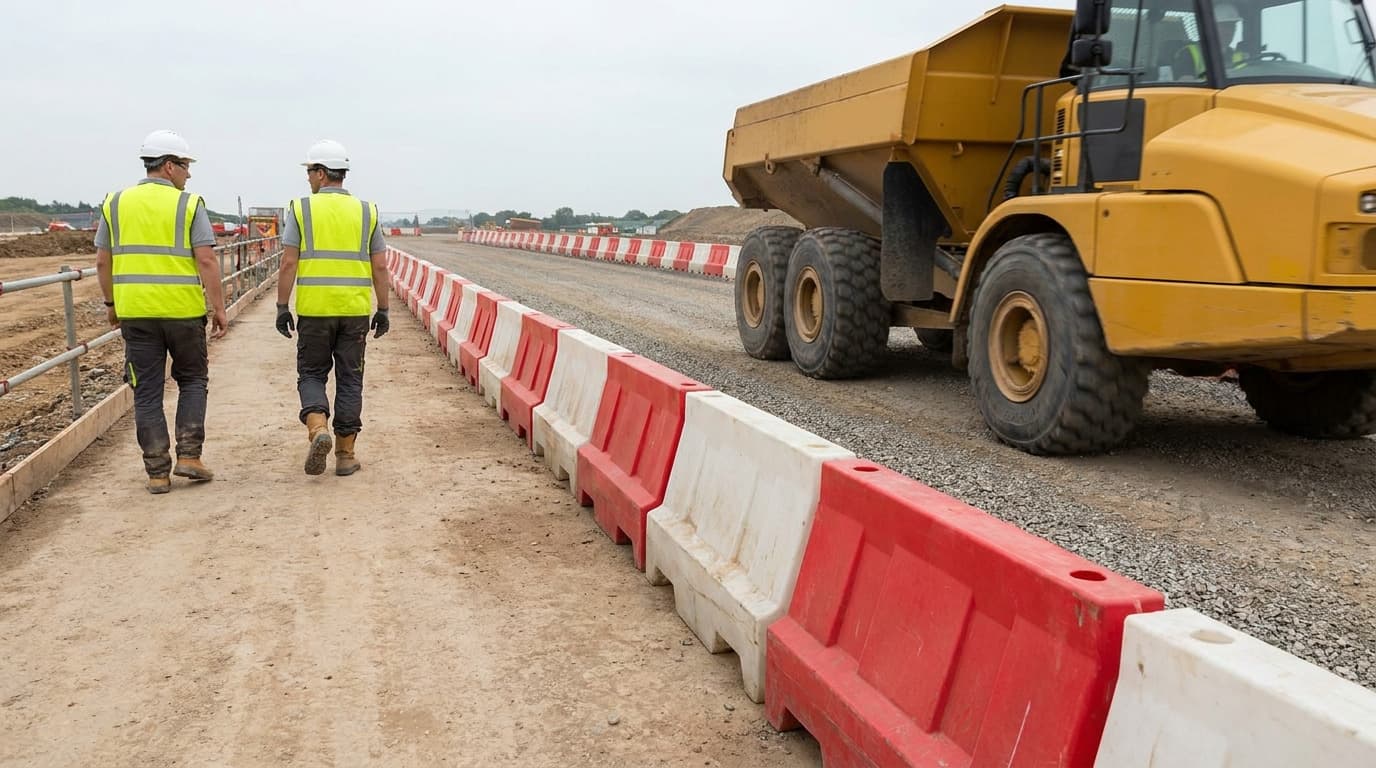
Separate people from vehicles. This is the single highest-value control, because vehicles cause nearly half of struck-by deaths:
- Designated pedestrian routes physically separated from vehicle routes, not shared
- A traffic management plan with defined entry, exit, and circulation, briefed to everyone including deliveries
- A spotter for every reversing movement where the operator's view is obstructed — positioned where the operator can see them, never behind the machine
- Eye contact before you cross behind or in front of any equipment; if you cannot see the operator's eyes, they cannot see you
- High-visibility clothing appropriate to the light conditions
Rig and lift correctly. Nobody under a suspended load, ever. Tag lines to control swing rather than hands. Rigging inspected before each lift. Loads landed on prepared, stable ground. Everyone clear of the swing radius, which is wider than the load looks.
Secure everything at height. Material stacked away from edges and secured against wind. Tools tethered or in closed bags when working overhead. Nothing stored on a guardrail, a platform edge, or a beam.
Control flying debris at the source. Guards in place on every cutting and grinding tool. Correct wheel for the operation and within its speed rating. Eye and face protection matched to the energy involved — safety glasses for incidental dust, a face shield over glasses for grinding and cutting.
Set up so the line of fire is empty. Before starting, look at where energy will go if something releases: which way a load would swing, which way a cut-off piece will fly, where a dropped tool would land. Then stand somewhere else, and make sure nobody else is there either.
Before you start#
- Identify what is above you, what is moving around you, and what could roll or reverse into your work area.
- Confirm barricades are established below any overhead work, and that they exclude people rather than just mark a boundary.
- Confirm every reversing vehicle in your area has a working alarm or a dedicated spotter.
- Check that your high-visibility clothing suits the light and weather conditions.
- Confirm no material or tools are stored near an edge, on a guardrail, or anywhere they could be knocked off.
- Confirm rigging has been inspected and that you know the swing radius of any lift happening near you.
- Confirm guards are fitted on every cutting and grinding tool you will use.
- Identify the line of fire for your specific task and position yourself outside it.
Talk it over#
- What is above us right now, and who is working up there? If they dropped something, where would it land?
- How many vehicles will move through this area today, and where exactly are people supposed to walk?
- Point to the swing radius of that lift. Now show me where you would stand if the load started to swing.
The bottom line#
Struck-by is the leading cause of non-fatal injury in construction and kills an average of 165 workers a year, with vehicles causing nearly half the deaths. You cannot react fast enough to a moving object, so the control is never alertness — it is position. Barricade the drop zone, separate people from vehicles with defined routes and spotters, never stand under a suspended load, secure everything at height, and before you start any task, work out where the energy goes if something releases and stand somewhere else.
Frequently asked questions about struck-by hazards#
What are the four types of struck-by hazards?
OSHA classifies them as struck-by flying object (ejected under power, such as grinder fragments), struck-by falling object (dropped from above), struck-by swinging object (suspended loads and material under tension), and struck-by rolling object (vehicles and mobile equipment). Each requires a different control.
What causes the most struck-by deaths in construction?
Transport vehicles. According to CPWR's analysis of BLS data, vehicles accounted for 48 percent of fatal struck-by injuries in 2020 — far more than falling tools or materials. Separating workers on foot from vehicle movement is the highest-value control available.
How many construction workers are killed by struck-by incidents?
An average of 165 construction workers died from struck-by injuries annually between 2011 and 2021 (CPWR, from BLS Census of Fatal Occupational Injuries). Struck-by is also the leading cause of non-fatal construction injury, accounting for 21.5 percent of all non-fatal injuries between 2011 and 2020.
Does OSHA require a backup alarm on construction vehicles?
Under 29 CFR 1926.601 and 1926.602, vehicles and earthmoving equipment with an obstructed rear view must not be used in reverse unless they have a reverse signal alarm audible above the surrounding noise level, or are backed up only when an observer signals that it is safe to do so.
What is a drop zone and how should it be controlled?
A drop zone is the area below overhead work where falling objects could land. It must be controlled with physical barricades that exclude people, not just tape marking a boundary — combined with toeboards, screens or debris nets at the elevated level, and hard hats for anyone who must pass nearby.
Do hard hats protect against all falling objects?
No. Hard hats are the last line of defence and are designed for limited impact energy. A tool dropped from several storeys can exceed what any helmet can absorb. Head protection is required under 29 CFR 1926.100, but the controls that actually prevent the injury are toeboards, nets, tethers, and keeping people out of the drop zone.
Download the struck-by hazards toolbox talk PDF#
Get this struck-by hazards toolbox talk as a print-ready PDF — available in English, Spanish, Portuguese, and Turkish. Print it, hand it to the crew, and collect signatures on the included attendance sheet.
Download the PDF — free account required. New members get 3 free downloads.
Related toolbox talks#
Sources#
- CPWR, Fatal and Nonfatal Focus Four Injuries in Construction, Data Bulletin March 2023: https://www.cpwr.com/wp-content/uploads/DataBulletin-March2023.pdf
- OSHA, Construction Focus Four: Struck-By Hazards: https://www.osha.gov/sites/default/files/struckby_ig.pdf
- OSHA, 29 CFR 1926 — Safety and Health Regulations for Construction: https://www.osha.gov/laws-regs/regulations/standardnumber/1926
- Bureau of Labor Statistics, Census of Fatal Occupational Injuries: https://www.bls.gov/iif/
Written by FieldSafetyTalk's safety professional — a CSP, ASP, CHST and OSHA Authorized Outreach Trainer with 14+ years of international construction safety experience across federal, heavy civil, and industrial projects.