Scissor Lift Rescue
Updated 2026-08-06
In this bundle Fire, Hot Work & Emergency
Print-ready PDF
Download this talk as a print-ready PDF, available in 4 languages.
Most talks about rescue at height picture the same thing: a worker who has fallen and is now hanging in a harness, and the race to get them down before suspension trauma sets in. A scissor lift emergency is a different situation entirely, and the difference decides how you rescue. A worker on a scissor lift is standing on a guardrail-protected platform, usually not wearing a harness at all — and when something goes wrong, they are not hanging, they are stranded, stuck up high on a platform that will not come down. This scissor lift rescue talk is about that specific emergency: what it actually is, why it is not the suspension rescue people train for, and why the answer is almost always a procedure the manufacturer already wrote and almost nobody has read.
Here is the distinction that carries this whole talk: a scissor lift is a scaffold, not a harness — so when it strands someone up high, the emergency is not a person hanging, it's a person trapped on a platform that won't come down, and the answer is a procedure the manufacturer already wrote and almost nobody has read. The reason a scissor lift worker usually has no harness is not carelessness — it is that OSHA classifies a scissor lift as a mobile scaffold, and on an adequately guardrailed scaffold platform, the guardrails are the fall protection. So the emergency you are preparing for is not "cut them down safely." It is "the platform is stuck at height — battery dead, tipped and leaning, controls failed, or the operator collapsed — and there is a person up there who cannot get down." The rescue for that is not improvised. Every lift has a manufacturer's emergency-lowering procedure — an auxiliary descent valve or control that brings the platform down safely — and knowing where it is and how it works before the emergency is the whole job.
Where the boundary of this talk sits#
The aerial scissor lifts talk owns operating the lift safely — the daily inspection, the stabilization, the positioning. The fall rescue and suspension trauma talk owns the worker hanging in a harness after a fall, and the clock that starts when they do. This talk owns the gap between them: the worker who has not fallen, is not hanging, but is trapped at height on a scissor lift that has failed and will not lower normally. Where the question is running the lift, that is the operating talk; where the question is a suspended worker, that is the suspension-trauma talk; this one owns the stranding.
A scissor lift is a scaffold, not an aerial lift#
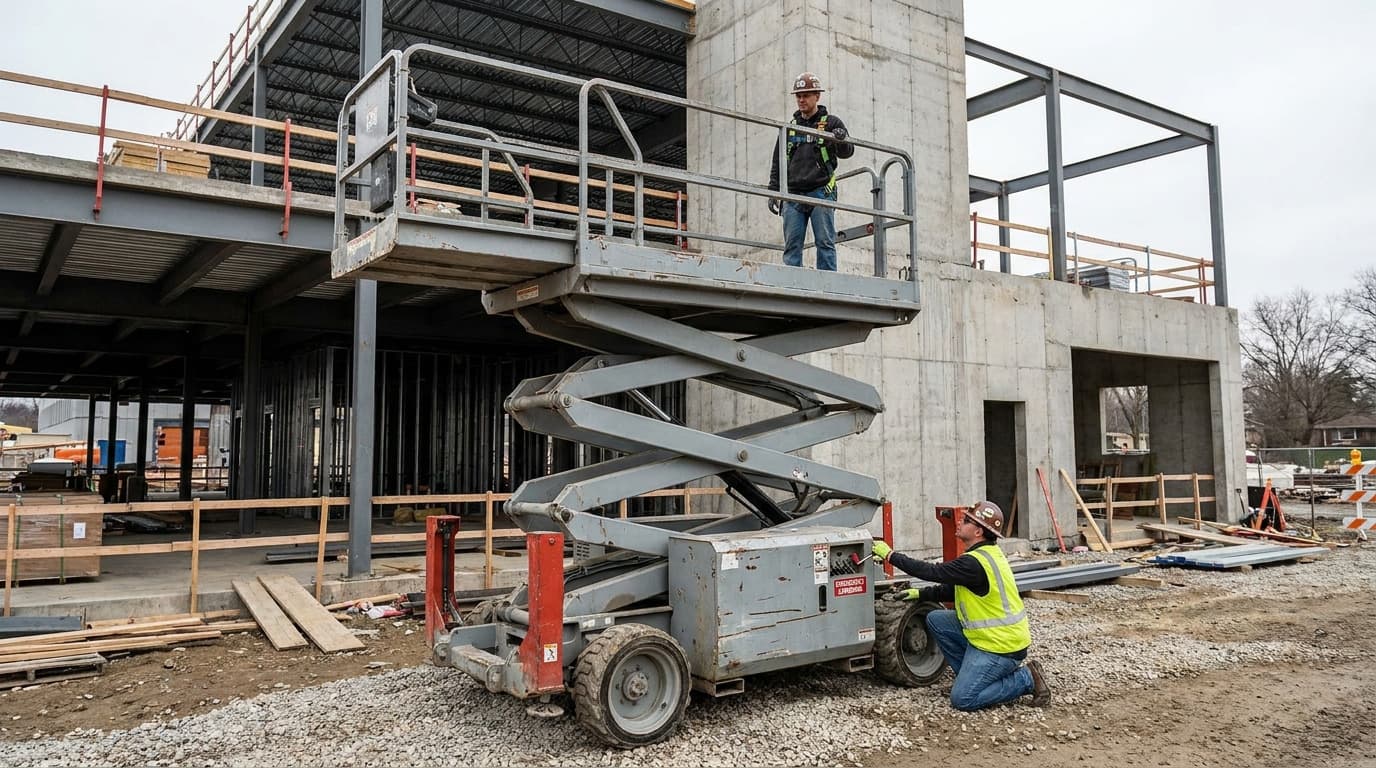
This classification is not a technicality — it changes what standards apply and why there is no harness. OSHA is explicit: scissor lifts are not aerial lifts. The aerial lift standard covers vehicle-mounted, boom-type platforms, and scissor lifts are not that. Because a scissor lift is a mobile work platform, OSHA covers it under the scaffold standard — the general scaffold requirements, the specific requirements for mobile scaffolds, and the scaffold training standard. OSHA even issued a directive years ago that mistakenly said scissor lifts fell under the aerial lift rules, then formally revoked that statement, because the confusion was causing real problems. The consequence that matters for rescue is the fall protection rule that follows from it: on an aerial or boom lift, the worker must be tied off. On a scissor lift, the worker need only be protected by an adequate guardrail system — no harness required. That is why a stranded scissor-lift worker is standing on a platform, not hanging from a lanyard, and why the rescue is a lowering problem, not a suspension problem.
The emergency is a stranding, and the instinct to improvise is the danger#
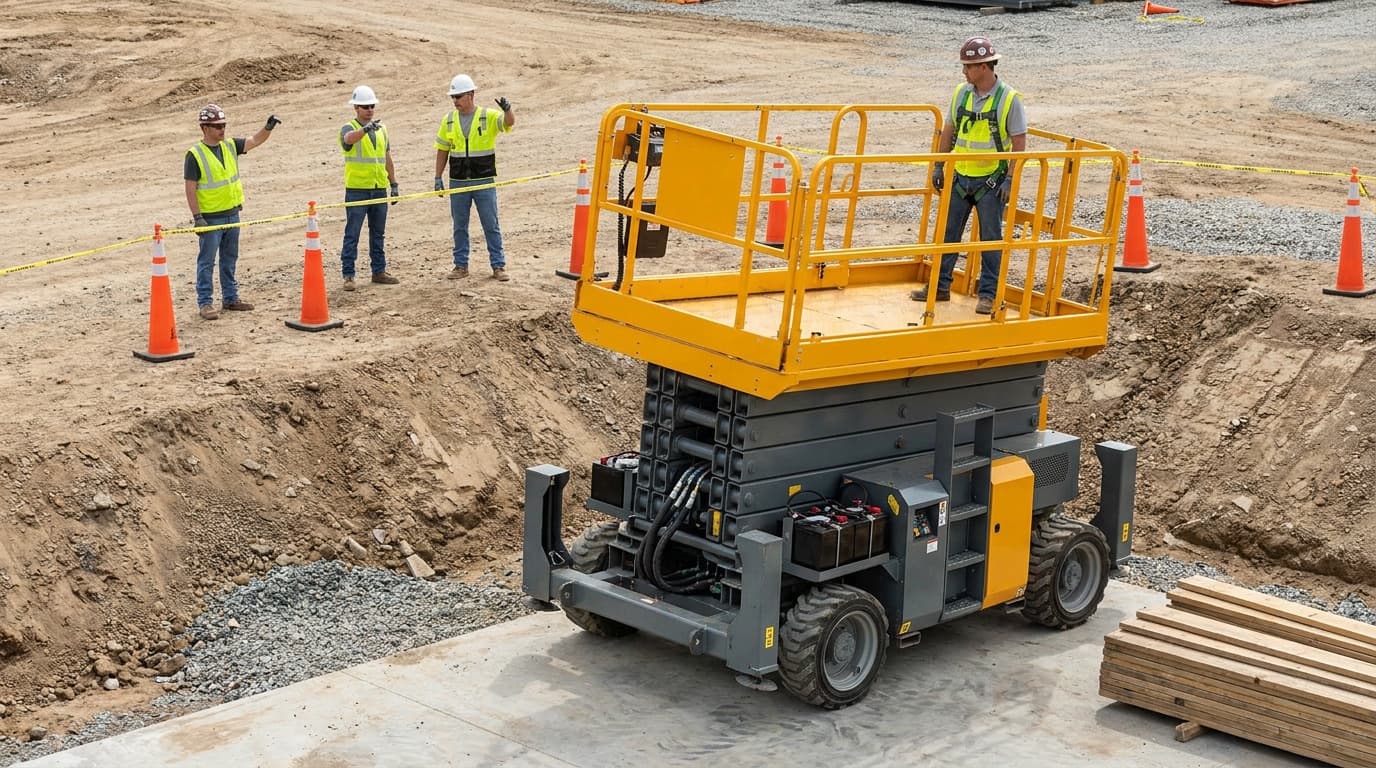
When a scissor lift will not come down, the worker is safe for the moment — they are inside a guardrailed platform. The danger is what the ground crew does next. The worst outcomes in scissor lift emergencies come from improvisation: someone tries to climb the scissor mechanism to reach the worker, or forces the platform with equipment, or worse, tries to move or reposition a lift that is already tipping and brings the whole thing over. A scissor lift that has tipped and is leaning is in an unstable equilibrium, and the wrong push finishes the tip-over that the structure was barely resisting. The stranded worker is usually in less immediate danger than the people improvising a rescue around them. The rule is the same one that governs confined space and every other rescue: an unplanned rescue creates a second casualty. The stranding buys you time to do it right, and doing it right means the manufacturer's procedure, not muscle and instinct.
The manufacturer's emergency-lowering procedure is the rescue#
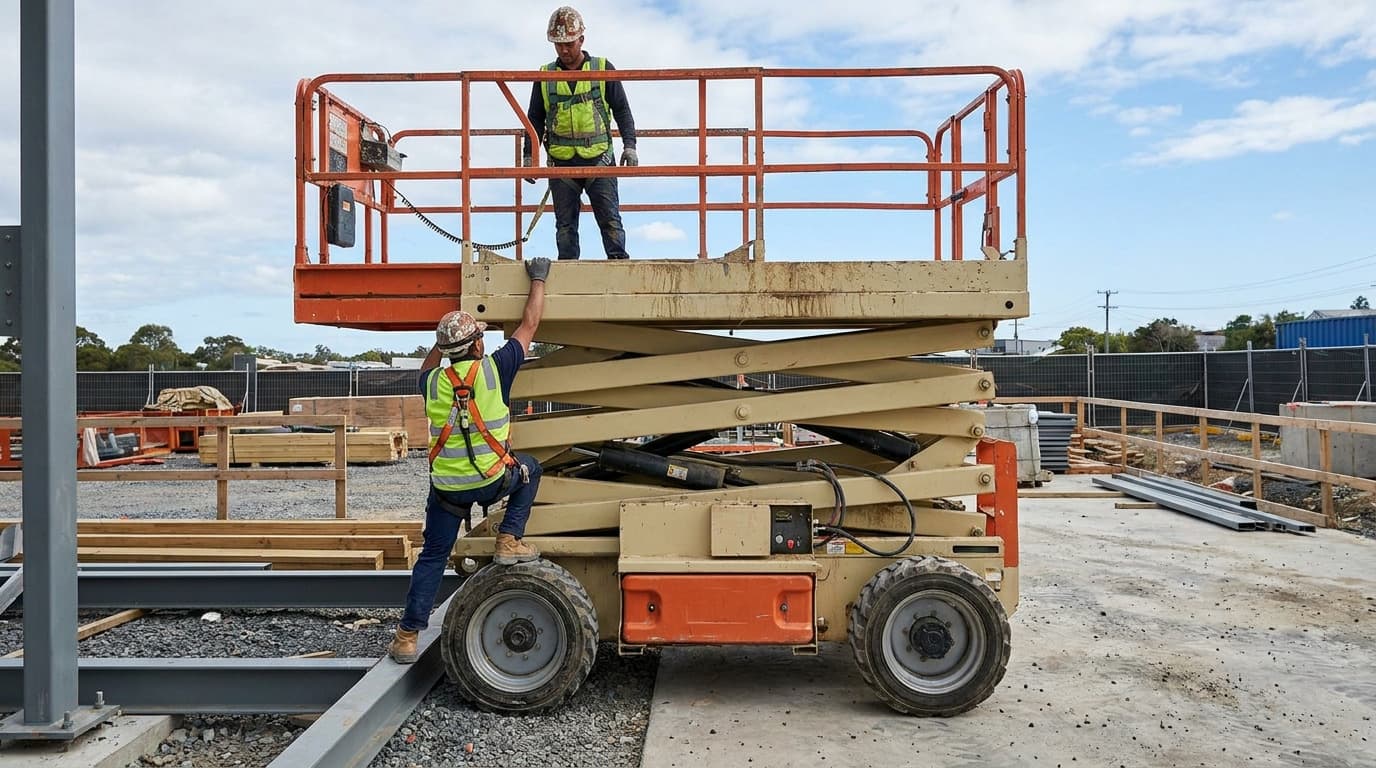
Here is the piece that makes the difference, and it is almost always overlooked until the moment it is needed. Every scissor lift is built with an emergency-lowering system — typically an auxiliary or manual descent valve, often located at the base of the machine, that lets someone on the ground safely lower the platform when the normal controls have failed or the operator cannot run them. This is not an obscure feature; it is in the operator's manual, and the manual is the authoritative source because the mechanism differs from machine to machine. The failure is not that the procedure does not exist — it is that nobody read it before the emergency, so when the platform is stuck at height, the ground crew does not know the valve exists, cannot find it, or does not know the sequence. The rescue plan for a scissor lift is, in large part, this: know that the emergency descent exists on your specific machines, know where it is, know how to operate it, and make sure that knowledge is on the ground before anyone goes up. A procedure nobody has read is not a rescue plan.
What strands a lift in the first place: stabilization and positioning#
The emergencies that require this rescue trace back to a small set of causes, and they are the same things the operating controls are supposed to prevent. Employers using scissor lifts are required to evaluate and implement controls addressing fall protection, stabilization, and positioning — and it is stabilization and positioning failures that create the stranding. A lift driven while elevated across uneven ground, over a floor opening, or on a slope can tip. A lift positioned under or beside something it can be struck by — a vehicle, a crane load, a door — can be hit and destabilized. A lift run past its capacity or reached out of can go unstable. And a simple power or hydraulic failure leaves a sound platform stuck at height with no fault of positioning at all. Knowing the causes matters for rescue because it tells you what you are walking up to: a tipped lift needs stabilizing before anything else, a struck lift needs the striking hazard controlled, and a dead-battery lift is mechanically fine and just needs the descent procedure.
Where the duty sits#
The framework is assembled from the scaffold and emergency-planning standards. Because a scissor lift is a scaffold, the general scaffold requirements at 1926.451, the mobile-scaffold requirements at 1926.452(w), and the scaffold training standard at 1926.454 apply — and 1926.451(g) sets the fall-protection requirement that guardrails satisfy on the platform. Aerial lift provisions at 1926.453 do not apply to scissor lifts. Where any fall-arrest component is used, it must meet 1926.502(d). The employer's duty to plan for emergencies and to train workers to recognize and respond to hazards runs through 1926.21(b)(2) and the General Duty Clause, Section 5(a)(1), and a foreseeable stranding at height with no rescue plan is a recognized hazard. Above all, the manufacturer's operating manual governs the specific emergency-lowering procedure for each machine — that instruction is the authority, because it is the only source that describes your actual lift.
What can go wrong?#
- A lift fails at height and the ground crew doesn't know the emergency-lowering procedure exists.
- Someone tries to climb the scissor mechanism to reach a stranded worker.
- A crew tries to move or reposition a lift that is already tipping and completes the tip-over.
- A struck lift is approached without controlling the vehicle or load that hit it.
- The manufacturer's manual — with the descent procedure — isn't on site or was never read.
- A lift is driven elevated over uneven ground, a slope, or a floor opening, and tips.
- The operator is incapacitated at height and no one on the ground can lower the platform.
- An "obvious" improvised rescue creates a second casualty on the ground.
How do we manage this properly?#
- Know that every lift has a manufacturer's emergency-lowering procedure — read it before you need it.
- Know where the descent valve is and how to operate it on your specific machines.
- Keep the operator's manual on site and make sure the ground crew can find the procedure.
- If a lift is tipping or tipped, stabilize before anything — never push, move, or reposition it.
- Never climb the scissor mechanism to reach a stranded worker.
- Treat the stranding as time to plan, not a reason to improvise — the worker is guardrailed.
- Prevent the emergency: don't drive elevated over uneven ground, slopes, or openings.
- Have a rescue plan for work at height before the lift goes up, not after it fails.
Before you start#
- Confirm the crew knows this lift has an emergency-lowering procedure and where it is.
- Confirm the operator's manual is on site and the descent procedure has been read.
- Confirm the ground is firm and level for the lift's elevated work.
- Confirm the lift won't be driven elevated across uneven ground or near openings.
- Confirm the lift isn't positioned where a vehicle, load, or door can strike it.
- Confirm a rescue plan exists for a worker stranded at height on this lift.
- Confirm at least one person on the ground can operate the emergency descent.
- Confirm the guardrail system is complete before anyone works from the platform.
Talk it over#
- Does anyone here know where the emergency-lowering valve is on the lifts we use?
- If a lift died at full height right now, what would we actually do?
- Has anyone ever seen someone try to climb a lift or force a stuck platform?
- What would strand a lift on this site — the ground, the slopes, the traffic?
The bottom line#
A scissor lift is a scaffold, not a harness — so when it strands someone up high, the emergency is not a person hanging, it's a person trapped on a platform that won't come down, and the answer is a procedure the manufacturer already wrote and almost nobody has read. Because OSHA classifies a scissor lift as a mobile scaffold — under 1926.451, 1926.452(w), and 1926.454, not the aerial lift standard — the worker is protected by guardrails and usually wears no harness, which makes the emergency a stranding, not a suspension. The worker on the guardrailed platform is safe for the moment; the danger is the ground crew improvising — climbing the scissor mechanism, forcing the platform, or pushing a tipping lift over. The rescue is the manufacturer's emergency-lowering procedure, the auxiliary descent valve on your specific machine, and the only thing that makes it work is that someone read the manual and knows where the valve is before the emergency. The strandings themselves come from stabilization and positioning failures — driving elevated over bad ground, being struck, overreaching — plus simple power failure, so a tipped lift is stabilized first, a struck lift has its hazard controlled first, and a dead lift just needs the descent. The duty is assembled from the scaffold standards and the emergency-planning duties under 5(a)(1), but the operating manual governs the actual procedure. The test is one question: if the lift on this site died at full height right now, does anyone on the ground know how to bring it down — or would we be improvising?
Frequently asked questions about scissor lift rescue#
Why isn't the worker wearing a harness on a scissor lift?
Because OSHA classifies a scissor lift as a mobile scaffold, not an aerial lift, and on an adequately guardrailed scaffold platform the guardrail system is the fall protection — a harness is not required. This is different from an aerial or boom lift, where the worker must be tied off. It is not an oversight; it is the standard. The consequence for rescue is important: a stranded scissor-lift worker is standing inside a guardrailed platform, not hanging from a lanyard, so the emergency is getting the platform down, not getting a suspended person down before suspension trauma sets in.
How do you actually get a stranded worker down?
With the manufacturer's emergency-lowering procedure. Every scissor lift is built with an auxiliary or manual descent system — often a valve at the base of the machine — that lets someone on the ground safely lower the platform when the normal controls have failed or the operator can't use them. The exact mechanism and its location differ from machine to machine, which is why the operator's manual is the authority and why it has to be read before the emergency. The single most common failure is not that the procedure doesn't exist, but that nobody on the ground knew it existed or where to find it when the lift stopped at height.
Why is improvising a rescue so dangerous?
Because the stranded worker is usually safe for the moment inside the guardrailed platform, while the improvised rescue creates new hazards. People try to climb the scissor mechanism, force the platform with other equipment, or move a lift that is already tipping — and moving a tipping lift can finish the tip-over the structure was barely resisting. The result is often a second casualty on the ground. The stranding buys time; that time should go to executing the manufacturer's descent procedure, not to muscle and instinct. An unplanned rescue is how one emergency becomes two.
Is a scissor lift an aerial lift under OSHA?
No. OSHA is explicit that scissor lifts are not aerial lifts — the aerial lift standard is limited to vehicle-mounted, boom-type platforms. Scissor lifts are mobile work platforms and are covered under the scaffold standard: the general scaffold requirements, the mobile-scaffold requirements, and the scaffold training standard. OSHA once issued a directive that mistakenly placed scissor lifts under the aerial lift rules and then formally revoked that statement. The classification matters because it explains the guardrails-not-harness fall protection and puts the equipment under scaffold inspection, training, and stabilization duties.
What causes a scissor lift to become stranded at height?
Mostly stabilization and positioning failures, plus simple power or hydraulic failure. A lift driven while elevated over uneven ground, a slope, or a floor opening can tip; a lift positioned where a vehicle, crane load, or door can strike it can be destabilized; a lift run past capacity or reached out of can go unstable; and a dead battery or hydraulic fault can leave a sound platform stuck up high. Knowing the cause shapes the response: a tipped lift must be stabilized before anything else, a struck lift needs the striking hazard controlled first, and a mechanically sound but powerless lift just needs the emergency descent.
Do we need a rescue plan just for scissor lifts?
You need a plan for a worker stranded at height, and a scissor lift is one of the ways that happens. The plan does not have to be elaborate, but it has to exist before the lift goes up: someone on the ground must know that the emergency-lowering procedure exists on your specific machines, know where the descent control is, and know how to operate it. The operator's manual has to be on site and read. Planning for the stranding in advance is what keeps the response from becoming an improvised climb or a forced platform — the two things that turn a stranded worker into a serious injury.
Download the scissor lift rescue toolbox talk PDF#
Get this scissor lift rescue toolbox talk as a print-ready PDF — available in English, Spanish, Portuguese, and Turkish. Print it, hand it to the crew, and collect signatures on the included attendance sheet.
Download the PDF — free account required. New members get 3 free downloads.
Related toolbox talks#
Sources#
- OSHA, Scissor lifts are not aerial lifts, are considered scaffolds (standard interpretation; scissor lifts covered by §1926.451 general scaffold requirements and §1926.452(w) mobile scaffolds, not the aerial lift standard; the 1997 directive placing them under §1926.453 was revoked): https://www.osha.gov/laws-regs/standardinterpretations/2000-08-01-0
- OSHA, Fall protection for scissor lifts (on a scissor lift a worker need only be protected by an adequate guardrail system — a harness is not required, unlike an aerial or boom lift where tie-off is required): https://www.osha.gov/laws-regs/standardinterpretations/1998-07-21
- OSHA, Scaffolding eTool — Scissor Lifts (employers who use scissor lifts must evaluate and implement effective controls that address fall protection, stabilization, and positioning; only trained workers may use them): https://www.osha.gov/etools/scaffolding/scissor-lifts
This talk is general awareness guidance for training purposes. It does not replace your employer's rescue plan, the OSHA scaffold standards, the OSH Act General Duty Clause, the scissor lift manufacturer's operating manual and emergency-lowering procedure, or a competent person's duties, and it is not legal advice. The manufacturer's manual for your specific machine governs its emergency descent procedure.