Battery Charging Station Safety
Updated 2026-07-28
In this bundle Electrical Safety
Print-ready PDF
Download this talk as a print-ready PDF, available in 4 languages.
Walk into most site containers and you will find a shelf of tool batteries on charge, a couple of chargers plugged into a power strip, and nobody who thinks of that shelf as a hazard area. Now open the regulation written for battery charging and you will find acid-resistant floors, rubber aprons and vent caps. This battery charging station safety talk is about both — the standard we have, and the batteries we actually charge.
Here is the distinction that carries this whole talk: 1926.441 was written about a chemical hazard, and the batteries on most sites now present a thermal one. Lead-acid gives off hydrogen and throws acid; the control is ventilation, drenching facilities and acid-resistant surfaces. Lithium-ion gives off heat and gas from inside a sealed cell; ventilation does not stop it and there is nothing to flush off your skin. Same shelf, same word, two different problems — and only one of them has a construction standard.
What 1926.441 actually requires#
The general requirements, in the standard's own order:
- (a)(1) Batteries of the unsealed type shall be located in enclosures with outside vents or in well ventilated rooms, arranged to prevent the escape of fumes, gases or electrolyte spray into other areas.
- (a)(2) Ventilation shall be provided to ensure diffusion of the gases from the battery and to prevent the accumulation of an explosive mixture.
- (a)(3) Racks and trays shall be substantial and treated to make them resistant to the electrolyte.
- (a)(4) Floors shall be of acid resistant construction unless protected from acid accumulations.
- (a)(5) Face shields, aprons and rubber gloves shall be provided for workers handling acids or batteries.
- (a)(6) Facilities for quick drenching of the eyes and body shall be provided within 25 feet (7.62 m) of battery handling areas.
- (a)(7) Facilities shall be provided for flushing and neutralising spilled electrolyte and for fire protection.
And for charging:
- (b)(1) Battery charging installations shall be located in areas designated for that purpose.
- (b)(2) Charging apparatus shall be protected from damage by trucks.
- (b)(3) When batteries are being charged, vent caps shall be kept in place to avoid electrolyte spray, and vent caps shall be maintained in functioning condition.
Two of these deserve reading twice. (a)(2) does not ask for "good ventilation" — it names the outcome: prevent the accumulation of an explosive mixture. Charging a flooded lead-acid battery liberates hydrogen, hydrogen is buoyant, and it collects at the top of an enclosed space. A closed container, a cupboard, a plant room with the door shut: the standard's concern is not stuffiness, it is an atmosphere that will ignite.
And (a)(6) puts a number on the drenching facility — 25 feet (7.62 m) of the battery handling area. That is a different and tighter provision from the general first-aid duty to have drenching facilities within the work area, and it is the one that applies wherever batteries are handled.
(b)(1) is the one most sites fail without noticing. A designated area means somebody decided where charging happens and why — not a shelf that acquired chargers over eight months.
The batteries on your site are not the batteries in the standard#
Read (a)(1) again: it applies to batteries of the unsealed type. The sealed lithium-ion packs powering the drills, lights and lasers on a modern site are not unsealed, have no electrolyte to spray, no vent caps to maintain and no acid to neutralise. Most of 1926.441 simply does not reach them.
That is not good news. Lithium-ion failure is thermal runaway — a self-sustaining reaction that a damaged, defective, overheated or over-charged cell can enter without warning. OSHA's own bulletin on the subject, Preventing Fire and/or Explosion Injury from Small and Wearable Lithium Battery Powered Devices, explains that the high energy density of lithium batteries makes them more susceptible to these reactions, and that cell failures can produce chemical and combustion reactions with heat release and over-pressurisation. It also notes that in some lithium batteries combustion can separate fluorine from the lithium salts, which mixed with water vapour produces hydrofluoric acid — particularly dangerous because a worker may not feel its effects until hours after skin exposure.
The bulletin cites the Consumer Product Safety Commission's Status Report on High Energy Density Batteries Project (2018), which recorded more than 25,000 overheating or fire incidents involving more than 400 types of lithium battery-powered consumer products between January 2012 and July 2017.
Now the part that matters for how you use it: that bulletin states plainly that it is not a standard or regulation and creates no new legal obligations. It is advisory. So on the question of the batteries most of us actually charge, the position is that the enforceable construction standard addresses a different chemistry, and the document that addresses ours is guidance.
What OSHA's guidance recommends is short and worth following anyway: use batteries and chargers that are certified by a Nationally Recognized Testing Laboratory and rated for their intended use; follow the manufacturer's instructions for storage, use, charging and maintenance; remove devices and batteries from the charger once fully charged; and make sure the emergency action plan includes lithium-specific incident response based on the manufacturer's instructions.
What can go wrong?#
The charging shelf is in a closed container. Lead-acid on charge in an unventilated space builds the exact atmosphere (a)(2) exists to prevent.
A damaged pack goes on charge. Dropped from height, crushed under a load, soaked, or run down in the heat — then plugged in that evening and left overnight.
Charging on or near combustibles. Chargers on a timber bench, packed among rags, cardboard and packaging, with nothing between a failing cell and a fuel load.

A metal object bridges the terminals. Spanners, offcuts and screws on top of an uncovered battery are a dead short and an ignition source in one.
Nobody can flush anything. Acid handling with no drenching facility within 25 feet (7.62 m), or a station that was installed and then never checked.
Water gets thrown at a lithium fire. A pack in thermal runaway keeps producing its own heat, and combustion by-products of some lithium batteries plus water vapour can produce hydrofluoric acid.
Everything is charged everywhere. No designated area, so nobody owns the ventilation, the housekeeping or the fire protection around it.
How do we do this properly?#
Designate the area, as (b)(1) requires, and mark it. One place, chosen for ventilation and separation, not for convenience.
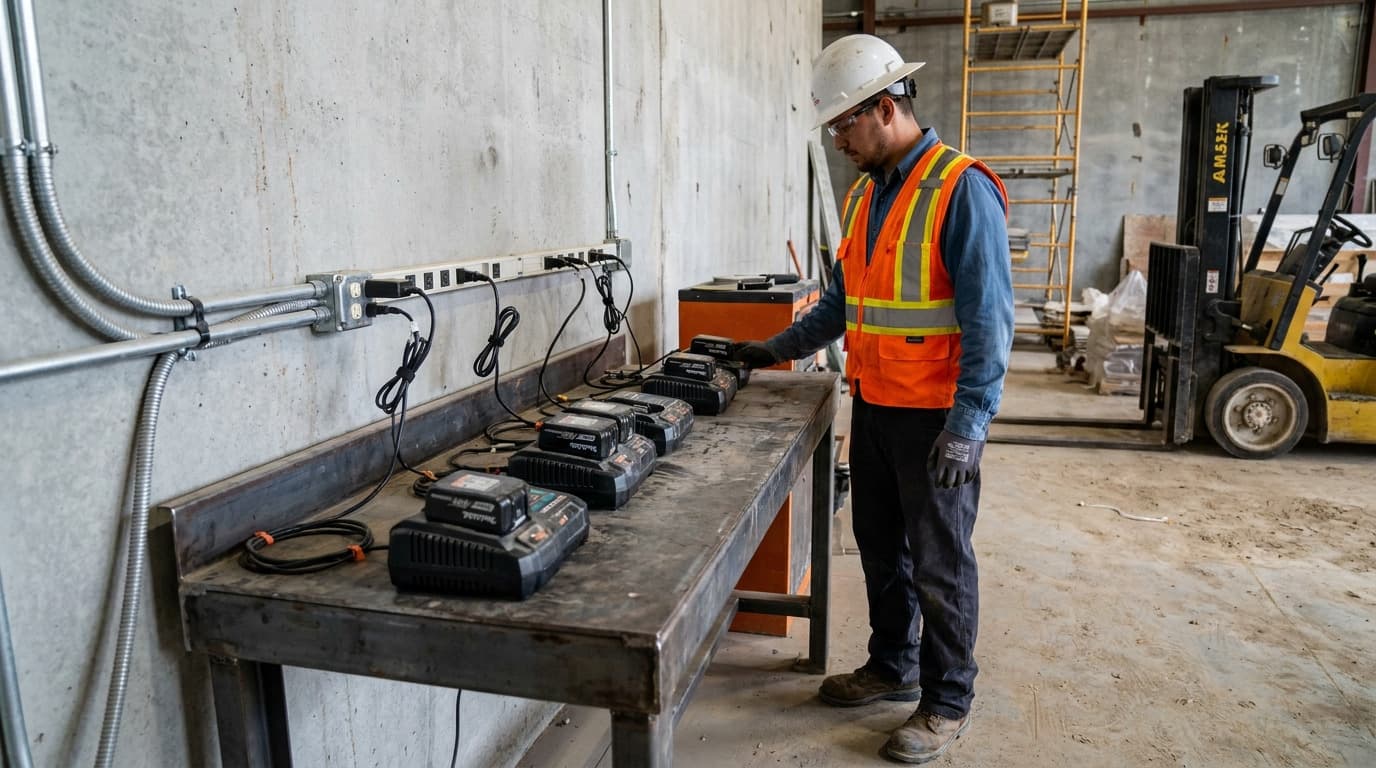
Ventilate for the gas, not for comfort. Unsealed batteries go in enclosures with outside vents or a well ventilated room, and the test is the one in (a)(2): no accumulation of an explosive mixture.
Keep the charging area clear of combustibles — nothing stored on, under or against chargers or packs, and a non-combustible surface underneath where you can.
Provide and check the drenching facility within 25 feet (7.62 m) of battery handling, along with the means to flush and neutralise spilled electrolyte and the fire protection (a)(7) requires.
Wear what (a)(5) requires when handling acid or batteries — face shield, apron and rubber gloves. Not sometimes.
Nothing metal on top of a battery, and vent caps in place and working while charging.
Inspect lithium packs before they go on charge. Swelling, deformation, heat, damage, corrosion, a hot charge cycle or an unusual smell all mean quarantine, not another charge.
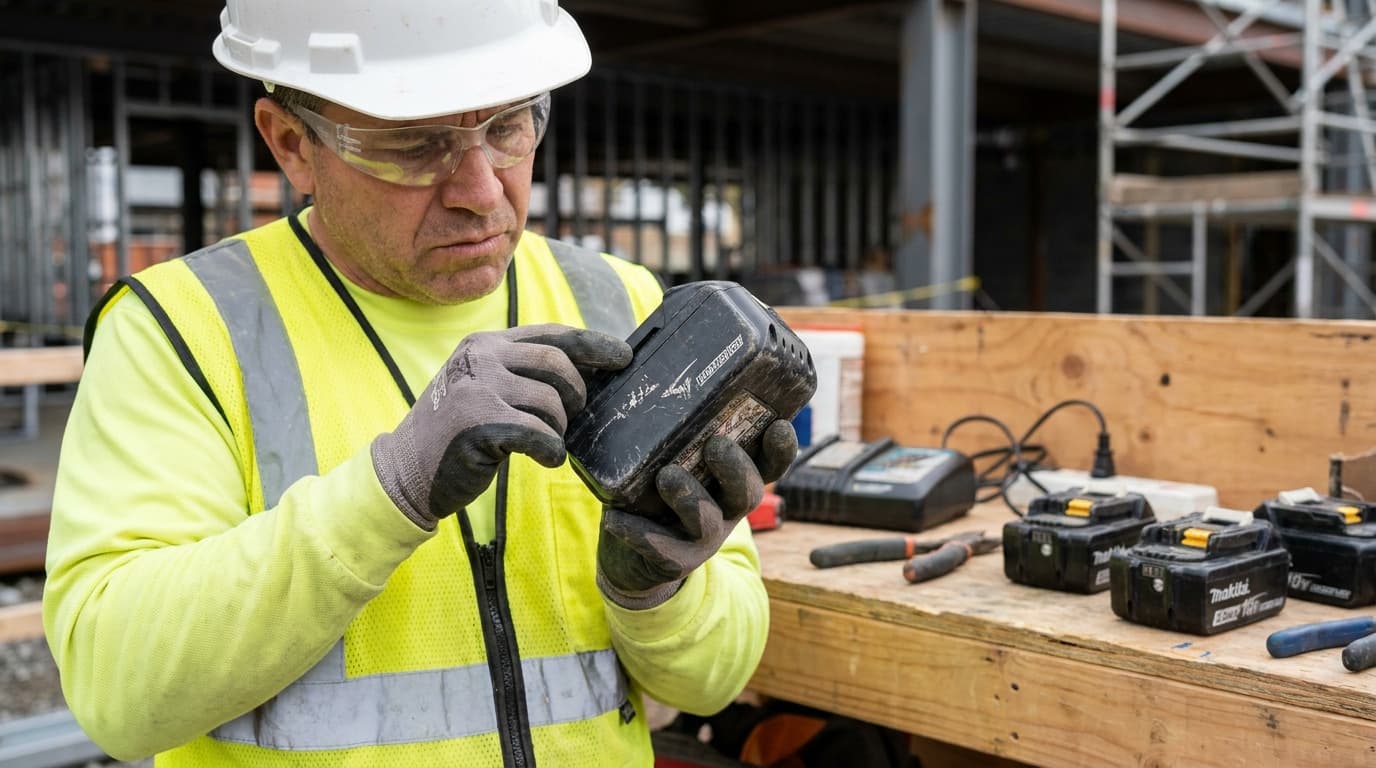
Take packs off the charger when they are full, use only NRTL-certified chargers matched to the battery, and never leave an unattended charge running in an occupied or closed space overnight.
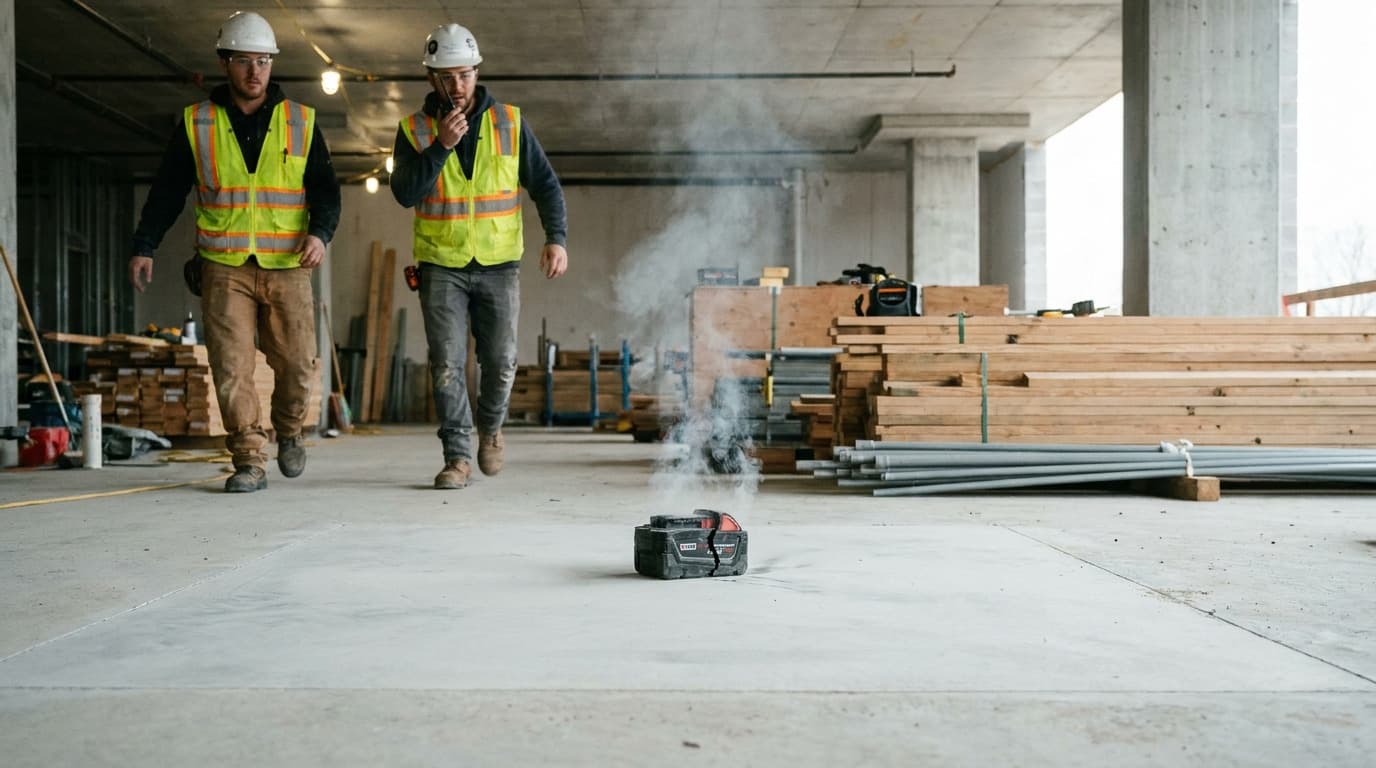
Know the response. A lithium pack in thermal runaway is an evacuate-and-call situation, not a hero situation.
Before you start#
- Confirm where the designated charging area is, and that what you are charging belongs there.
- Confirm ventilation is adequate for the type of battery being charged — and that the door is not closed on an unsealed battery.
- Confirm the drenching facility within 25 feet (7.62 m) exists and works, if acid or batteries are handled here.
- Confirm nothing combustible is stored on, under or beside the chargers.
- Confirm no metal objects are resting on any battery, and that vent caps are in place on unsealed cells.
- Confirm every lithium pack going on charge is undamaged, unswollen and at normal temperature.
- Confirm everyone knows what to do if a pack starts smoking, hissing or swelling.
Talk it over#
- Where do batteries actually get charged on this site, and who decided that?
- What is stored within arm's reach of the chargers right now?
- Has anyone here had a pack get hot, swell or smell odd? What did you do with it?
- If a battery caught fire in that container tonight, who would know, and when?
The bottom line#
1926.441 requires unsealed batteries to be in enclosures with outside vents or well ventilated rooms; ventilation sufficient to prevent the accumulation of an explosive mixture; acid-resistant racks, trays and floors; face shields, aprons and rubber gloves; quick-drenching facilities within 25 feet (7.62 m) of battery handling; means to flush and neutralise electrolyte and provide fire protection; a designated charging area; charging apparatus protected from trucks; and vent caps in place and functioning during charge. Every one of those provisions is about acid and hydrogen. The sealed lithium-ion packs most crews actually charge fall outside almost all of it, and the OSHA document that does address them is a bulletin that creates no legal obligations. That gap is not a reason to relax — it is the reason to run the charging area on manufacturer instructions, NRTL-certified equipment, physical separation from combustibles and honest inspection of every pack before it goes on charge.
Frequently asked questions about battery charging on construction sites#
What does OSHA require for battery charging areas?
Under 29 CFR 1926.441(b), battery charging installations must be located in areas designated for that purpose, charging apparatus must be protected from damage by trucks, and while batteries are charging the vent caps must be kept in place to avoid electrolyte spray and maintained in functioning condition. The general requirements in (a) add ventilation, acid-resistant racks, trays and floors, PPE, drenching facilities and fire protection.
How close does an eyewash or drenching station have to be to batteries?
1926.441(a)(6) requires facilities for quick drenching of the eyes and body within 25 feet (7.62 m) of battery handling areas. That is a specific distance for battery work, and it sits alongside the general construction first-aid requirement for drenching facilities in the work area.
Why does battery charging need ventilation?
Because of what charging produces. 1926.441(a)(2) requires ventilation to ensure diffusion of the gases from the battery and to prevent the accumulation of an explosive mixture. Charging flooded lead-acid batteries liberates hydrogen, which rises and collects at the top of an enclosed space. (a)(1) requires unsealed batteries to be in enclosures with outside vents or well ventilated rooms.
Does 1926.441 apply to lithium-ion tool batteries?
Largely not. 1926.441(a)(1) is addressed to batteries of the unsealed type, and the rest of the section deals with electrolyte, acid resistance and vent caps — none of which describe a sealed lithium-ion pack. There is no construction standard specific to lithium-ion batteries, which is why manufacturer instructions, NRTL-certified equipment and OSHA's advisory bulletin do the work instead.
What is thermal runaway?
A self-sustaining reaction inside a failing lithium cell. OSHA's bulletin on lithium battery powered devices explains that the high energy density of lithium batteries makes them more susceptible to such reactions, and that cell failure can produce chemical and combustion reactions, heat release and over-pressurisation. Damage, defects, extreme temperatures and charging contrary to the manufacturer's instructions are recognised triggers.
What should we do with a swollen or damaged battery?
Take it out of service without charging it again. Isolate it away from combustibles and from people, follow the manufacturer's instructions for damaged batteries, and dispose of or recycle it through the route the manufacturer specifies. A pack that has swollen, been crushed, been soaked or run unusually hot should never go back on a charger.
How do we respond to a lithium battery fire?
Treat it as an evacuate-and-call event rather than something to fight by instinct. OSHA advises that the emergency action plan include lithium-specific response procedures based on the manufacturer's instructions. Be aware that in some lithium batteries combustion can separate fluorine from lithium salts, which with water vapour can form hydrofluoric acid — and a worker may not feel its effects on skin until hours later.
Download the battery charging safety toolbox talk PDF#
Get this battery charging station safety toolbox talk as a print-ready PDF — available in English, Spanish, Portuguese, and Turkish. Print it, hand it to the crew, and collect signatures on the included attendance sheet.
Download the PDF — free account required. New members get 3 free downloads.
Related toolbox talks#
Sources#
- OSHA, 29 CFR 1926.441 — Batteries and battery charging: https://www.osha.gov/laws-regs/regulations/standardnumber/1926/1926.441
- OSHA, Safety and Health Information Bulletin — Preventing Fire and/or Explosion Injury from Small and Wearable Lithium Battery Powered Devices: https://www.osha.gov/sites/default/files/publications/SHIB011819.pdf
- OSHA, Lithium-ion Battery Safety: https://www.osha.gov/sites/default/files/publications/OSHA4480.pdf
This talk summarises published regulatory and advisory guidance. It is not medical advice. Anyone exposed to electrolyte, battery combustion products or suspected hydrofluoric acid should be assessed by emergency medical services, even in the absence of immediate symptoms.