Lone Worker Safety for Construction
Updated 2026-10-05
In this bundle Jobsite Fundamentals & Compliance
Print-ready PDF
Download this talk as a print-ready PDF, available in 4 languages.
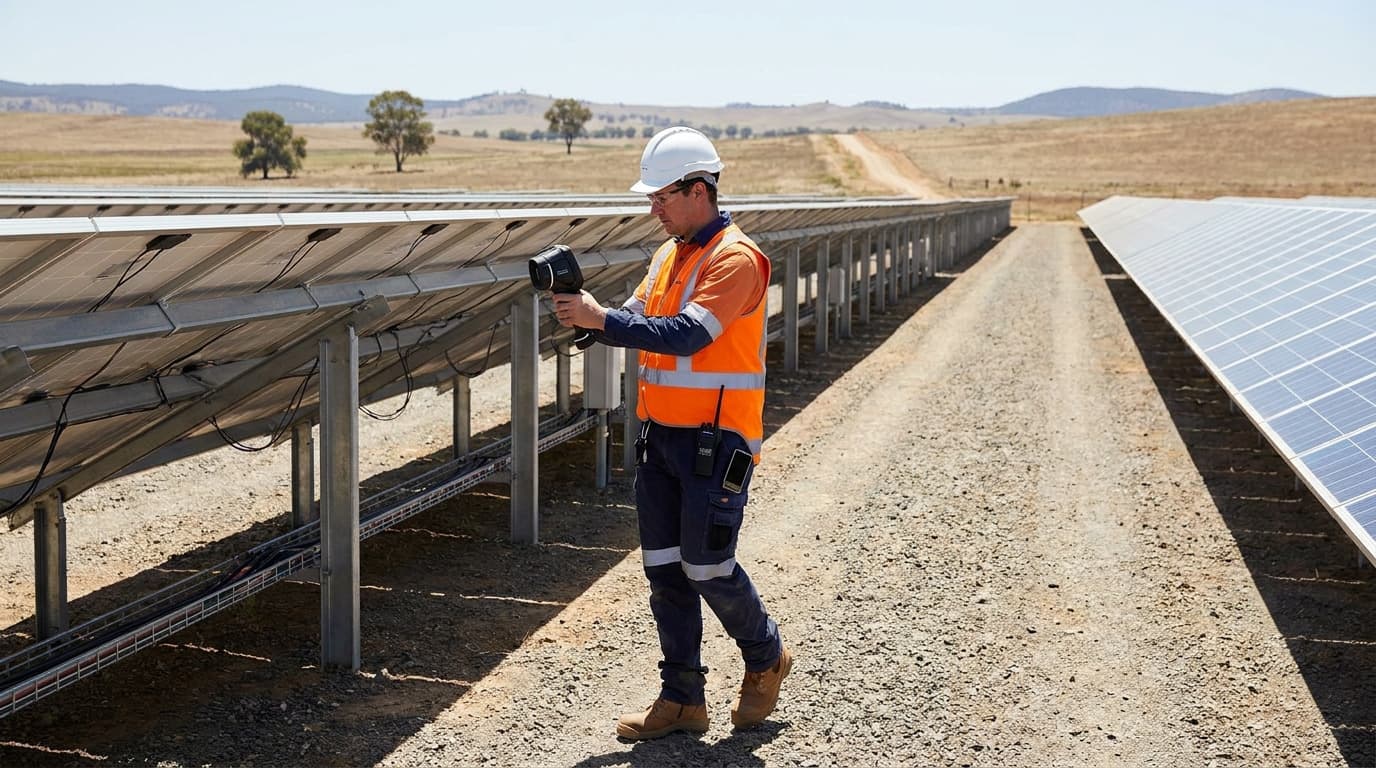
A lone worker on a jobsite is not a rare thing. It is the superintendent opening the gate at five in the morning, the surveyor two miles down the right-of-way, the operator in the borrow pit, the electrician in the vault, the mechanic in the pump house, the last person finishing a pour after the crew has gone, the guard walking the fence at night. This Lone Worker Safety for Construction Toolbox Talk (Safety Talk / Tailgate Talk) is about what changes when nobody can see or hear you on a site built for crews. The trench is the same trench. The fall is the same fall. What changes is time — how long before anyone knows, and how long before anyone arrives — and the whole job of a lone-worker system is to make both of those shorter.
Where the boundary of this talk sits#
This talk owns the system that watches a person working out of sight and sound of the crew: what counts as alone on a jobsite, the check-in and escalation that catch a missed signal, the construction first-aid and communication rules that set the time help takes, the devices that do the watching, and the short list of tasks that may never be done alone. It hands the buddy relationship itself — and the HAZWOPER, confined-space-attendant and two-in/two-out rules — to the buddy-system talk; fall-arrest equipment and anchorage to the fall-protection talk; the mental-health strain of isolation to the isolation and remote-work talk; and the treatment after someone is found to the first-aid and AED talk. All are linked below. This is the construction version; the general-industry version covers plants, healthcare, retail, security, and electric power.
The anchor#
Here is the distinction that carries this whole talk: working alone does not make the hazard worse — it makes two clocks longer: the time until someone knows you are down, and the time until someone reaches you — so every lone-worker control is a way of shortening one of those two clocks, the check-in and the man-down device shorten the first, the first-aider and the shared location shorten the second, and a short list of tasks has "no" built into the standard because for a worker hanging in a harness or touching a line over 600 volts no clock is short enough; which means the question before any solo task is never "is it safe to do this alone?" but "if this goes wrong, how long until someone knows, and how long until someone arrives?" — and if nobody can answer both, you are not alone, you are missing.
What "alone" means on a jobsite, and the one rule OSHA wrote for it#
You are working alone whenever nobody who would notice can see or hear you. On a construction site that happens more than people think: the early arrival, the late finish, the far end of a linear job, the basement or the vault, the equipment yard after the crew moves on, the weekend check on the dewatering pump. It has nothing to do with how far the nearest town is. It has to do with whether a person falling to the ground right now would be found in minutes or at the next shift.
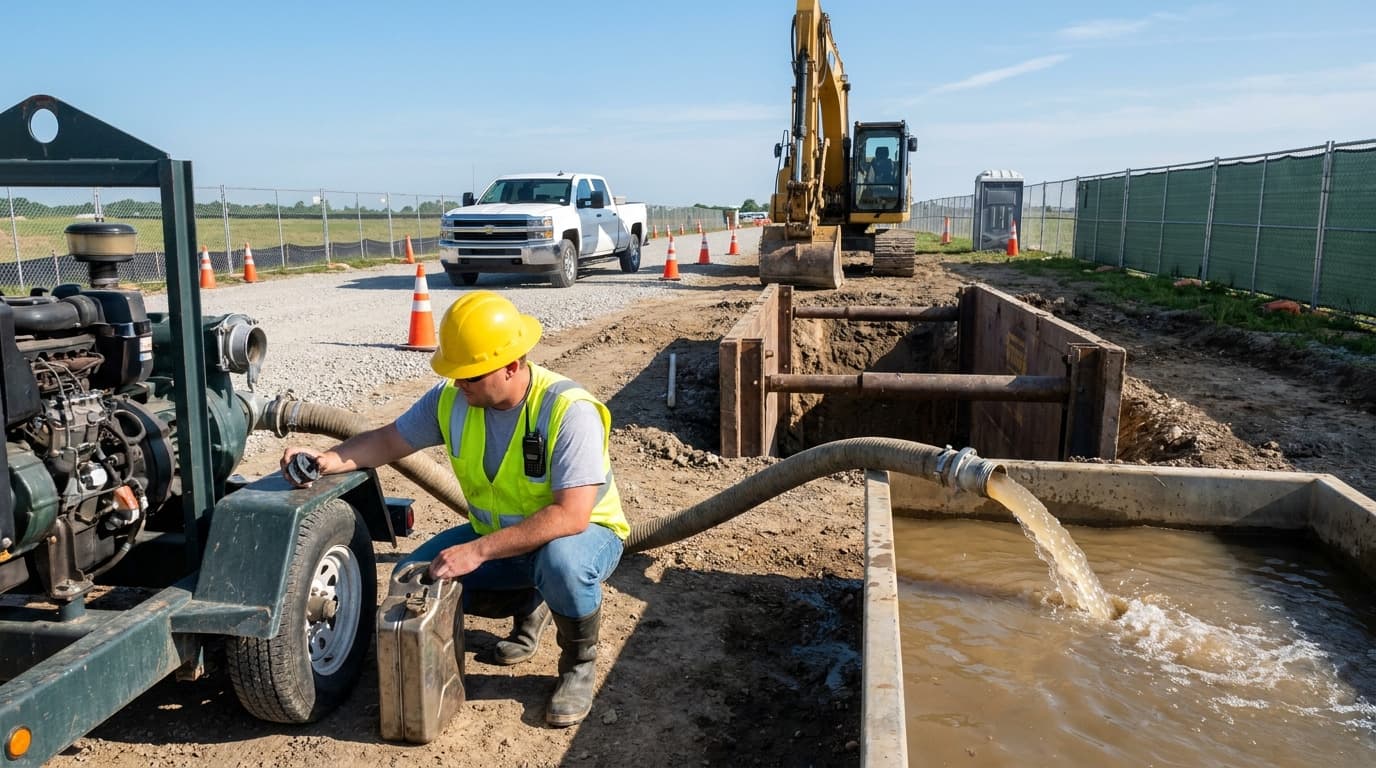
OSHA has exactly one rule titled "Working alone," and it was written for shipyards. It is short enough to read out loud. Whenever an employee is working alone, such as in a confined space or isolated location, the employer must account for each employee throughout each work shift, at regular intervals appropriate to the job assignment, and at the end of the job assignment or the end of the shift, whichever comes first — and must do it by sight or verbal communication. That is a check-in schedule written as law. It does not apply to construction, and OSHA has said in writing that outside electric power work there is no general OSHA standard on working alone except in specific situations. But it is the clearest description anyone has written of what a lone-worker system does, and everything in this talk is a way of meeting it.
On a construction site the duty comes from the General Duty Clause — the employer must keep the workplace free of recognized hazards likely to cause death or serious harm — and from 1926.21(b)(2), which requires every employee to be instructed in the recognition and avoidance of the hazards of their work. A hazard that becomes deadly only because nobody will notice is a recognized hazard, and working alone is a condition every worker should be trained to recognize.
The first clock: who notices#
The first clock starts when you go down and stops when someone realizes you have. For a lone worker without a system, it stops when the crew arrives in the morning. The system is three things.
A check-in that fits the task. The shipyard rule says "regular intervals appropriate to the job assignment," and that is the right test. A superintendent opening the site might check in on arrival and when the first crew lands. A surveyor on a remote right-of-way might check in every hour and at every move. Someone on a task that can put them on the ground in seconds — work at height, hot work, a trench, an energized panel — needs a check-in measured in minutes, or an attendant, or should not be alone at all. A check-in can be a radio call, a phone call, a text, or a timer in an app that the worker resets; what matters is that a missed one is noticed.
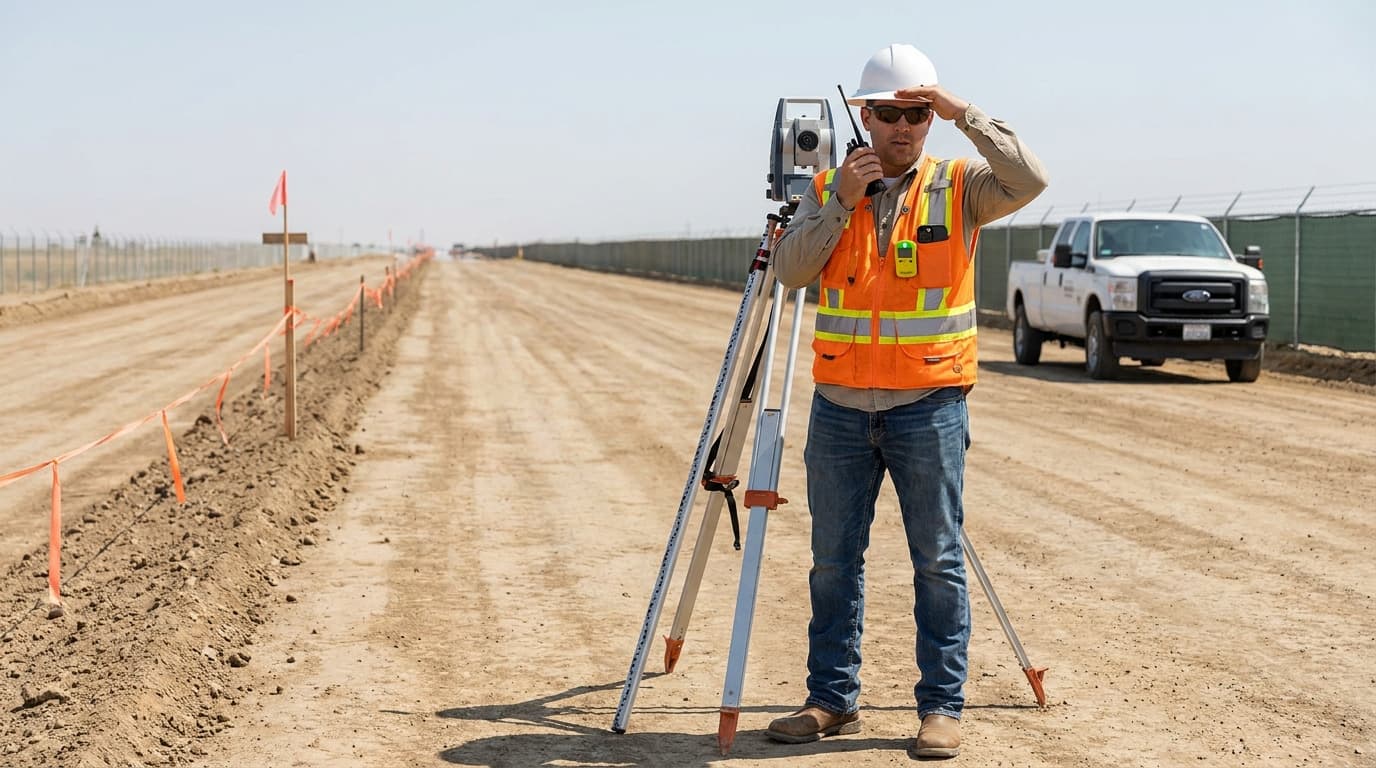
Someone awake on the other end. A check-in that goes to a foreman's phone on silent, a group text nobody reads, or an office that closed at four is not a check-in. The person holding the watch must be reachable for the whole shift, must know when the next check-in is due, and must know what to do when it does not come. On a site with early and late lone work, the watch is a named person each day, and the handover names the lone workers and their next times.
An escalation with a clock on it. The plan says what happens when a check-in is missed, with minutes: call the worker; call again on a second channel — radio if the first was phone; after a set number of minutes with no answer, send someone to the last known location; after another set interval, call emergency services and tell them how to find the spot. Write the minutes down. "We'd figure it out" is not an escalation.
Technology shortens this clock when it is used right. Check-in timers and apps make the schedule automatic and escalate on their own when a timer runs out. Duress or panic buttons — on a phone, a radio, a wearable — let a worker call for help silently when they cannot speak. Man-down or no-motion devices detect a fall, an impact, or a body that has not moved for a set time, and raise the alarm when the worker cannot. OSHA requires none of these. They are tools for meeting the duty, and they only work if the alarm lands with someone who will act — a device nobody monitors is a diary.
The second clock: who reaches you#
The second clock starts when the alarm lands and stops when a trained person is at your side. The construction first-aid standard is written for it, and it is worth reading line by line for a lone worker.
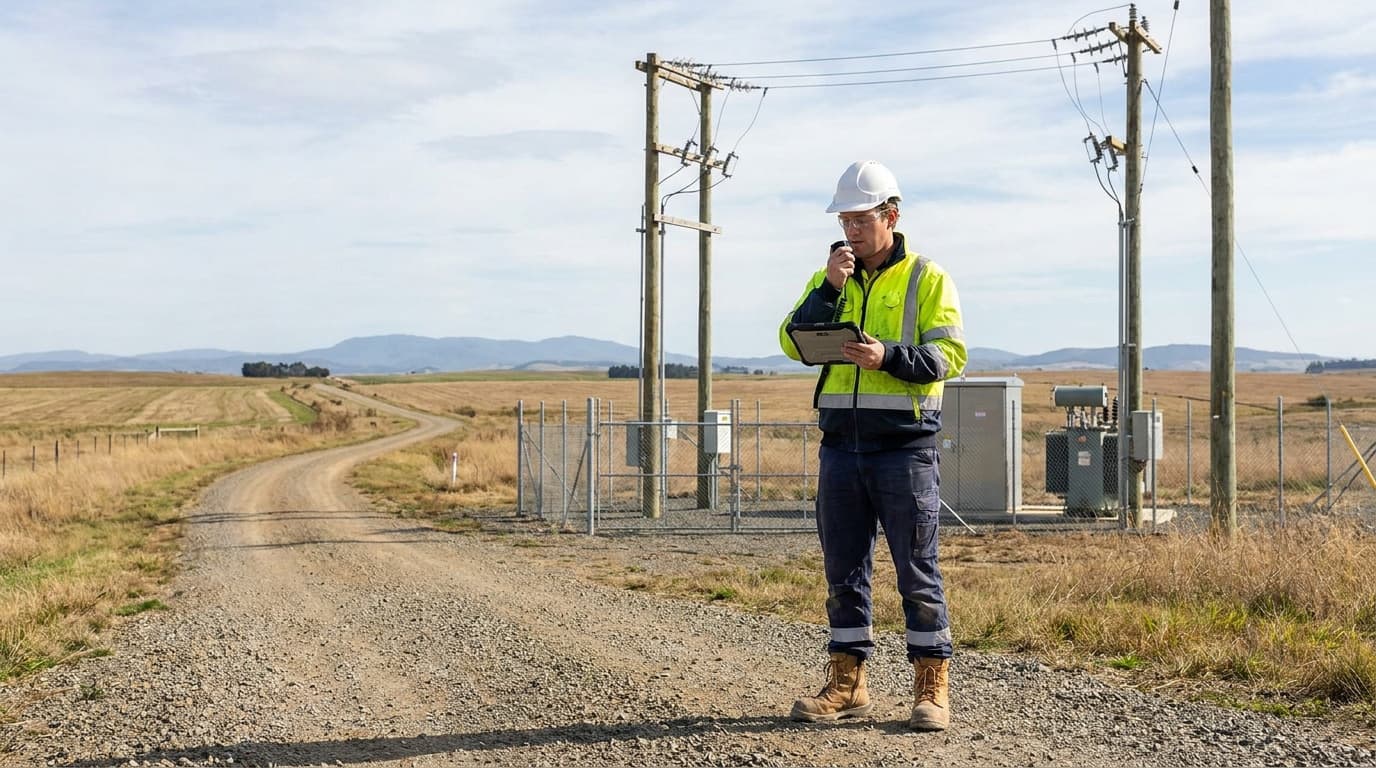
Before the project starts, the employer must make provisions for prompt medical attention in case of serious injury — not after the first injury, before the first shift. Where no infirmary, clinic, hospital or physician is reasonably accessible in terms of time and distance, a person with a valid first-aid certificate must be available at the worksite to render first aid. For a lone worker, read that for what it says: a first-aider at the trailer is help only if the first clock has already run — only if someone knows you are down. The first clock and the second clock are one system. Proper equipment for prompt transportation of an injured person to a physician or hospital, or a communication system for contacting ambulance service, must be provided — on a remote right-of-way that means a radio or a phone that actually has signal where you are working, and a vehicle that can get out. And where 911 is not available, the numbers for physicians, hospitals and ambulances must be conspicuously posted, with the information responders need to find the site.
OSHA has written the second clock down as a number in one place: in electric power work, enough first-aid and CPR-trained people that anyone exposed to shock can be reached within four minutes. Four minutes is the time a stopped heart gives you. It is not a construction rule, but it is the only time OSHA has ever put on how fast help must come, and it is a fair number to carry into every lone-worker decision on a site.
Three things shorten the second clock. Location: on a linear job or a large site, "somewhere on the project" is useless; share the station, the structure, the gate you came through, or a live location from a phone or device. Access: a locked gate, a haul road, a dark site adds minutes; the escalation plan says who has the key and how the ambulance gets in. The medical emergencies that do not wait: a heart attack, a seizure, a severe allergic reaction, heat stroke — the cases where the lone worker cannot make the call, and where the check-in interval and the man-down device are the only way the second clock ever starts. The first-aid and AED talk covers what the responder does; this talk covers getting them there.
The tasks with "no" built in#
Some tasks may not be done alone because OSHA — or physics — has already answered the two-clock question. For a lone worker on a jobsite, this is the list to know by heart.
A fall in a harness. The construction fall-protection standard requires the employer to provide for prompt rescue of employees in the event of a fall, or to assure that employees are able to rescue themselves. A lone worker hanging in a personal fall-arrest system after a fall cannot be promptly rescued by anyone, and self-rescue after a real fall is not something to bet on. "Prompt" and "alone" do not fit in the same sentence; a solo task in a harness needs a rescue plan with a person in it.
Energized work over 600 volts. In power transmission and distribution construction, at least two employees must be present for installing, removing or repairing lines energized over 600 volts, for work near parts energized over 600 volts, and for work of equal or greater electrical hazard, with narrow exceptions for routine switching, live-line tool work out of reach, and emergency repairs to protect the public. OSHA has explained the reason: the second employee is there for the immediate availability of a person trained in CPR.
Permit-required confined spaces need an attendant outside who monitors and summons rescue; HAZWOPER work in hazardous areas runs on the buddy system. The buddy-system and confined-space talks own those. And the honest line for everything else: no standard forbids it, so the decision belongs to the risk assessment. The test is the anchor's two questions. If the answer to either is "nobody would know" or "nobody could get there in time," the task gets a second person or waits for the crew.
Weather, trespassers, and the worker nobody sees#
Heat and cold are lone-worker hazards in their own right. The first symptom of heat stroke is confusion, and a confused worker does not call for help; the same is true of hypothermia. On a hot or cold day the check-in interval gets shorter, and the watcher listens for slurred speech or odd answers, not just for a voice. The heat and cold talks own the physiology; this talk owns the shorter interval.
A worker alone on a site at night or on a weekend is also the one who meets the trespasser, the thief, or the angry neighbor. The lone-worker controls are the same two clocks: a duress signal that works without speaking, a check-in on arrival and departure, a way out, and a rule to leave and report rather than confront. And the strain of weeks of working without another person has its own effects on judgment and mood; the isolation and remote-work talk owns that, and the lone-worker system should make sure the check-in is also, sometimes, a conversation.
Where the duty sits#
The lone-worker duty on a construction site sits in the General Duty Clause, Section 5(a)(1), in 1926.21(b)(2)'s requirement to train workers to recognize the hazards of their work, and in the employer's hazard assessment: deciding which tasks can be done alone, under what check-in and escalation plan, with what first-aid coverage. 1926.50 sets the second clock — prompt medical attention arranged before the project, a certified first-aider on site where no clinic is reasonably accessible in time and distance, transport or a communication system for the ambulance, and posted numbers where 911 is not available. 1926.502(d)(20) requires prompt rescue after a fall, and 1926.960(b)(3) forbids working alone over 600 volts in power line work. 1915.84 is the shipyard rule that shows what "accounting for" a lone worker looks like. The confined-space and HAZWOPER standards carry the attendant and buddy rules owned by the talks linked below. The worker's part is to know the plan, to make the check-ins, and to refuse the tasks on the "no" list.
What can go wrong?#
- A superintendent opening the site at five falls on an icy stair into the basement and is found when the crew arrives at seven.
- The surveyor's hourly check-in goes to a project phone sitting on a desk in a locked trailer.
- A worker finishing alone after the pour arrests a fall at the slab edge and hangs in the harness; the rescue plan assumed the crew was there.
- A mechanic working alone in the pump house has a seizure; the man-down device sends its alarm to an email nobody reads on Saturday.
- A lone operator in the borrow pit rolls the compactor at the edge of the stockpile; nobody knows which pit he was in.
- A lineman decides a cutout change over 600 volts is "quick enough" to do before the second truck arrives.
- A worker alone on a hot afternoon stops making sense on the radio; the watcher assumes a bad signal.
- The site is remote and 911 is patchy; nobody posted the ambulance number or the gate location in the trailer.
- The night guard meets two trespassers at the laydown yard and tries to stop them alone.
How do we manage this properly?#
- Decide alone or not alone, task by task — the hazard assessment names which jobs may be done alone, which need a check-in measured in minutes, and which never happen without a second person.
- Set the check-in to the task — regular intervals appropriate to the job, plus a check-in at the end of the task or shift, by radio, phone, text or timer.
- Put someone awake on the watch — a named person each day, reachable all shift, who knows the next check-in time and the escalation plan, with a handover when the watch changes.
- Write the escalation with minutes — call, second channel, send someone, call emergency services — and the gate and location to give them.
- Share where you are — station, structure, gate, or live location; who has the key and how the ambulance gets in.
- Use the devices as tools, not substitutes — timers, duress buttons, man-down alarms, with every alarm landing on a person who acts.
- Cover the second clock under 1926.50 — medical arrangements before the project, a certified first-aider on site, a radio or phone with signal where the work is, and numbers posted where 911 is not available.
- Honor the "no" list — fall arrest without a rescue plan, energized work over 600 volts, permit spaces without an attendant, HAZWOPER without a buddy: not alone, not today.
Before you start#
Before any solo task, answer the two questions out loud: who will know if I go down, and how fast will someone reach me? Confirm who is holding the watch today, that they can be reached, and when your next check-in is due. Tell them where you will be — station, structure, gate — and what you are doing. Check that your radio or phone has signal where you are going and that the duress function works without three screens. Confirm where the nearest first-aid kit and AED are, who is certified, and how an ambulance gets to your spot. If the task is on the "no" list, it waits for the second person.
Talk it over#
- Who knew where you were the last time you were alone on this site, and when was the last time they would have noticed you missing?
- What happens here when a check-in is missed — in minutes, not in principle?
- Does your radio or phone have signal at the far end of this job? Have you checked?
- Which tasks on this site do we do alone that should be on the "no" list?
- If you fell at the slab edge tonight after everyone left, who would get you down?
The bottom line#
Working alone does not make the hazard worse; it makes two clocks longer — the time until someone knows you are down, and the time until someone reaches you. The check-in, the watcher, the escalation with minutes on it, and the man-down device shorten the first. The certified first-aider, the radio with signal, the posted numbers, and the key to the gate shorten the second — and 1926.50 requires every one of them to be arranged before the project starts. Some tasks get a flat "no": hanging in a harness with no rescue, energized work over 600 volts, inside a permit space, in a hazardous zone. For everything else, ask the two questions before you start. If nobody can answer both, you are not alone — you are missing.
Frequently asked questions about lone worker safety in construction#
Is it legal to work alone on a construction site?
In most cases, yes. OSHA has one standard titled "Working alone," and it applies only to shipyards; OSHA has stated in writing that outside electric power work there is no general OSHA standard on working alone except in specific situations. In construction those situations are the "no" list — energized line work over 600 volts, permit-required confined spaces, HAZWOPER hazardous areas — plus the fall-protection rule that requires prompt rescue or self-rescue after a fall, which a lone worker hanging in a harness usually cannot meet. Everywhere else, the employer's duty under the General Duty Clause and 1926.21(b)(2) is to recognize that working alone turns an ordinary hazard into a deadly one when nobody notices, to train workers to recognize it, and to put a system in place that notices.
What counts as "alone" on a jobsite?
You are alone whenever nobody who would notice can see or hear you — regardless of how big the crew is or how close the town is. The superintendent opening the gate, the surveyor down the right-of-way, the operator in the borrow pit, the electrician in the vault, the last person finishing after the pour, and the night guard are all lone workers. The test is simple: if you went down right now, would you be found in minutes, or when the crew arrives?
How often should a lone worker check in?
At intervals appropriate to the task — which is the exact test OSHA wrote into its shipyard rule. The superintendent opening the site may check in on arrival and when the first crew lands; the surveyor on a remote line, every hour and at every move; a worker on a task that can put them down in seconds — height, hot work, a trench, an energized panel — every few minutes, or with an attendant, or not alone at all. Add a check-in at the end of the task or the end of the shift, whichever comes first. Whatever the interval, it has to land with a person who is awake, knows it is due, and knows what to do when it does not come.
What should happen when a check-in is missed?
Something, within minutes, by plan. The escalation names the steps and the clock: call the worker; try a second channel — radio if the first was phone; after a set number of minutes with no answer, send someone to the last known location; after a further interval, call emergency services with the gate and location. The watcher does not wait for a second missed check-in to "be sure." A missed check-in is treated as a person down until the person proves otherwise, because that is the whole point of having one.
Can I work alone in a harness if I am tied off?
Not without a rescue plan that has a person in it. The construction fall-protection standard requires the employer to provide for prompt rescue in the event of a fall or to assure that employees can rescue themselves. A worker alone after a fall is hanging in a harness with no one to lower them, and self-rescue after a real fall — injured, shocked, possibly unconscious — is not something a plan should depend on. Being tied off stops the fall; it does not end the emergency. If the task needs a harness and nobody is there to rescue you, it needs a second person.
What does 1926.50 require for a remote site?
Four things, and the first one is timing: provisions for prompt medical attention must be made before the project starts, not after the first injury. Where no infirmary, clinic, hospital or physician is reasonably accessible in terms of time and distance, a person with a valid first-aid certificate must be available at the worksite. Proper equipment for prompt transportation of an injured person, or a communication system for contacting an ambulance, must be provided — a radio or phone that has signal where the work is, not where the trailer is. And where 911 is not available, the numbers for physicians, hospitals and ambulances must be conspicuously posted. For a lone worker, all four only work if the first clock has run — if someone knows you are down — which is why the check-in and the first-aid rule are one system.
What about a heart attack or a seizure when I am alone on site?
This is the case the whole system exists for, because you will not be the one who calls. Three things give you a chance: a check-in interval short enough that the first clock does not run for hours; a man-down or no-motion device that raises the alarm when you cannot; and a second clock that is actually short — a certified first-aider on site, an AED someone can reach, a radio with signal, and responders who know which gate and which structure. OSHA's only written number on how fast help must come is four minutes for electric-shock exposure, and it is a fair number to measure any lone-worker plan against. The first-aid and AED talk covers what happens when help arrives; this talk is about making sure it does.
Download the lone worker safety for construction toolbox talk PDF#
Download this Lone Worker Safety for Construction Toolbox Talk (Safety Talk / Tailgate Talk) as a printable PDF in English, Spanish, Portuguese, and Turkish for your next tailgate meeting, and use it to write the escalation plan with the minutes and the gate location filled in.
Related toolbox talks#
Sources#
- OSHA, 29 CFR 1926.50 — Medical services and first aid ((b) provisions for prompt medical attention made prior to commencement of the project; (c) a person with a valid first-aid certificate available at the worksite where no infirmary, clinic, hospital or physician is reasonably accessible in time and distance; (e) equipment for prompt transportation or a communication system for contacting ambulance service; (f) emergency numbers conspicuously posted where 911 is not available): https://www.osha.gov/laws-regs/regulations/standardnumber/1926/1926.50
- OSHA, 29 CFR 1926.502(d)(20) (the employer shall provide for prompt rescue of employees in the event of a fall or shall assure that employees are able to rescue themselves): https://www.osha.gov/laws-regs/regulations/standardnumber/1926/1926.502
- OSHA, 29 CFR 1926.960(b)(3) (at least two employees present for installation, removal or repair of lines energized at more than 600 volts and related work, with exceptions for routine switching, live-line tool work out of reach, and emergency repairs) and OSHA Standard Interpretation, August 27, 2001 (the two-employee rule ensures the immediate availability of a person trained in CPR): https://www.osha.gov/laws-regs/standardinterpretations/2001-08-27-1
- OSHA, 29 CFR 1915.84 — Working alone (shipyards: account for each employee working alone throughout the shift at regular intervals appropriate to the job assignment and at the end of the job or shift, by sight or verbal communication): https://www.osha.gov/laws-regs/regulations/standardnumber/1915/1915.84
- OSHA Standard Interpretation, February 22, 1999 — CPR/first aid training and "working alone" provisions of 1910.269 (outside 1910.269 "there is no general OSHA Standard that deals with the situation of an employee 'working alone' except in specific situations"; 1910.269(b)(1)(ii) four-minute reach for employees exposed to shock): https://www.osha.gov/laws-regs/standardinterpretations/1999-02-22-0
- OSHA, 29 CFR 1926.21(b)(2) (instruction of each employee in the recognition and avoidance of unsafe conditions and the regulations applicable to the work) and OSH Act Section 5(a)(1), General Duty Clause: https://www.osha.gov/laws-regs/oshact/section5-duties
Written by FieldSafetyTalk's safety professional — a CSP, ASP, CHST and OSHA Authorized Outreach Trainer with 14+ years of international construction safety experience across federal, heavy civil, and industrial projects.