Cranes and Suspended Loads
Updated 2026-08-06
In this bundle Rigging & Lifting
Print-ready PDF
Download this talk as a print-ready PDF, available in 4 languages.
Every crew knows the phrase "never stand under a suspended load." It is repeated so often that it has almost stopped meaning anything — and the way most people picture it is wrong in a way that gets people killed. They picture the load's shadow, the patch of ground directly beneath it, step just outside it, and feel safe. The regulation that governs this does not think in shadows. It thinks in fall zones, and a fall zone is a much bigger place. This cranes and suspended loads talk is about that difference, and about a rule stricter than the one most people carry in their heads.
Here is the distinction that carries this whole talk: the danger zone of a suspended load is not the shadow directly under it — it is the fall zone, the entire area the load could reach if it came free, and the rule is that nobody is in that zone at all, not that nobody stands under it. A load that can tip, swing, or roll when a sling fails does not drop straight down onto its own footprint. It goes sideways, it rolls, it slides off the hook — and the ground it can reach extends well beyond where it hangs. That is why OSHA's crane standard does not say "stay out from under"; it says no employee may be within the fall zone while a load is suspended, with only a few narrow exceptions, and even those exceptions keep people out from directly under the load. Understanding that one shift — from shadow to fall zone, from "under" to "in" — is the whole point of this talk.
Where the boundary of this talk sits#
The crane lifting talk owns the operation of the crane — setup, capacity, signals, the lift plan. The wire rope inspection talk owns the crane's wire rope; the rigging inspections talk owns the daily checks; the synthetic sling and chain hoist talks own their hardware; the struck-by hazards talk owns struck-by generally. This talk owns the ground beneath and around a suspended load — the fall zone, who is allowed into it and who is not, what the few essential exceptions require, and why loads come down at all. It is the "keep clear" discipline: not how the crane lifts, but where people may and may not be while it does. Where the question is the machine or the rigging hardware, those talks own it; this one owns the space under the hook.
What the fall zone actually is#
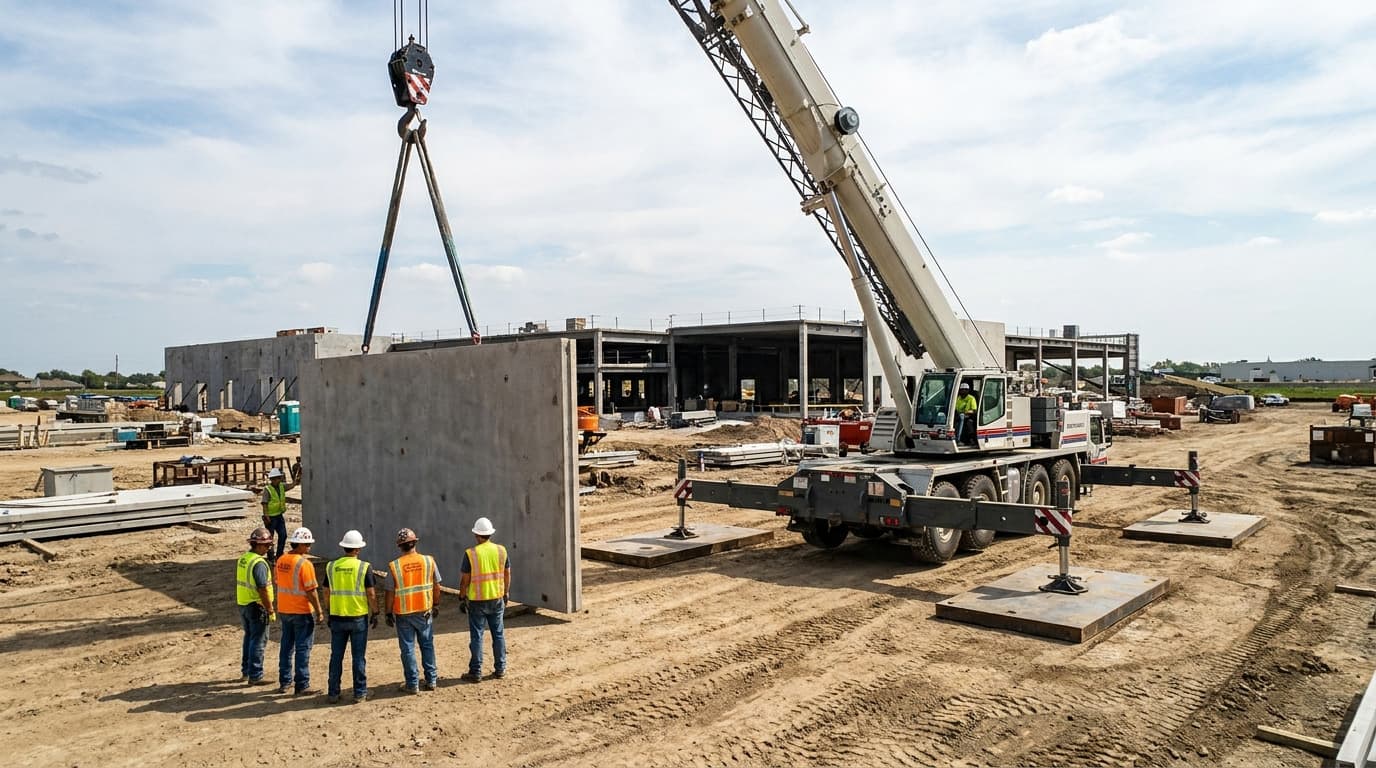
The fall zone is not a line on the ground; it is a volume of risk — the area in which it is foreseeable that a load could fall or land if it came free. For a compact, stable load that could only drop straight down, that might be close to its footprint. But most loads are not that. A wall panel that can tip flat on its side has a fall zone extending its full length in every direction it could topple — a 360-degree area far larger than the shadow beneath it. A load on a spreader bar, a bundle that can shift, a pipe that can roll: each has a fall zone shaped by how it could fail, not by where it currently hangs.
This is why the shadow model is dangerous. A worker who steps three feet to the side of a hanging wall panel believes they have cleared the load. If that panel comes off the hook and tips, three feet is nothing — they are still squarely in the space it will occupy on the ground. The honest question is never "am I under it?" but "if this came free right now, could it reach me?" — and for most loads the answer reaches much further out than instinct suggests.
The rule: nobody in the zone, with narrow exceptions#
OSHA's crane standard, 1926.1425, is titled "Keeping clear of the load," and it is built on a simple default with tightly drawn exceptions.
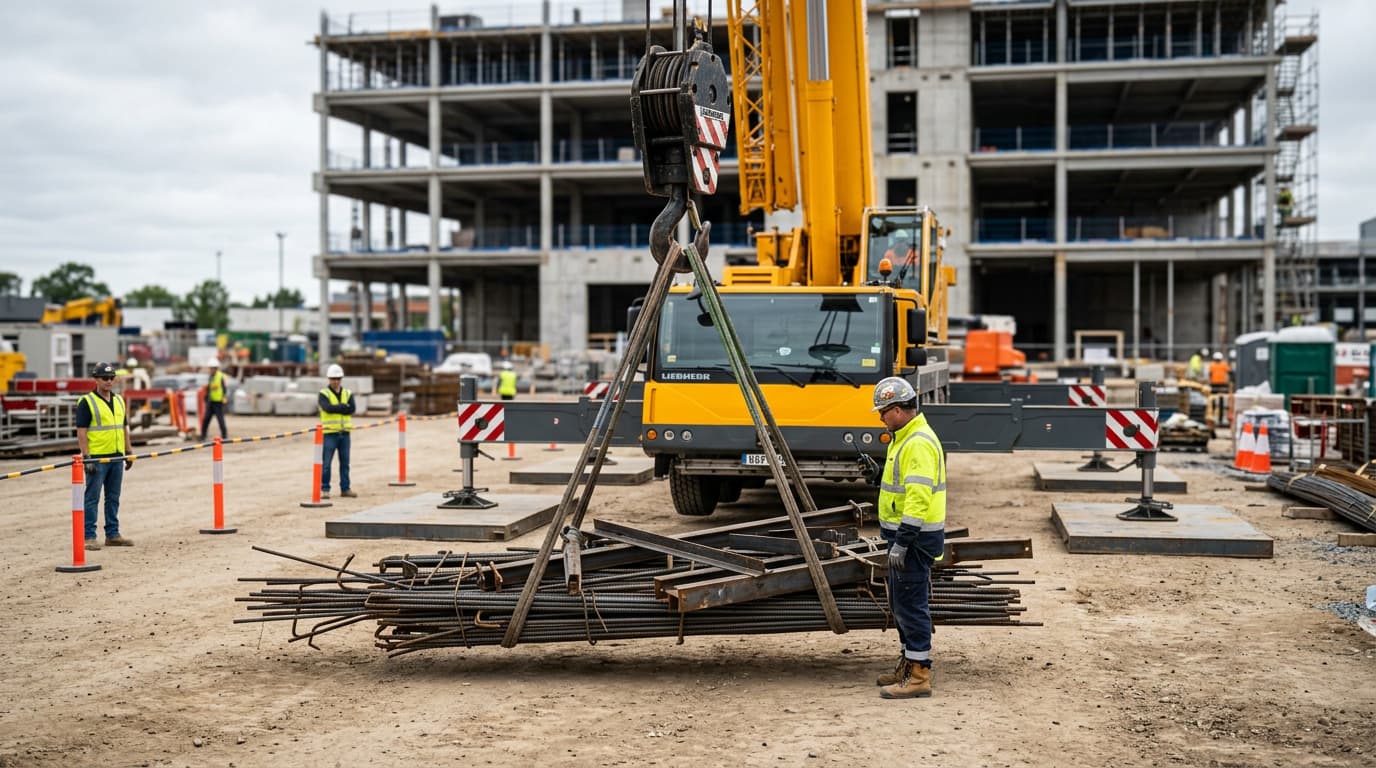
The default, at 1926.1425(b): while the operator is not moving a suspended load, no employee may be within the fall zone — full stop. The exceptions are only three: employees hooking, unhooking, or guiding the load; employees making the initial attachment of the load to a component or structure; and employees operating a concrete hopper or bucket. Nobody else has a reason to be in the fall zone, and the standard does not grant them one. And there is a prior duty at 1926.1425(a): where routes are available that minimize workers' exposure to hoisted loads, those routes must be used — the lift is planned to keep the load away from people in the first place, not just to shoo people away once it is in the air.
When those essential employees are in the fall zone, 1926.1425(c) sets conditions that must all be met: the load must be rigged to prevent unintentional displacement — it cannot shift, slide, or roll out of the rigging — and hooks with self-closing latches or their equivalent must be used (a narrow exception allows "J" hooks for setting wooden trusses). And when a load is being landed, only the employees needed to receive it may be in the fall zone. The principle under every clause is the same: the number of people exposed to a suspended load is kept to the few who cannot do their job any other way, and even they are protected by rigging that will not let the load get loose.
Not directly under — even for the essential few#
The exceptions let certain workers into the fall zone. They do not let anyone stand directly under the load. OSHA has been explicit: only employees essential to the operation are permitted in the fall zone, but not directly under the load, and "essential" is narrowly defined — an employee who must physically guide the load, closely monitor and give instructions on its movement, or make or break the connection to a structure, and whose employer can show it is infeasible to do that job from outside the fall zone. Everyone else stays out.
Two more rules close the gap. Under 1926.1426, boom free fall is prohibited whenever an employee is in the fall zone of the boom or load, and load-line free fall is prohibited whenever an employee is directly under the load — the machine is not allowed to drop on the very people the exceptions let in close. And riding the load is finished: hoisting, lowering, or traveling while a worker is on the load or hook is prohibited. The old habit of riding a load to guide it into place — a shortcut that still kills people — is not permitted; you guide from beside it, with a tag line, not from on top of it.
Tag lines, and why loads come free#
A tag line — a rope on the load handled from outside the fall zone — is how a load is controlled without a body inside the zone. It lets a worker steady a load, stop it spinning, and guide it to its landing while standing clear of where it would fall. The standard does not command a tag line on every lift, but the moment a load needs guiding, a tag line is what lets that happen from outside the danger. A worker with a hand on the load and a worker with a tag line do the same job from two very different places.
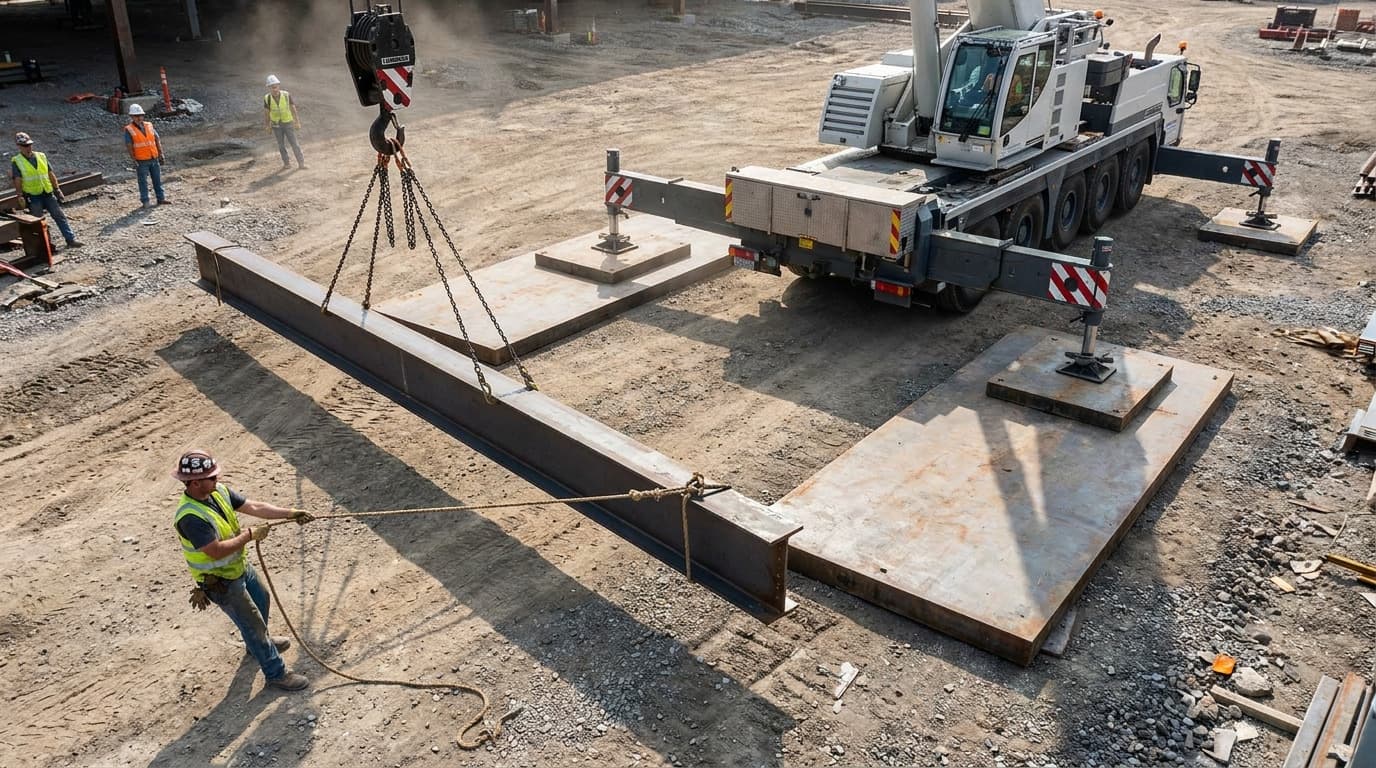
And it is worth being blunt about why loads come free at all, because that is what makes the fall zone real rather than theoretical. Loads drop because a sling was damaged and not caught, a hook had no latch and the sling jumped out, the load was rigged off-balance and rotated until it slid, a shackle was under-rated or side-loaded, or the load was never rigged to prevent displacement. Every one is a rigging failure that the "keep clear" rule assumes will eventually happen to someone. The fall zone is not built for the lift that goes right; it is built for the one that does not.
Where the duty sits#
Working under and around suspended loads is governed primarily by OSHA's construction crane standard, Subpart CC.
1926.1425 carries the fall-zone rule itself — the keep-clear default, the three exceptions, the rigging-and-latch conditions for essential employees, the receiving-a-load limit, and the not-directly-under principle. 1926.1426 prohibits boom free fall with anyone in the fall zone and load-line free fall with anyone directly under. Hooks, latches and the rigging of the load connect to 1926.251 and the rigging talks; the crane's own operation, capacity and signals belong to the crane lifting talk under Subpart CC. For loads handled by equipment other than cranes, the general struck-by duty and the employer's duty under the General Duty Clause still require keeping workers clear of suspended loads. And the consensus standard ASME B30.5 (mobile cranes) carries the same keep-clear discipline the OSHA text codifies.
On federal contract work, EM 385-1-1 carries its own suspended-load, fall-zone, tag-line and rigging requirements, generally at least as strict as the OSHA baseline; where the manufacturer's instruction or the contract sets a tighter limit, that limit governs. The through-line across all of it is the one the fall zone teaches: plan the lift so people are not exposed, and keep everyone out of the space the load could reach.
What can go wrong?#
- A worker steps just outside a load's shadow and is still inside the fall zone when the load tips.
- A load that can roll or tip is treated as if it would only drop straight down, so the cleared area is far too small.
- Non-essential workers stand in the fall zone to watch or wait, with no reason to be there.
- An essential worker stands directly under the load instead of beside it while guiding.
- A worker rides the load or the hook to guide it into place.
- The load is not rigged to prevent displacement, so it shifts, slides, or rolls out of the rigging.
- A hook without a self-closing latch lets the sling jump off under a shift of load.
- A load is carried over workers because the hoisting route was not planned to avoid them.
How do we manage this properly?#
- Judge the danger by the fall zone, not the shadow — ask "if this came free now, could it reach me?" and clear the whole area the load could tip, roll, or swing into.
- Keep everyone out of the fall zone while a load is suspended, except the few essential to hooking, guiding, initial attachment, or a concrete bucket.
- Keep even essential workers out from directly under the load — beside it, never beneath it.
- Plan the hoisting route to keep the load away from people; never carry a load over workers.
- Control the load with a tag line from outside the fall zone, never by riding it or by a hand under it.
- Confirm the load is rigged to prevent unintentional displacement and that hooks have self-closing latches.
- Never allow boom or load-line free fall with anyone in the fall zone or under the load.
- When landing a load, keep everyone out but the workers needed to receive it.
Before you start#
- Confirm the fall zone has been identified for how this load could fall — its full tip, roll, and swing reach, not just its footprint.
- Confirm the hoisting route keeps the load clear of workers, and no load will travel over anyone.
- Confirm only essential workers will be in the fall zone, and none directly under the load.
- Confirm the load is rigged to prevent displacement and the hooks have self-closing latches.
- Confirm a tag line is ready if the load needs guiding, handled from outside the zone.
- Confirm nobody will ride the load or hook, and free fall is disabled with people in the zone.
- Confirm everyone on the ground knows where the fall zone is and stays out of it.
- On federal work, confirm the EM 385-1-1 suspended-load and fall-zone requirements are met.
Talk it over#
- On today's load, how far does the fall zone actually reach if it tips or rolls — and who is standing in it right now?
- What is the difference between "not under the load" and "not in the fall zone," and which one keeps you alive?
- If this load needs guiding, are we doing it with a tag line from outside, or with a hand on it?
- What would have to fail for this load to come down — and is any of it something we can see right now?
The bottom line#
The danger zone of a suspended load is not the shadow directly under it — it is the fall zone, the entire area the load could reach if it came free, and the rule is that nobody is in that zone at all, not merely that nobody stands under it. A load that can tip, roll, or swing when the rigging fails does not drop onto its own footprint; it reaches sideways, so a worker three feet to the side of a hanging wall panel is still squarely where it will land. OSHA's crane standard 1926.1425 is built on that: while a load is suspended, no employee may be within the fall zone except the few essential to hooking, unhooking, guiding, initial attachment, or a concrete bucket — and even they may not be directly under the load. Where routes exist that keep the load away from people, 1926.1425(a) requires using them, and any essential worker in the zone gets a load rigged to prevent unintentional displacement and hooks with self-closing latches (1926.1425(c)). 1926.1426 forbids boom free fall with anyone in the fall zone and load-line free fall with anyone directly under, and riding the load or hook is prohibited — you guide from beside the load with a tag line handled from outside the zone, never from on it or under it. The fall zone is not designed for the lift that goes right; it is designed for the sling that fails, the latchless hook that lets go, the off-balance load that rolls — the failure the "keep clear" rule assumes will eventually come. The test for anyone on the ground during a lift is one question: if this load came free this second, could it reach where I am standing — and if the honest answer is yes, why am I there?
Frequently asked questions about cranes and suspended loads#
What exactly is the fall zone?
It is the area in which it is foreseeable that a load could fall or land if it came free — not just the ground directly beneath it. For a load that can tip, roll, or swing, the fall zone is a wide, often 360-degree area that extends as far as the load could reach if the rigging failed. It is defined by how the load could fail, not by where it currently hangs.
Isn't the rule just "don't stand under the load"?
No, and that misunderstanding is dangerous. The rule in 1926.1425 is that no employee may be within the fall zone while a load is suspended — a much larger area than the shadow directly under the load. Stepping just outside the load's footprint does not clear you if the load can tip or roll onto the spot where you are standing. The correct question is whether the load could reach you if it came free, not whether you are directly beneath it.
Who is allowed in the fall zone?
Only employees essential to the operation: those hooking, unhooking, or guiding the load; those making the initial attachment of the load to a component or structure; and those operating a concrete hopper or bucket. Even these essential workers may not stand directly under the load, and the employer must be able to show it is infeasible for them to do the task from outside the fall zone. Everyone else stays out.
What has to be true for an essential worker to be in the fall zone?
Under 1926.1425(c), the load must be rigged to prevent unintentional displacement — it cannot shift, slide, or roll out of the rigging — and hooks with self-closing latches or the equivalent must be used, with a narrow exception permitting "J" hooks for setting wooden trusses. When a load is being landed, only the workers actually needed to receive it may be in the fall zone.
Can a worker ride the load to guide it into place?
No. Hoisting, lowering, or traveling while an employee is on the load or hook is prohibited. Guiding a load is done from beside it with a tag line handled from outside the fall zone, never by riding the load. Riding a load to steer it is an old shortcut that still causes fatalities.
Are tag lines required on every lift?
The standard does not mandate a tag line on every single lift, but a tag line is the means by which a load is guided and steadied from outside the fall zone. The moment a load needs controlling, a tag line lets that happen without putting a worker in the danger area. In practice, a load that could swing or spin should be controlled with a tag line rather than a hand.
What actually makes a load fall?
Rigging failures: a damaged sling that was not caught, a hook with no latch that let the sling jump off, a load rigged off-balance that rotated and slid, an under-rated or side-loaded shackle, or a load never rigged to prevent displacement. The "keep clear" rule exists precisely because these failures happen — the fall zone is built for the lift that goes wrong, not the one that goes right.
Download the cranes and suspended loads toolbox talk PDF#
Get this cranes and suspended loads toolbox talk as a print-ready PDF — available in English, Spanish, Portuguese, and Turkish. Print it, hand it to the crew, and collect signatures on the included attendance sheet.
Download the PDF — free account required. New members get 3 free downloads.
Related toolbox talks#
Sources#
- OSHA, 29 CFR 1926.1425 — Keeping clear of the load: https://www.ecfr.gov/current/title-29/subtitle-B/chapter-XVII/part-1926/subpart-CC/section-1926.1425
- OSHA, 29 CFR 1926.1426 — Free fall and controlled load lowering: https://www.osha.gov/laws-regs/regulations/standardnumber/1926/1926.1426
- OSHA, Letter of Interpretation — Employee hand placement on and around suspended crane loads (21 Oct 1999): https://www.osha.gov/laws-regs/standardinterpretations/1999-10-21-0
This talk is general awareness guidance for training purposes. It does not replace your employer's crane and rigging program, the crane manufacturer's instructions, OSHA Subpart CC, ASME B30.5, or a competent or qualified person's duties, and it is not legal advice. Where the manufacturer's instruction or a contract sets a specific limit, that limit governs.