Cold Stress
Updated 2026-07-28
In this bundle Health & Environmental Exposure
Print-ready PDF
Download this talk as a print-ready PDF, available in 4 languages.
Everyone knows to take cold seriously when it is freezing. The problem is that the injuries do not wait for freezing, and the days that put people in hospital are usually the ones nobody thought were cold enough to mention. Wet, windy and 10 °C does more damage on a construction site than dry and −5 °C, because the first one gets ignored. This Cold Stress Toolbox Talk (Safety Talk / Tailgate Talk) is about that gap.
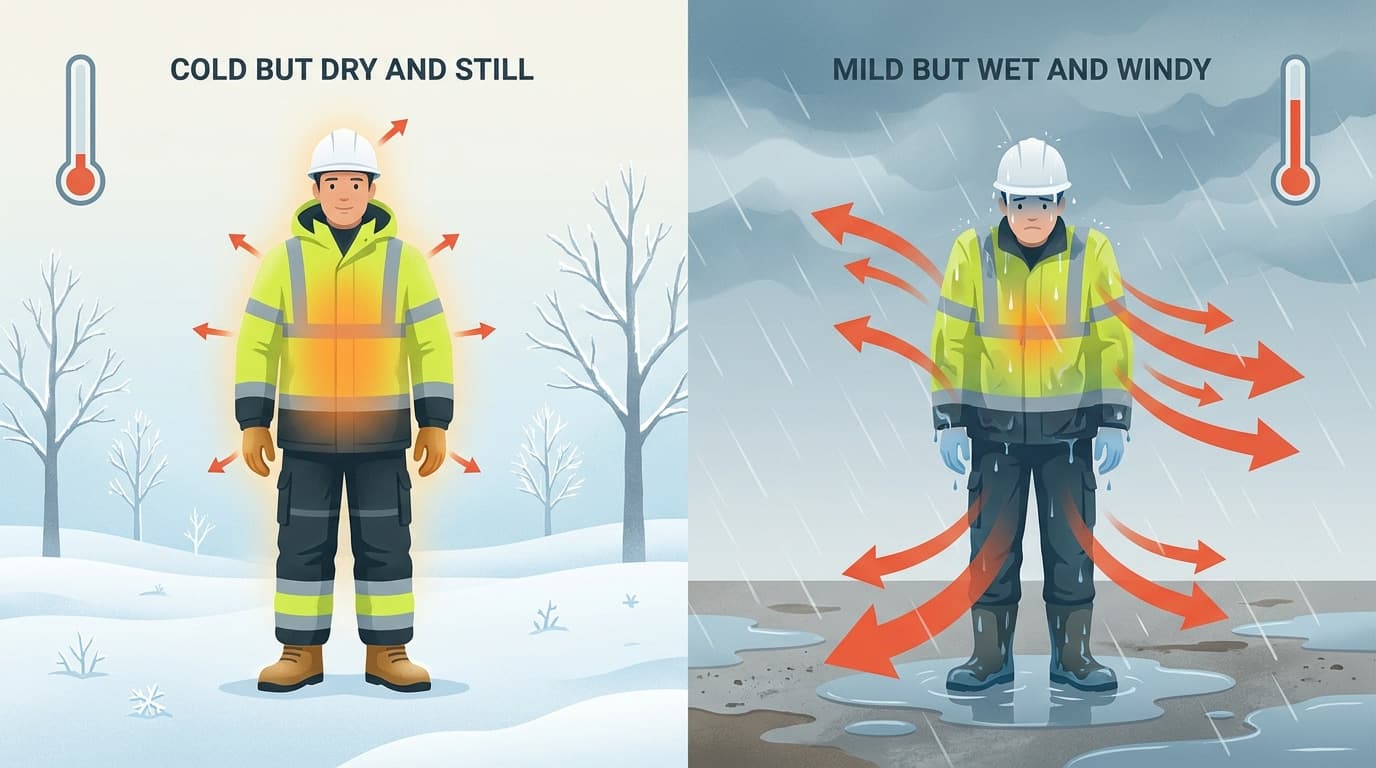
Here is the distinction that carries this whole talk: cold injury does not require cold — it requires heat loss. The body loses heat by conduction, convection, evaporation and radiation, and wet skin, wind and exhaustion accelerate all of them. That is why the temperatures at which real injuries begin are far higher than most crews expect, and why the phrase "it's not even freezing" is one of the more dangerous things said on a winter site.
The numbers that surprise people#
OSHA's own cold stress guidance sets them out, and none of them mention a freezer.
Trench foot — up to 60 °F (15.6 °C). A non-freezing injury of the feet caused by prolonged exposure to wet and cold conditions. It can occur at temperatures as high as 60 °F (15.6 °C) if the feet are constantly wet. The mechanism is stated plainly: wet feet lose heat 25 times faster than dry feet. Symptoms are redness, tingling, pain, swelling, leg cramps, numbness and blisters.
Hypothermia — above 40 °F (4.4 °C). It occurs when body heat is lost faster than it can be replaced and normal body temperature — 98.6 °F (37 °C) — drops to less than 95 °F (35 °C). It is most likely at very cold temperatures, but it can occur even at cool temperatures above 40 °F (4.4 °C) if a person becomes chilled from rain, sweat or submersion in cold water.
Frostbite — above freezing. Freezing of the skin and tissues, which can cause permanent damage and in severe cases lead to amputation. It can occur at temperatures above freezing because of wind chill.
Chilblains — skin inflammation from repeated exposure to cold air — completes the four types of cold stress OSHA names.
Read those together and the pattern is obvious: wet plus wind plus time, not a thermometer reading. A worker in soaked boots at 12 °C in a breeze is in a worse position than a dry worker at −3 °C in still air.
There is no cold standard either#
OSHA does not have a specific standard covering work in cold environments. The duty comes from the General Duty Clause, Section 5(a)(1) of the OSH Act: employers must protect workers from recognised hazards causing or likely to cause death or serious physical harm, and cold stress is a recognised hazard.
Note the asymmetry with heat. Heat has a proposed standard and a five-year national enforcement programme aimed at it. Cold has neither — no proposed rule, no emphasis programme — and exactly the same General Duty Clause obligation. The absence of an enforcement programme is not an absence of duty; it just means nobody is coming to remind you.
What fills the space is guidance: NIOSH Publication 2019-113, Preventing Cold-related Illness, Injury & Death among Workers (September 2019), the ACGIH Threshold Limit Values for cold, which set work-warming schedules based on temperature and wind speed, and OSHA's own cold stress guides.
How the body gives up its extremities#
Understanding one physiological response explains most of what goes wrong.
In a cold environment, the body prioritises the core. It shifts blood flow away from the extremities — hands, feet, arms, legs — and the outer skin, toward the chest and abdomen, to keep the internal core temperature up. The consequence is direct: exposed skin and the extremities cool rapidly, which increases the risk of frostbite and hypothermia. Add a wet environment and trench foot joins the list.
That is why fingers and toes go first, why they stop reporting accurately once they are numb, and why "I can't feel my hands" is a signal to stop rather than a passing inconvenience. It is also why the person losing heat is often the last one to judge it correctly — the same core-protection response that saves the organs also degrades coordination and judgement.
What can go wrong?#
Boots get wet on day one and stay wet all week. No dry replacements, no chance for feet to recover overnight.
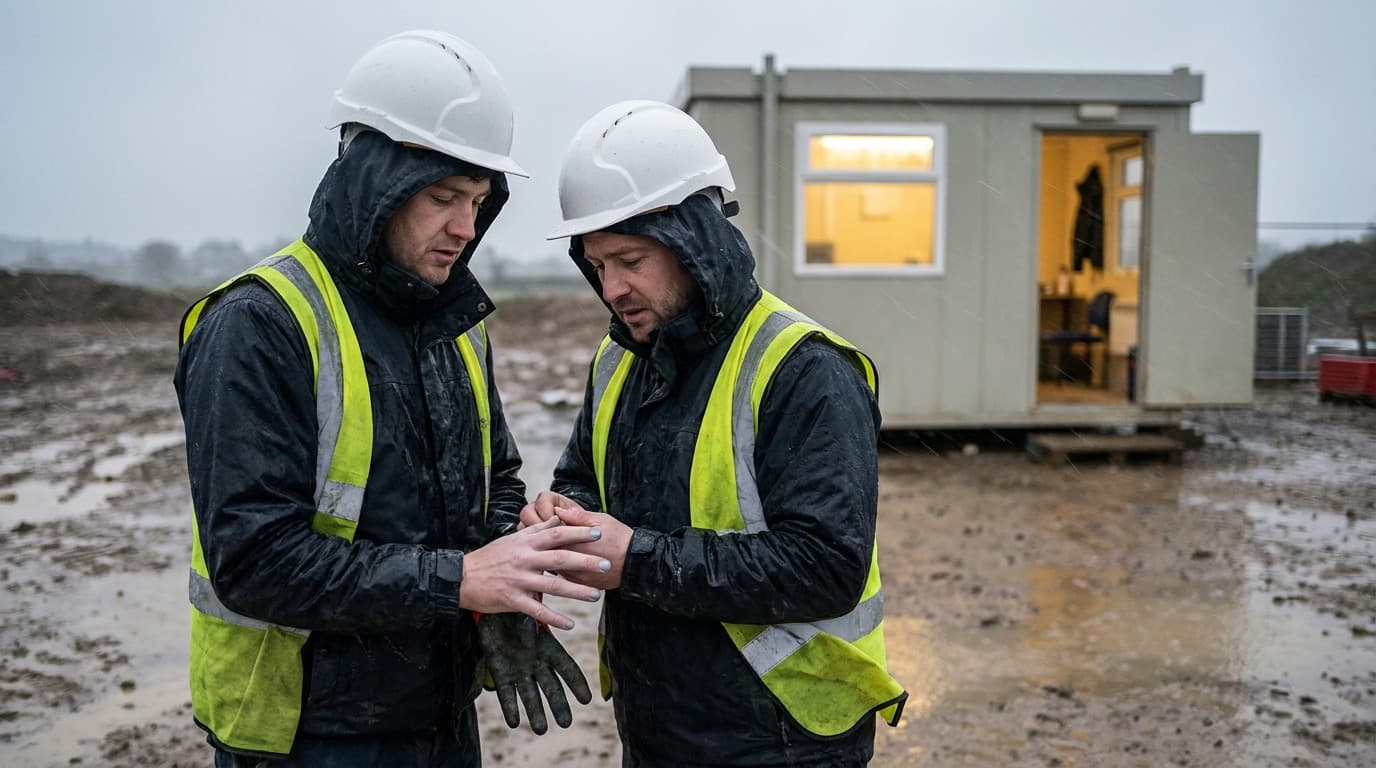
Sweat does the damage. Heavy work in insulated clothing soaks the base layer, then the break in the wind chills it against the skin.
The temperature is dismissed. Above freezing, so nobody treats it as a cold job — the exact conditions in which trench foot and hypothermia occur.
Nobody watches for the mental signs. Confusion, slurred speech, poor coordination and stopping shivering are late signs of hypothermia, not eccentricity.
Frostbite is "warmed up" badly. Rubbed, put in hot water, held against a heater, or thawed and then refrozen — each of which increases the damage.
Alcohol is treated as warming. It is not, and it worsens heat loss.
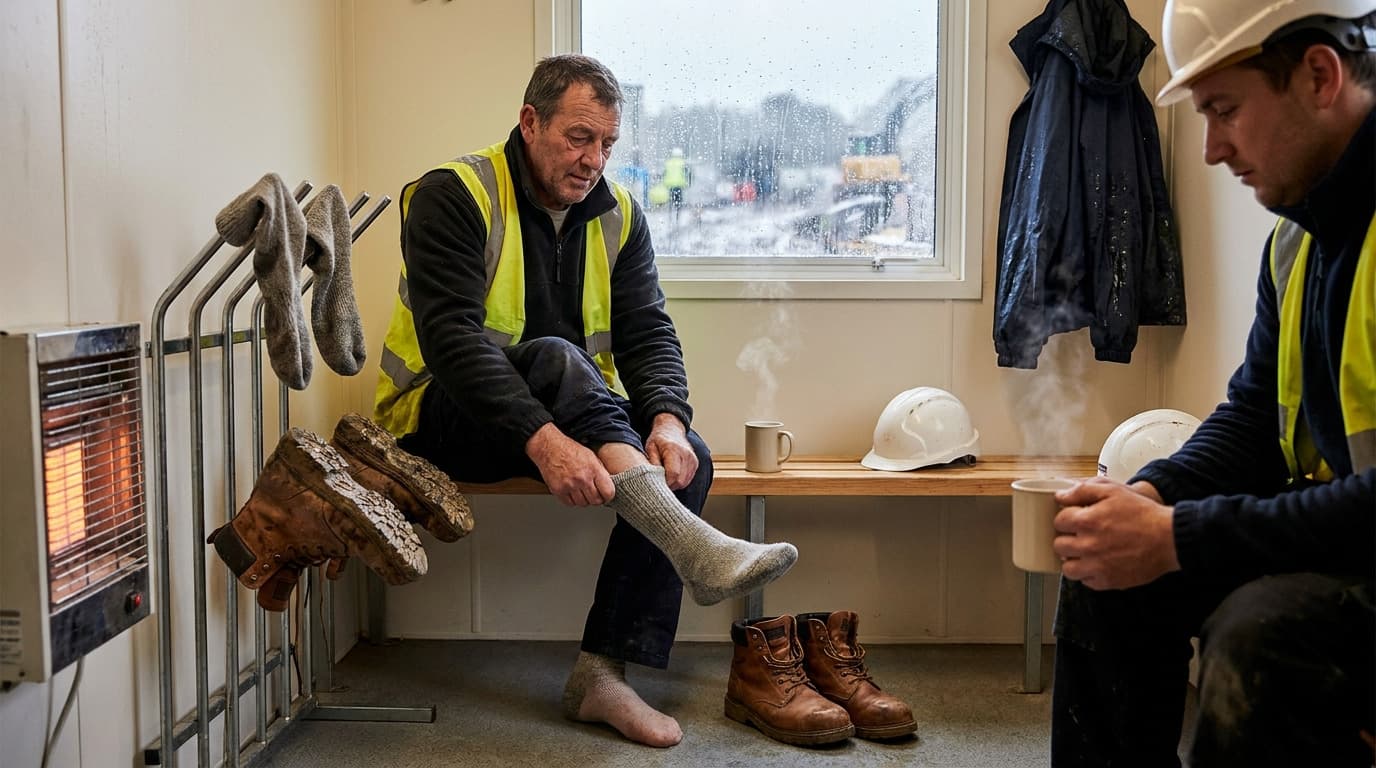
The break area is not warm. Nowhere to actually recover, so the breaks provide time but no thermal benefit.
Working alone. Nobody to notice the change in someone whose judgement is already affected.
How do we manage this properly?#
Dress in layers, and manage sweat as carefully as rain. A wicking base layer, insulation in the middle, wind and waterproof outside — and shed layers before you soak them rather than after.
Keep feet dry and have spares. Waterproof boots, spare socks on site, and a chance to change during the shift, because wet feet lose heat 25 times faster than dry ones.
Provide a genuinely warm break area and schedule warming breaks by conditions rather than by the clock alone, using ACGIH-type work-warming schedules that account for wind speed.
Use the wind chill, not the air temperature, when deciding how the day runs.
Watch each other. Buddy system, and treat "no shivering," confusion or stumbling as an emergency rather than tiredness.
Get people out of wet clothing. Dry replacements available on site, not at home.
Provide warm sweetened drinks, and no alcohol.
Know the frostbite rules — they are mostly prohibitions. Do not rub the affected area. Do not apply snow or water. Do not break blisters. Do not try to rewarm before getting medical help, and do not use a heating pad, heat lamp, stove, fireplace or radiator, because numb tissue burns easily. Cover the area loosely, protect it from contact, and get medical attention. Rewarming is safest done by medical professionals — and a rewarmed area that refreezes suffers more damage than one left cold.
For trench foot: remove wet boots and socks, dry the feet, keep them elevated, avoid walking on them, and get medical attention.
Before you start#
- Confirm today's temperature and wind speed — the wind chill is what matters.
- Confirm whether the work is wet, and whether anyone will be standing in water.
- Confirm everyone has waterproof boots, spare socks and dry gloves available on site.
- Confirm where the warm break area is and how often breaks are scheduled.
- Confirm nobody is working alone in cold or wet conditions.
- Confirm the crew knows the late signs of hypothermia — confusion, slurred speech, shivering stopping.
- Confirm what the plan is if someone gets soaked, including dry replacement clothing.
- Confirm everyone knows the frostbite "do nots" before anyone needs them.
Talk it over#
- Whose boots are still wet from yesterday?
- What temperature do we start calling it a cold day — and is that number sensible?
- Has anyone here had numb fingers that took hours to come back?
- If somebody stopped shivering and started talking oddly, what would you do?
The bottom line#
Cold injury does not need freezing temperatures. Trench foot can occur at temperatures as high as 60 °F (15.6 °C) where the feet are constantly wet, because wet feet lose heat 25 times faster than dry feet. Hypothermia — normal body temperature of 98.6 °F (37 °C) dropping below 95 °F (35 °C) — can occur even above 40 °F (4.4 °C) if someone is chilled by rain, sweat or immersion. Frostbite can occur above freezing through wind chill. There is no OSHA cold standard, so the duty runs through the General Duty Clause with NIOSH 2019-113 and ACGIH TLVs supplying the practice. And when it goes wrong, the frostbite rules are almost entirely prohibitions: do not rub, do not apply snow or water, do not break blisters, do not rewarm before medical help, and never with a heater — because refreezing a rewarmed area causes more damage than leaving it cold.
Frequently asked questions about cold stress#
Does OSHA have a cold stress standard?
No. OSHA does not have a specific standard covering work in cold environments. The obligation comes from the General Duty Clause, Section 5(a)(1) of the OSH Act, under which employers must protect workers from recognised hazards — including cold stress — that are causing or likely to cause death or serious physical harm. NIOSH Publication 2019-113 and the ACGIH Threshold Limit Values provide the recognised practice.
How cold does it have to be to get trench foot?
Not cold at all, by most people's standards. Trench foot is a non-freezing injury caused by prolonged exposure to wet and cold conditions, and it can occur at temperatures as high as 60 °F (15.6 °C) if the feet are constantly wet. The reason is that wet feet lose heat 25 times faster than dry feet.
Can you get hypothermia above freezing?
Yes. Hypothermia occurs when body heat is lost faster than it can be replaced and normal body temperature of 98.6 °F (37 °C) drops below 95 °F (35 °C). It is most likely at very cold temperatures, but can occur even at cool temperatures above 40 °F (4.4 °C) if a person becomes chilled from rain, sweat or submersion in cold water.
What are the late signs of hypothermia?
Shivering stopping is the one to know, along with confusion, slurred speech, loss of coordination, slowed heart rate and breathing, and loss of consciousness. Mild hypothermia looks like someone alert and shivering; the disappearance of shivering means the condition is worsening, not improving.
What should we not do for frostbite?
Most of the guidance is prohibitions. Do not rub or massage the affected area. Do not apply snow or water. Do not break blisters. Do not attempt to rewarm before getting medical help — and do not use a heating pad, heat lamp, stove, fireplace or radiator, because the area is numb and burns easily. Cover it loosely, protect it from contact, give warm sweetened drinks if the person is alert, avoid alcohol, and let medical professionals rewarm it. A frostbitten area that is rewarmed and then refreezes suffers more tissue damage.
What is the first aid for trench foot?
Remove wet shoes, boots and socks, dry the feet, keep them elevated and avoid walking on them, since walking may cause tissue damage — then get medical attention. Call emergency services in an emergency; otherwise seek medical assistance as soon as possible.
Why does the body sacrifice hands and feet?
Because it prioritises the core. In a cold environment the body shifts blood flow away from the extremities and outer skin toward the chest and abdomen to protect the internal core temperature. The consequence is that exposed skin and the extremities cool rapidly, raising the risk of frostbite and hypothermia — and once fingers and toes are numb, they stop giving accurate warning.
Download the cold stress toolbox talk PDF#
Get this cold stress toolbox talk as a print-ready PDF — available in English, Spanish, Portuguese, and Turkish. Print it, hand it to the crew, and collect signatures on the included attendance sheet.
Download the PDF — free account required. New members get 3 free downloads.
Related toolbox talks#
Sources#
- OSHA, Cold Stress Guide: https://www.osha.gov/emergency-preparedness/guides/cold-stress
- OSHA, Winter Weather — Cold Stress: https://www.osha.gov/winter-weather/cold-stress
- OSHA, Protecting Workers from Cold Stress (OSHA 3156): https://www.osha.gov/sites/default/files/publications/OSHA3156.pdf
This talk summarises published regulatory and health guidance. It is not medical advice. Suspected hypothermia, frostbite or trench foot requires medical assessment — call emergency services in an emergency and otherwise seek medical assistance as soon as possible.
Written by FieldSafetyTalk's safety professional — a CSP, ASP, CHST and OSHA Authorized Outreach Trainer with 14+ years of international construction safety experience across federal, heavy civil, and industrial projects.