Lead Paint Awareness
Updated 2026-07-31
In this bundle Health & Environmental Exposure
Print-ready PDF
Download this talk as a print-ready PDF, available in 4 languages.
Most lead training covers the worker breathing it. This talk covers a second problem that runs alongside and is regulated by a completely different agency: the paint itself, who is allowed to disturb it, and the people who live in the building after you leave. Getting the first right does not get you the second. This Lead Paint Awareness Toolbox Talk (Safety Talk / Tailgate Talk) is about identifying lead paint and the rules that attach the moment you touch it.
Here is the distinction that carries this whole talk: two different agencies regulate the same paint, and complying with one does not comply with the other. OSHA's 1926.62 protects the worker — exposure limits, monitoring, blood lead, hygiene. EPA's Renovation, Repair and Painting rule protects the occupant — certification, containment, cleaning, notification. A crew can be fully compliant on respirators, monitoring and washing facilities, and still be committing an EPA violation before the first scraper touches the wall.
Where lead paint is: the 1978 line#
The federal government banned lead-based paint from housing in 1978. That single date does most of the work on a construction site.
Assume any painted surface in a pre-1978 building contains lead until testing says otherwise. Older buildings have more, and it concentrates on surfaces that were painted for durability: windows and sills, doors and frames, stairs, railings, porches, skirting, radiators, and exterior siding and trim.
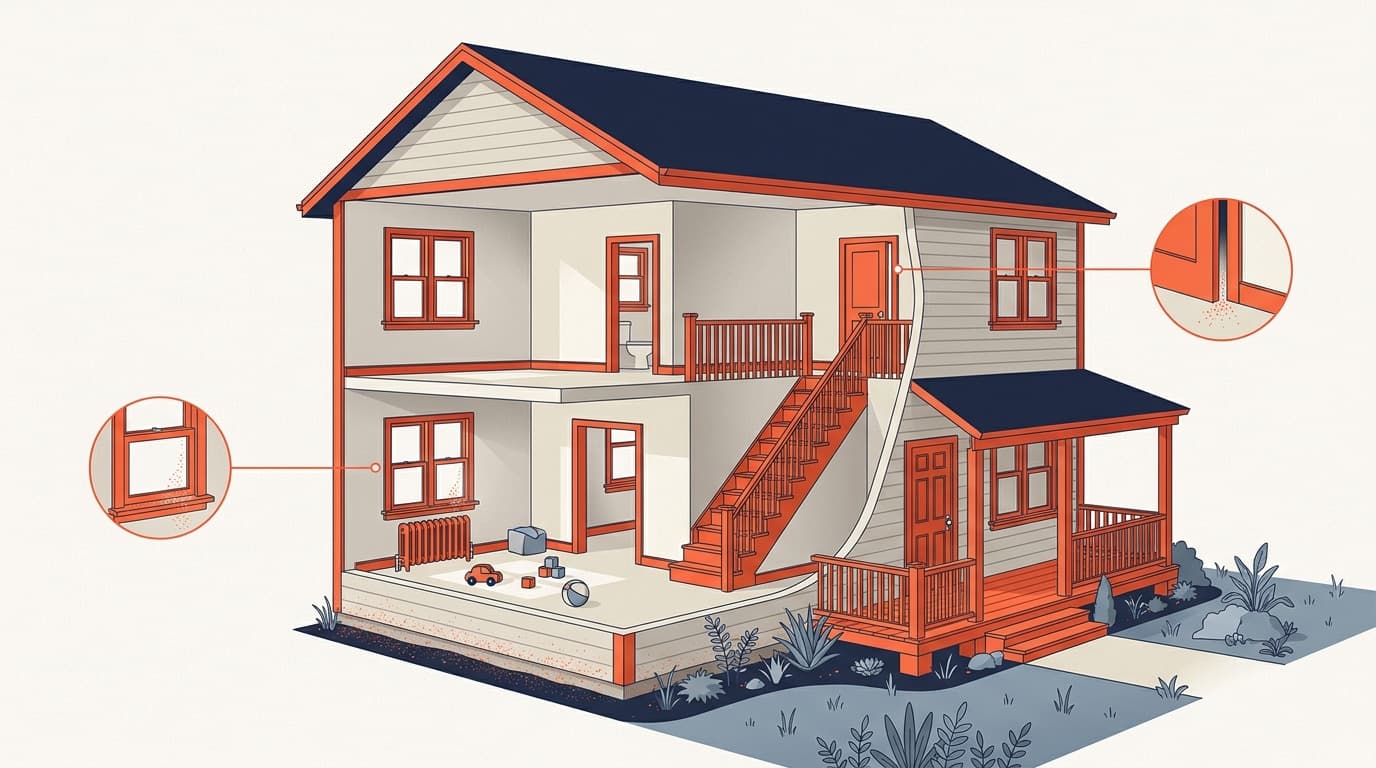
Friction and impact surfaces are the worst. A painted window sash grinding in its frame has been making lead dust for decades without anyone touching it. So has a door that rubs.
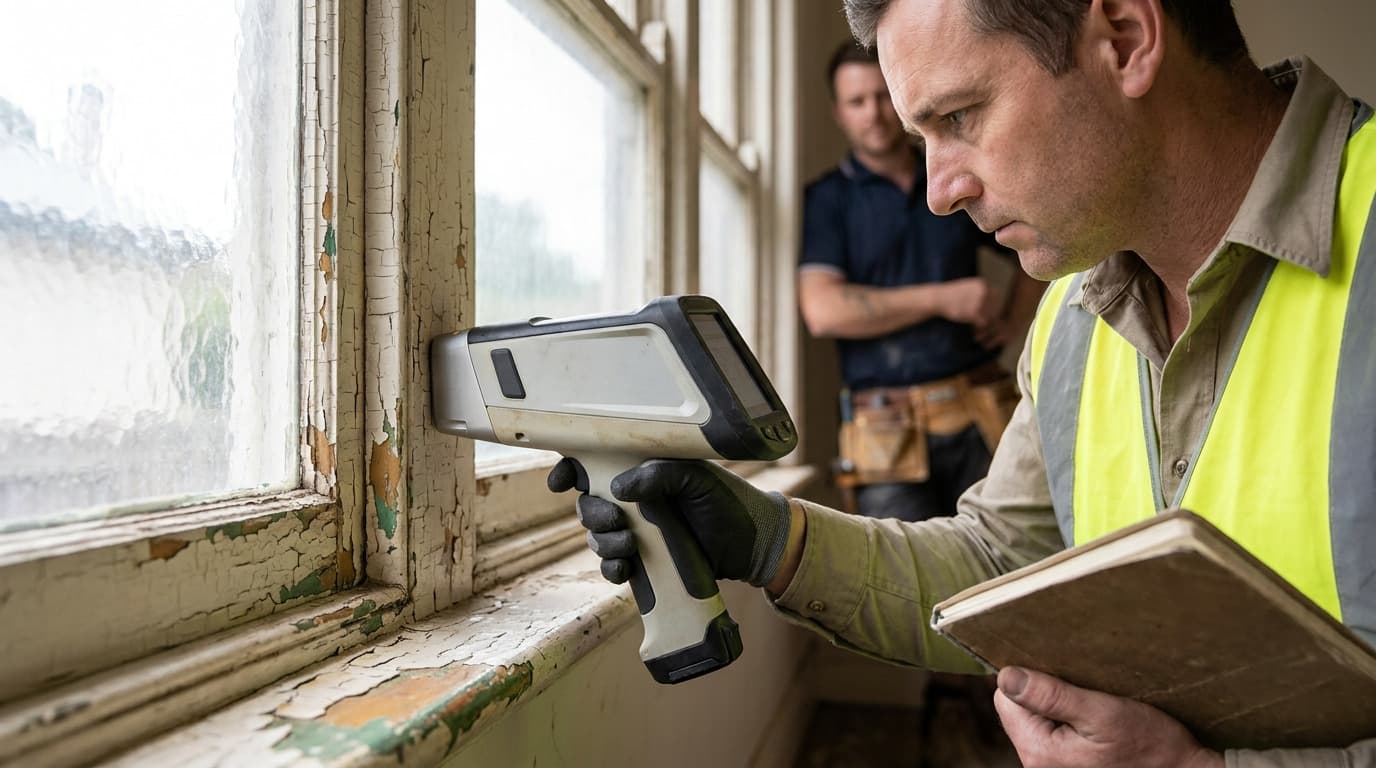
Testing settles it. XRF instruments read the paint in place; paint-chip samples go to a laboratory. Until one of those happens, the presumption stands — and working on the presumption is entirely legitimate, it just means working to the full rules.
The rule most crews have never read — EPA RRP#
This sits at 40 CFR Part 745, Subpart E, and it has been fully in force since 22 April 2010.
Who it covers. Anyone paid to perform work that disturbs painted surfaces in target housing (housing built before 1 January 1978) and child-occupied facilities built before 1978 — a residential, public or commercial facility where children under six are present on a regular basis, which includes schools, daycare centres and kindergartens.
It reaches far wider than painters. Remodelers, carpenters, plumbers, electricians, HVAC installers, window and door fitters, and in-house maintenance staff are all covered when their work disturbs paint. Sole proprietorships are covered. Landlords doing their own work in rental units are covered.
What it requires:
Firm certification. The firm must be EPA- or state-certified. Firms cannot advertise or perform covered renovation activities without it.
Certified renovators. Individuals trained by an EPA-accredited provider, who then direct the work and may train other workers on the job in lead-safe practices.
Pre-renovation education. The "Renovate Right" pamphlet must be given to owners and occupants before work begins.
Lead-safe work practices under 40 CFR 745.85 — containment, dust control, specified cleaning, and cleaning verification at the end.
Note the jurisdiction. EPA administers the programme in most states, but a number of states and tribes run their own authorised programmes. Check which applies where you are working rather than assuming.
The threshold: 6 and 20#
This is the number to remember, because it decides whether the rule bites.
The requirements are triggered where the job disturbs more than 6 square feet of interior surface in a room, or more than 20 square feet of exterior surface.
Below that, and with no window replacement and no demolition of painted surfaces, the work can fall within the minor repair and maintenance exemption.
Two traps in that:
Window replacement and demolition are triggers regardless of area. Change a single window in a pre-1978 house and you are inside the rule even though the area is small.
Six square feet is not much. It is roughly a metre square — a patch of wall around a socket, a section of skirting, a door surround. Crews consistently overestimate how much they are allowed to disturb.
Practices that are prohibited or restricted#
These are the ones that turn a manageable job into a contaminated building.
Open-flame burning or torching of painted surfaces.
Machine sanding, grinding, planing, needle gunning or blasting without a HEPA-filtered shroud or vacuum attachment.
Heat guns operating above 1100°F.
Beyond the prohibitions, the ordinary failures are just as effective at spreading lead: dry sweeping and dry scraping, using a household vacuum instead of a HEPA vacuum, working with windows open and no containment, and walking dust through the building on boots and clothing.
Where OSHA picks it up#
The worker-protection side is 1926.62, and it is covered in depth in the lead exposure talk in this library — the PEL and action level, the presumed-exposure trigger tasks, blood lead and medical removal, and the hygiene and clothing requirements. Do not treat this talk as covering that ground.
Two connections matter here.
The trigger tasks overlap almost exactly with the practices EPA restricts. Manual scraping and sanding, heat-gun work, power tool cleaning, abrasive blasting, and welding or torch cutting on lead-coated surfaces are where both regimes engage at once.
And take-home contamination is the point where the two problems become one. Lead dust travels on clothing, boots, hair, tools and vehicle seats. A worker who protects the occupants of a pre-1978 house all day and then drives home in dusty coveralls has moved the hazard to their own children — who are, medically, the most vulnerable people in the whole picture.
What can go wrong?#
Assuming a building is post-1978 because it looks modern, when only the fit-out is.
A single window replaced without anyone realising the rule was triggered.
Dry scraping onto the ground outside, which contaminates the soil children play in.
A household vacuum used for cleanup, which discharges fine lead dust straight back into the room.
Occupants left in the property with no containment and no notification.
No firm certification, discovered when a complaint is made rather than before.
Debris and washings left on site, or disposed of as ordinary waste.
Coveralls taken home to be washed with the family laundry.
How do we manage this properly?#
Establish the age of the building first, and treat pre-1978 as lead until tested.
Check certification before mobilising — the firm's, and who on the crew is the certified renovator.
Serve the "Renovate Right" pamphlet before work starts, and keep the record that you did.
Measure the area honestly against the 6 and 20 square foot thresholds, and remember windows and demolition trigger regardless.
Contain before disturbing — sheeting, sealed openings, controlled access — because containment is far cheaper than cleanup.
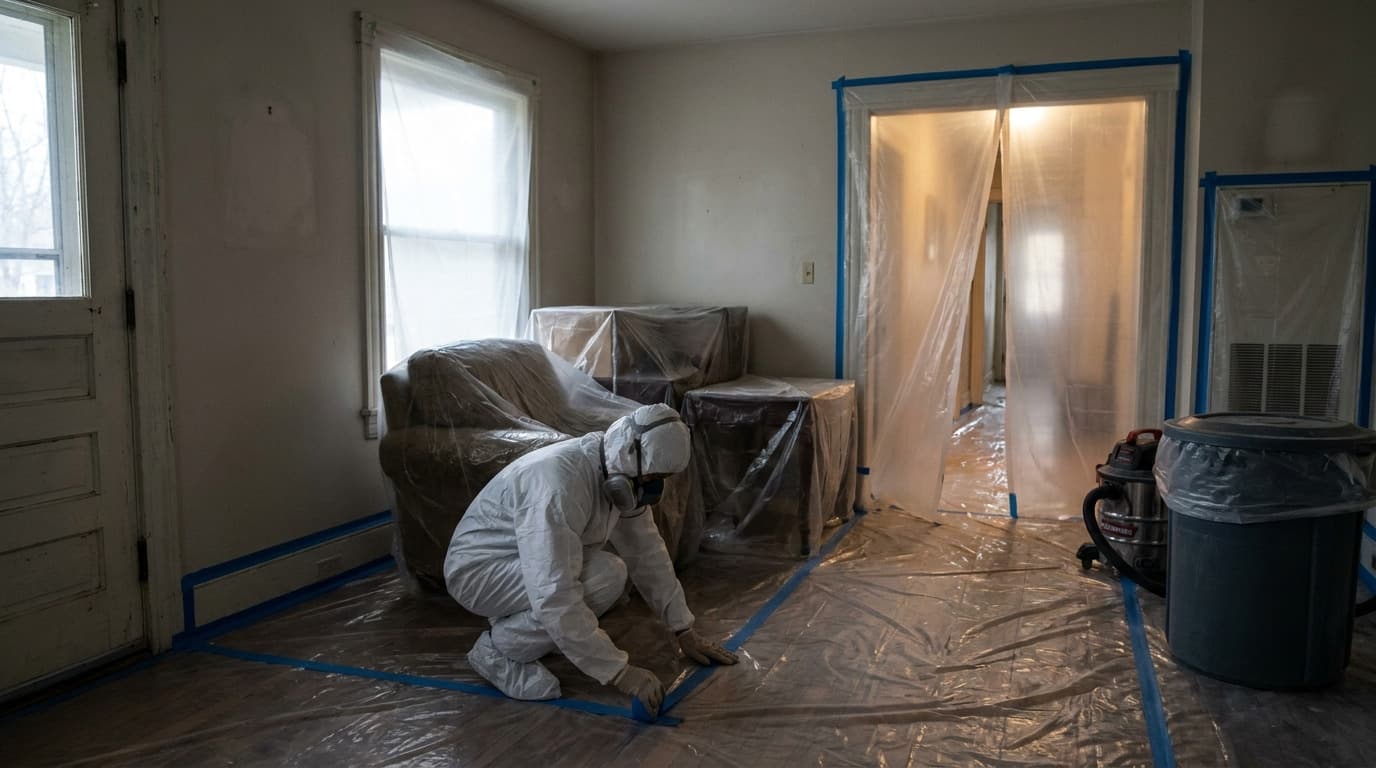
Use HEPA-shrouded tools and HEPA vacuums, never a household vacuum, and never dry sweep.
Keep occupants out of the work area, particularly children and anyone pregnant.
Clean properly and verify, rather than declaring it finished because it looks tidy.
Change and wash separately. No work clothing in the vehicle cab or the family wash.
And if you find unexpected paint in unexpected condition, stop and ask. Nobody is expected to identify lead by eye.
Before you start#
- Confirm the age of the building, and whether pre-1978 applies.
- Confirm whether the property is target housing or a child-occupied facility.
- Confirm whether testing has been done, or whether you are working on the presumption.
- Confirm the firm is certified and who the certified renovator on this job is.
- Confirm the "Renovate Right" pamphlet has been provided and recorded.
- Confirm the disturbed area against the 6 square foot interior and 20 square foot exterior triggers.
- Confirm no prohibited practice is planned — open flame, unshrouded power sanding, heat gun over 1100°F.
- Confirm how you will change, wash and keep dust out of your vehicle and home.
Talk it over#
- How old is this building, and how do you know?
- Which surfaces here have been painted and repainted the most?
- Do you know who the certified renovator is on this job?
- What would you do differently today if you knew this paint had lead in it?
The bottom line#
Two agencies regulate the same paint and complying with one does not comply with the other — OSHA's 1926.62 protects the worker, EPA's RRP rule at 40 CFR Part 745 Subpart E protects the occupant. Start from the date: lead-based paint was banned from housing in 1978, so treat every painted surface in a pre-1978 building as lead until testing says otherwise, with windows, doors, stairs, railings, porches and trim the priority and friction and impact surfaces the worst. The RRP rule covers anyone paid to disturb paint in pre-1978 target housing and child-occupied facilities — not just painters but carpenters, plumbers, electricians, HVAC and maintenance staff — and requires firm certification, certified renovators, the "Renovate Right" pamphlet before work begins, and lead-safe work practices under 745.85. The threshold is more than 6 square feet interior in a room or 20 square feet exterior, with window replacement and demolition triggering regardless of area. Prohibited or restricted: open-flame burning or torching, machine sanding, grinding, planing, needle gunning or blasting without HEPA shroud or vacuum, and heat guns above 1100°F — and in practice dry sweeping, dry scraping and household vacuums do as much damage. Finally, take-home dust is where this stops being a jobsite problem: it travels on clothing, boots, hair and vehicle seats to the children most vulnerable to it.
Frequently asked questions about lead paint#
How do I know if paint contains lead?
By the date, until it is tested. Lead-based paint was banned from housing in 1978, so any painted surface in a pre-1978 building should be treated as containing lead until an XRF reading or a laboratory paint-chip analysis says otherwise. Working on the presumption is entirely legitimate — it simply means working to the full requirements.
What is the EPA RRP rule and who does it cover?
The Renovation, Repair and Painting rule at 40 CFR Part 745, Subpart E, fully in force since 22 April 2010. It covers anyone paid to perform work disturbing painted surfaces in target housing built before 1978 and in child-occupied facilities — buildings where children under six are regularly present. It reaches remodelers, carpenters, plumbers, electricians, HVAC installers, window fitters, maintenance staff and sole proprietors, not just painters.
What is the square footage trigger?
The rule bites where work disturbs more than 6 square feet of interior surface in a room or more than 20 square feet of exterior surface. Below that, and with no window replacement and no demolition, work may fall within the minor repair and maintenance exemption. Note that window replacement and demolition trigger the rule regardless of area — and that six square feet is only about a metre square.
Which work practices are prohibited?
Open-flame burning or torching of painted surfaces; machine sanding, grinding, planing, needle gunning or blasting without a HEPA-filtered shroud or vacuum attachment; and heat guns above 1100°F. In practice, dry sweeping, dry scraping and household vacuums spread just as much lead dust even though they are not on the prohibited list.
Does being OSHA-compliant mean I am RRP-compliant?
No, and this is the most common and most expensive misunderstanding. 1926.62 governs the worker's exposure — limits, monitoring, blood lead, hygiene. The RRP rule governs the occupant's protection — firm certification, certified renovators, notification, containment and cleaning verification. A crew can satisfy every OSHA requirement and still be in violation before work starts, for want of a certification.
Who needs to be certified?
Both the firm and an individual. The firm must be EPA- or state-certified and cannot advertise or perform covered work without it. The work must be directed by a certified renovator trained by an EPA-accredited provider, who can then train other workers on the job in lead-safe practices. Some states and tribes run their own authorised programmes, so check which applies where you are working.
Why does take-home lead matter so much?
Because of who it reaches. Lead dust travels on clothing, boots, hair, tools and vehicle seats, and young children are the most vulnerable group there is — the same group the RRP rule exists to protect. Changing and washing at work, keeping work clothing out of the vehicle cab, and never putting coveralls through the family laundry are the controls that stop a jobsite hazard becoming a household one.
Download the lead paint awareness toolbox talk PDF#
Get this lead paint awareness toolbox talk as a print-ready PDF — available in English, Spanish, Portuguese, and Turkish. Print it, hand it to the crew, and collect signatures on the included attendance sheet.
Download the PDF — free account required. New members get 3 free downloads.
Related toolbox talks#
Sources#
- EPA, Lead Renovation, Repair and Painting Program: https://www.epa.gov/lead/lead-renovation-repair-and-painting-program
- EPA, Renovation, Repair and Painting Program: Contractors: https://www.epa.gov/lead/renovation-repair-and-painting-program-contractors
- OSHA, 29 CFR 1926.62 — Lead: https://www.osha.gov/laws-regs/regulations/standardnumber/1926/1926.62
This talk summarises published regulation for training purposes and is not legal advice. Lead exposure is a medical matter — anyone concerned about their own or a family member's exposure should speak to a physician, and blood lead testing should be arranged through the employer's medical surveillance programme where one applies.
Written by FieldSafetyTalk's safety professional — a CSP, ASP, CHST and OSHA Authorized Outreach Trainer with 14+ years of international construction safety experience across federal, heavy civil, and industrial projects.