Pre-Task Planning
Updated 2026-08-06
In this bundle Jobsite Fundamentals & Compliance
Print-ready PDF
Download this talk as a print-ready PDF, available in 4 languages.
Most crews have filled one of these out — a card or a tablet screen, five minutes at the gang box before the tools come out — and most have watched it turn into a signature exercise, because the same four hazards get written down every morning and nothing comes of it. That is not a discipline problem. It is a misunderstanding about what the document is for. This Pre-Task Planning Toolbox Talk (Safety Talk / Tailgate Talk) is about what a pre-task plan can actually find, and why doing it properly produces a different answer most days.
Here is the distinction that carries this whole talk: a pre-task plan is not there to find the hazards of the job. Those were already found, before you arrived, by people with more time and more information than you have at seven in the morning. The hazard analysis for this activity was written for a job type: these steps, these tools, these predictable exposures. What no advance document can contain is the state of the site on the day — who else turned up, what the weather did overnight, which tool got substituted, which sequence slipped, which control somebody removed and did not put back. Those all arrive after it is finished. So the only hazard information a pre-task plan can add is what changed. It is a change detector, not a hazard list — and a change detector that returns the same answer every day is not passing, it is broken.
Where the boundary of this talk sits#
The job hazard analysis talk owns the document itself: breaking a job into steps, ranking which jobs get analysed first, and the fact that no construction standard requires a JHA by name. The situational awareness talk owns what happens inside one person's head while the work runs. The stop work authority talk owns the legal position when somebody halts a job. The near-miss talk owns what you do after something nearly went wrong. The human error talk owns why people do the wrong thing. This talk owns the fifteen minutes between the written plan and the first tool going in — the comparison between the job as approved and the job as it actually is this morning.
The rule that already says this, in writing#
On federal work this is not a matter of opinion. The Corps of Engineers safety manual, EM 385-1-1, sets out how activity hazard analyses are to be used, and the wording is worth reading slowly, because most sites do not run their AHAs this way.
An AHA is prepared before beginning each work activity, task or definable feature of work. Each step gets a Risk Assessment Code (RAC) applied to the residual risk — what is left after the controls — and the RAC for the activity as a whole cannot be lower than the highest step. Work does not begin until that AHA has been accepted by the Government Designated Authority and discussed with everyone engaged in the activity, including subcontractors, at the preparatory and initial control phase meetings.
Then comes the part that gets skipped. The manual states that AHAs are intended to be developed and used by the field crews and workers performing the work, that they are living documents, and that they are intended to be created in the field and updated by the workers as needed. It requires them to be reviewed and modified as necessary to address changing site conditions, operations, or a change of competent or qualified person. And it requires that workers and crews shall have in their possession the current AHA that reflects current site conditions, personnel, equipment and control measures while the work is being performed.
Read that last requirement literally. Not the AHA accepted in March — the one reflecting current conditions, personnel and equipment. If the crew changed and the document did not, the crew is not carrying what the manual asks for. The pre-task plan is the mechanism that keeps that sentence true from one day to the next. The manual also treats JSAs and JHAs as acceptable substitutes where the data collected is the same, so the name on your form is not the point; what it is required to do is.
The one test that decides what happens next#
Most pre-task briefings have no decision rule. Somebody names a hazard, everybody nods, work starts. EM 385-1-1 supplies a rule, and it is sharper than what most sites use:
- If a change made in the field increases the initial RAC, the AHA is resubmitted for acceptance before work proceeds.
- If the change does not increase the RAC, it is updated in the field and no resubmission is required.
That converts a vague conversation into a question with two possible answers. Not is this hazardous — everything on a construction site is hazardous. The question is: does what changed make the residual risk higher than the version somebody already accepted? If yes, you are outside the approved plan and the work waits for someone with authority to accept the new risk. If no, you write it on the plan, tell the crew, and go.
That test is the useful one off federal work too. Sites that ask "is it safe?" get an argument; sites that ask "is it riskier than the version we agreed?" get an answer, usually within a minute.
What actually changes between the plan and the day#
If the plan is a change detector, the crew needs to know which categories to sweep. Four cover most of it.
The people. A different operator, a new hire two days on site, a competent person who is off today. The manual names a change of competent or qualified person as a trigger to review the AHA, and a new one added to the list has to acknowledge in writing that they have reviewed it and are familiar with current site safety issues.
The conditions. Rain overnight, ground softened under an outrigger pad, ice, wind, heat, light. The plan was written against the conditions someone imagined.
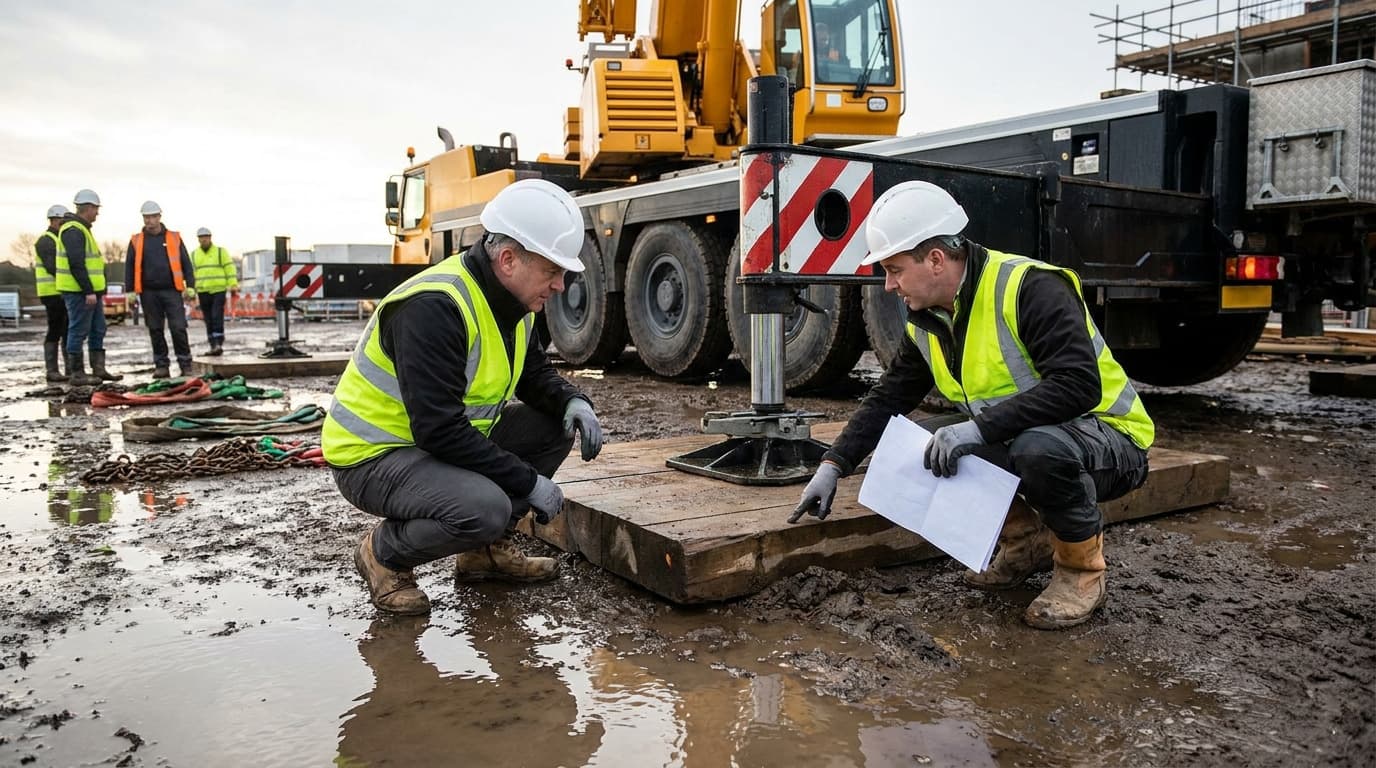
The sequence. Work that was supposed to happen before yours did not. The scaffold went up but was not tagged. The isolation was pulled early. The delivery came late, so material is standing where the exclusion zone was meant to go.
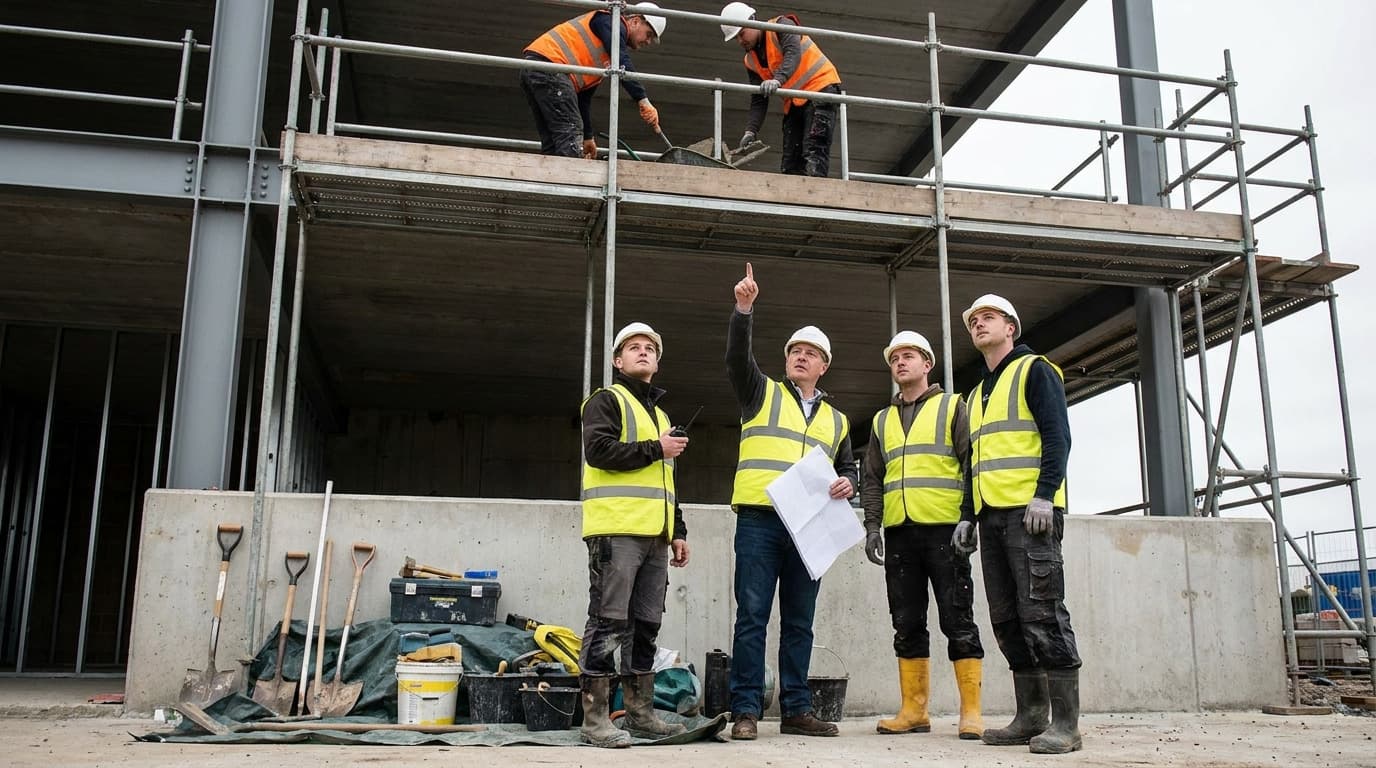
The neighbours. The category most plans miss entirely, because it sits outside your own work: somebody else is now overhead, below you, or occupying the route you planned to walk material along. Your own hazards were foreseeable to you; another trade's schedule was not, and the interaction between two safe activities is covered by neither activity's analysis.
Why yesterday's card is the failure mode#
Copying forward is not only laziness. It is what happens when a form is treated as a record instead of a check: if the purpose is to prove a conversation happened, the fastest way to satisfy it is to write what you wrote yesterday — and nothing about the form tells you that you have stopped looking.
That gives supervisors an unusually clean diagnostic. Pull the last ten pre-task plans for one crew. If they are substantively identical, the control is not working, and insisting on completion will not fix it — because they are being completed. A crew that genuinely swept the four categories produces different answers, because sites do not stay the same for ten days. Sameness is the symptom, and the corrective action is not "fill it in properly" but changing the question the form asks: from list the hazards of this task to what is different today from the last time we did this.
Where the duty sits#
No OSHA construction standard requires a pre-task plan by name, just as none requires a JHA by name. The duties it discharges are general, but real.
29 CFR 1926.20(b)(1) makes the employer responsible for initiating and maintaining the programs necessary to comply with Part 1926. 1926.20(b)(2) requires those programs to provide for frequent and regular inspections of the job sites, materials, and equipment by competent persons designated by the employer — and a daily look at the workface by the person supervising the work is the most frequent and regular inspection a site has. 1926.21(b)(2) requires the employer to instruct each employee in the recognition and avoidance of unsafe conditions and the regulations applicable to his work environment; the conditions to be recognised are today's, not the ones covered in a classroom last year.
1926.32(f) matters more than it looks: a competent person is capable of identifying existing and predictable hazards and has authorization to take prompt corrective measures to eliminate them. Both halves. A briefing run by somebody who can identify a problem but cannot fix, stop or escalate it is a report, not a control.
Section 5(a)(1) of the OSH Act turns on recognised hazards, so a change written on a plan is recognised from that moment. That cuts both ways, and it should — it is why the plan has to produce an action, not just an entry. On contract work, EM 385-1-1 safety meetings run at least monthly for supervisors and at least weekly for all workers, documented with date, attendance, subjects and who conducted them; the weekly meeting is not a substitute for the daily comparison, because a week is long enough for everything in the four categories to change twice.
What can go wrong?#
- The plan lists generic hazards true on day one and every day since, so nothing on it is news.
- A change that raises the risk is noticed, discussed and then absorbed, because nobody knew that raising the risk is the trigger to stop and get acceptance.
- The crew changes and the document does not, leaving workers on a plan written for people who are not there.
- Another trade's work is not swept, so two individually safe activities meet over somebody's head.
- The briefing is a monologue, signed by people who were not listening or were listening in a language they do not work in.
- A hazard is identified and the plan stops there, with no control, no owner and no time.
How do we manage this properly?#
- Hold it at the workface, not in the trailer, and after you have looked at the area — half the changes are visible only from where the work will happen.
- Start from the accepted analysis, in hand. You are comparing against it, so you need it there.
- Sweep the four categories out loud: people, conditions, sequence, neighbours.
- Apply the one test to each change: does this raise the residual risk above the version that was accepted? Higher, and the work waits for acceptance; not higher, record it and proceed.
- Give every hazard a control, a named person and a time. A hazard with no owner is a note.
- Write the changes on the plan the crew carries, so the document in their possession reflects the site they are standing on.
- Ask for input by name and wait. The operator and the labourer see different parts of the same job.
- Walk anyone who arrived since the last briefing through it, rather than handing it to them.
Before you start#
- Confirm you have the current accepted analysis for this activity, not a copy of an older revision.
- Confirm who is on the crew today and who was not here yesterday.
- Confirm the competent person for this activity is on site and available.
- Confirm what other trades are working above, below or across your route.
- Confirm the conditions the plan assumed — ground, weather, light, access — still hold.
- Confirm the controls named in the plan physically exist in the area right now.
- Confirm everyone can follow the briefing in a language they work in.
- Confirm who has authority to accept an increase in risk, and how you reach them today.
Talk it over#
- What is different about this job today compared with the last time we did it?
- Who is working above us or below us right now, and does their plan know about ours?
- When was the last time this crew's pre-task plan said something new?
- If something changed halfway through the shift, who here would stop and update the plan?
The bottom line#
A pre-task plan is not a hazard list, it is a change detector. The hazards intrinsic to the activity were identified in advance in the AHA, JHA or JSA by people with more time and information than the crew has at the gang box; what no advance document can contain is the state of the site today, so the only information the pre-task plan can add is what changed. EM 385-1-1 already says this: AHAs are living documents, intended to be created in the field and updated by the workers as needed, reviewed and modified to address changing site conditions, operations or a change of competent or qualified person, and crews shall have in their possession the current AHA reflecting current site conditions, personnel, equipment and control measures while the work is being performed. It also supplies the decision rule the daily briefing usually lacks: if a field change increases the initial RAC, the analysis is resubmitted for acceptance before work proceeds; if it does not, it is updated in the field. So the question is not is this hazardous but is it riskier than the version somebody already accepted. Sweep four categories — people, conditions, sequence, neighbours — and remember that the fourth is the one your own analysis was never going to cover, because another trade's schedule was not foreseeable to you. The duties are general but real: 1926.20(b)(1) programs, 1926.20(b)(2) frequent and regular inspections by competent persons, 1926.21(b)(2) instruction in the recognition and avoidance of unsafe conditions, 1926.32(f) competence that includes authorization to take prompt corrective measures, and 5(a)(1), which turns on recognised hazards — so writing one down starts a clock. And the diagnostic worth running this week: ten identical cards in a row do not mean the site is stable, they mean the check has stopped working.
Frequently asked questions about pre-task planning#
Is a pre-task plan the same thing as a JHA?
No. The JHA, JSA or AHA analyses the activity in advance and is the approved baseline; the pre-task plan is the daily comparison of that baseline against today's site. One is written for a job type, the other for a day. EM 385-1-1 treats JSAs and JHAs as acceptable substitutes for the AHA where the data collected is the same — but nothing substitutes for the daily check.
Does OSHA require a pre-task plan?
No construction standard requires one by name. The duties it discharges are general: 1926.20(b)(1) and (b)(2), 1926.21(b)(2), and Section 5(a)(1). On federal contract work it is far more specific, because EM 385-1-1 requires the crew to hold a current analysis reflecting current conditions while the work is performed.
What if the crew finds something the analysis never covered?
Apply the test. If it raises the residual risk above the accepted version, work waits until someone with authority to accept that risk has done so; if it does not, record it, brief it and proceed. Either way it goes in writing on the document the crew carries.
How long should a pre-task briefing take?
Long enough to compare the plan against the site and reach a decision. If it consistently takes two minutes and produces the same output, it is not being done — it is being recorded.
Who should lead it?
Whoever will supervise the work, with the crew contributing. EM 385-1-1 is explicit that these analyses are intended to be developed and used by the field crews and workers performing the work, and under 1926.32(f) the person leading needs authority to take prompt corrective measures, not just the ability to spot a problem.
Our cards look identical every day. Is that a problem?
It is the clearest signal available that the control has stopped working. People, weather, sequence and neighbouring trades all move. If ten consecutive plans say the same thing, the crew has stopped comparing and started copying — and the fix is to change the question the form asks, not to insist harder on completion.
Do we need a new plan if the work changes mid-shift?
Yes, if the change matters. The document in the crew's possession has to reflect current conditions, personnel, equipment and controls while the work is being performed — a continuous requirement, not a morning one. If the change raises the risk above what was accepted, stop and get it accepted.
Download the pre-task planning toolbox talk PDF#
Get this pre-task planning toolbox talk as a print-ready PDF — available in English, Spanish, Portuguese, and Turkish. Print it, hand it to the crew, and collect signatures on the included attendance sheet.
Download the PDF — free account required. New members get 3 free downloads.
Related toolbox talks#
Sources#
- OSHA, 29 CFR 1926.20 — General safety and health provisions: https://www.ecfr.gov/current/title-29/subtitle-B/chapter-XVII/part-1926/subpart-C/section-1926.20
- OSHA, 29 CFR 1926.21 — Safety training and education: https://www.ecfr.gov/current/title-29/subtitle-B/chapter-XVII/part-1926/subpart-C/section-1926.21
- U.S. Army Corps of Engineers, EM 385-1-1, Section 1 — Program Management: https://www.usace.army.mil/Portals/2/docs/Safety/EM385-1-1%20Section%201FINAL.pdf
This talk is general awareness guidance for training purposes. It does not replace your employer's hazard analysis procedure, contract requirements or permit systems, and it does not authorise anyone to accept risk on behalf of a project. Where a contract specifies a format, acceptance route or approval authority, that contract governs.
Written by FieldSafetyTalk's safety professional — a CSP, ASP, CHST and OSHA Authorized Outreach Trainer with 14+ years of international construction safety experience across federal, heavy civil, and industrial projects.