Energized vs De-Energized Work
Updated 2026-07-24
In this bundle Electrical Safety
Print-ready PDF
Download this talk as a print-ready PDF, available in 4 languages.
Everyone knows live work is allowed "if de-energizing creates a greater hazard." Almost nobody has read what OSHA means by that. The agency gives four examples, and once you see them the argument on site usually ends — because every one of them is about creating a hazard for somebody else, and none of them is about the job being harder. This energized vs de-energized work talk is about the decision that happens before any of the electrical controls we have already covered.
Here is the distinction that carries this whole talk: lockout, testing, PPE and arc flash are all answers to the question how do we do this safely. This one is the question that comes first — should this circuit be live at all while someone's hands are near it? Get that answer wrong and everything downstream is damage limitation.
What does de-energized mean?#
De-energized means the circuit has been disconnected from every source of electrical energy — not simply switched off at a control. In construction, 29 CFR 1926.416(a)(1) requires that a worker be protected by de-energising the circuit and grounding it, or by guarding it effectively; grounding is part of the protection, not an optional extra. The general industry rule at 29 CFR 1910.333(a)(1) requires live parts to be de-energized before work on or near them, unless the employer can demonstrate that doing so introduces additional or increased hazards, or is infeasible due to equipment design or operational limitations.
The four examples#
29 CFR 1910.333(a)(1) states the rule and then, in a Note, gives OSHA's own examples of what an acceptable justification looks like:
Live parts to which an employee may be exposed shall be deenergized before the employee works on or near them, unless the employer can demonstrate that deenergizing introduces additional or increased hazards or is infeasible due to equipment design or operational limitations.
Note 1: Examples of increased or additional hazards include interruption of life support equipment, deactivation of emergency alarm systems, shutdown of hazardous location ventilation equipment, or removal of illumination for an area.
Read that list again:
- Interruption of life support equipment
- Deactivation of emergency alarm systems
- Shutdown of hazardous location ventilation equipment
- Removal of illumination for an area
Every single one is a hazard created for other people by the power going off. Somebody on a ventilator. An alarm that will not sound. A hazardous location filling with vapour. A space plunged into darkness.
Not one of them is about the electrician. Not "the job takes longer." Not "the client will not authorise a shutdown." Not "we would have to come back at the weekend." Those are commercial problems, and OSHA's list does not contain a commercial problem.
There is a further point worth making about even these four. Life support, emergency alarms and area lighting are generally required by other codes to have backup systems — which makes it genuinely difficult to argue that switching off a single circuit interrupts them at all. The exception is narrow by design, and narrower still in practice.
Infeasible means the work cannot be done, not that it is inconvenient#
The second route is infeasibility due to equipment design or operational limitations, and OSHA gives examples for that too:
Note 2: Examples of work that may be performed on or near energized circuit parts because of infeasibility include testing of electric circuits that can only be performed with the circuit energized, and work on circuits that form an integral part of a continuous industrial process in a chemical plant that would otherwise need to be completely shut down.
Testing and troubleshooting is the honest, common case. You cannot measure voltage on a dead circuit; diagnosis frequently requires the circuit live. That is legitimate infeasibility — and it is important to be clear that this justifies the circuit being live, not the absence of protection. A qualified person, a risk assessment, correct arc-rated clothing and insulated tools are all still required.
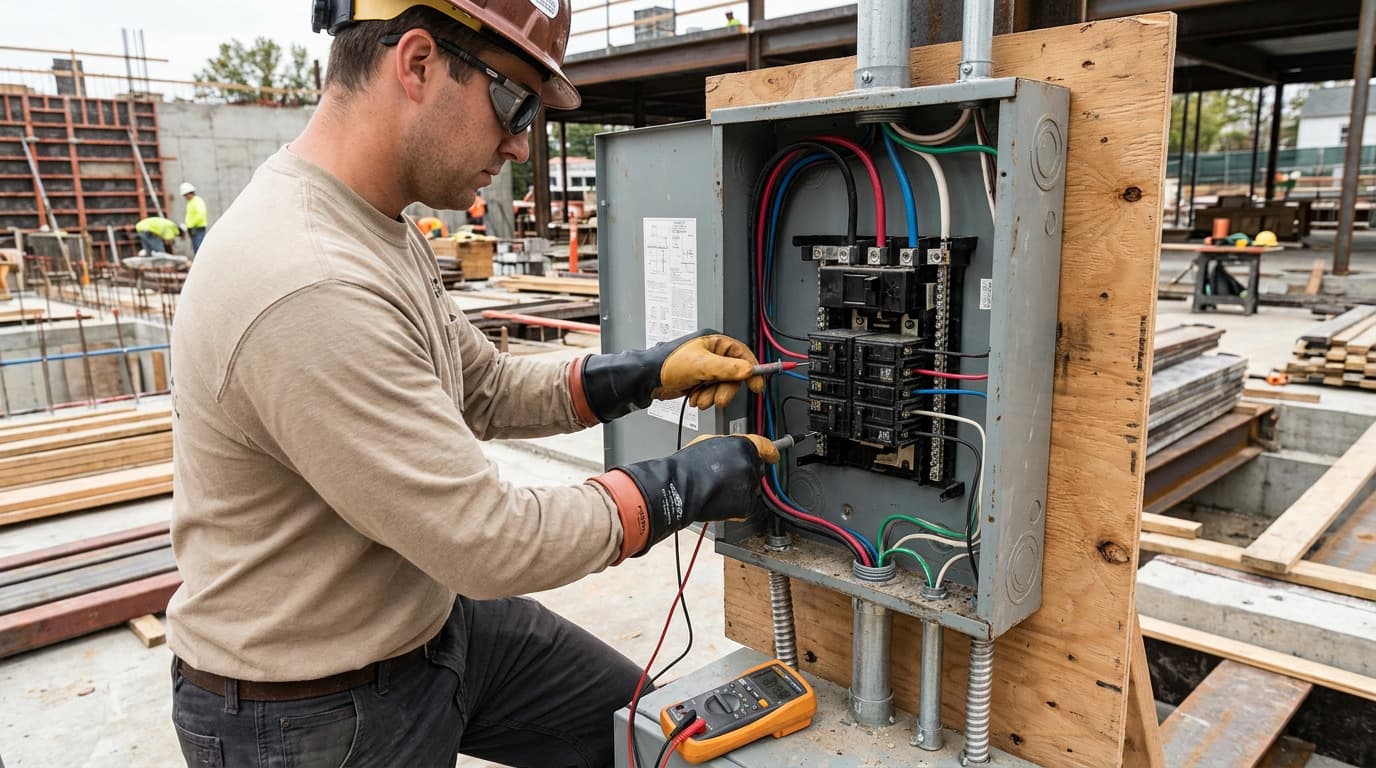
What it does not justify is what usually follows: having diagnosed the fault with the circuit live, carrying on to repair it live because everything is already open.
Construction's rule is worded differently#
Being straight about this, because the two are often quoted interchangeably. 1910.333 is a general industry standard. Construction's governing provision is 29 CFR 1926.416(a)(1), and it is framed as a duty rather than an exception:
No employer shall permit an employee to work in such proximity to any part of an electric power circuit that the employee could contact the electric power circuit in the course of work, unless the employee is protected against electric shock by deenergizing the circuit and grounding it or by guarding it effectively by insulation or other means.
Two things follow. First, the construction rule requires de-energising and grounding, not just switching off — grounding is part of the protection, not an optional extra. Second, the alternative it offers is effective guarding by insulation or other means, not "an energised work permit." The permit framework, the arc flash risk assessment and the approach boundaries come from NFPA 70E, which is a consensus standard rather than a regulation — but is widely adopted through contract, insurance, and as the recognised industry practice OSHA measures against under the General Duty Clause.
The practical position on a construction site is unchanged: de-energise, ground, verify. Live work is exceptional, needs a documented justification that would survive being read out loud, and needs a qualified person with the right protection.
The 50-volt rule, and the half nobody quotes#
This one causes real injuries. The standard says:
Live parts that operate at less than 50 volts to ground need not be deenergized — if there will be no increased exposure to electrical burns or to explosion due to electric arcs.
The first half is quoted constantly. The second half is a condition, and it is doing serious work. Low voltage does not mean low energy: a battery bank, a large DC system, or a control circuit fed from a high-fault-current source can produce a substantial arc even below 50 volts. The exemption applies to shock risk under specific conditions — it is not a general permission to work live on anything under 50 volts.
What can go wrong#
"Greater hazard" used to mean "greater inconvenience." The single most common failure, and OSHA's four examples answer it.
Production or client pressure driving the decision. The person who says no needs to be someone who can afford to.
Diagnosing live, then repairing live. The infeasibility justification ends when the testing does.
No written justification. If the reasoning was never recorded, it usually was not reasoning.
Live work by someone who is not a qualified person under the definition, on the basis that they have done it before.
The 50-volt exemption applied without its condition, on a system with high available fault current.
No arc flash risk assessment, so the PPE was chosen by habit rather than incident energy.
De-energised but not grounded, which 1926.416(a)(1) treats as part of the protection.
Guarding assumed rather than verified — a cover that does not fit, insulation that is damaged, a barrier that leaves a gap.
Nobody verified dead with a meter proved before and after.
Backfeed. The circuit was correctly opened at the board and re-energised from a generator, second supply, or UPS.
How do we decide?#
Start from de-energised as the default position, not as one of two equal options. That is how both standards are written.
Test the justification against OSHA's four examples. Life support, emergency alarms, hazardous location ventilation, area illumination. If your reason is not on that list and is not genuine testing infeasibility, the answer is de-energise.
Ask who is harmed by the shutdown. If the answer is "the programme," that is not the hazard the exception was written for.
Write it down, with a name against it. A justification that has to be signed is a justification that gets thought about.
Separate testing from repair. Diagnose live if you must; isolate before you work.
De-energise and ground — 1926.416(a)(1) treats grounding as part of the protection.
Verify dead with a meter proved on a known source before and after.
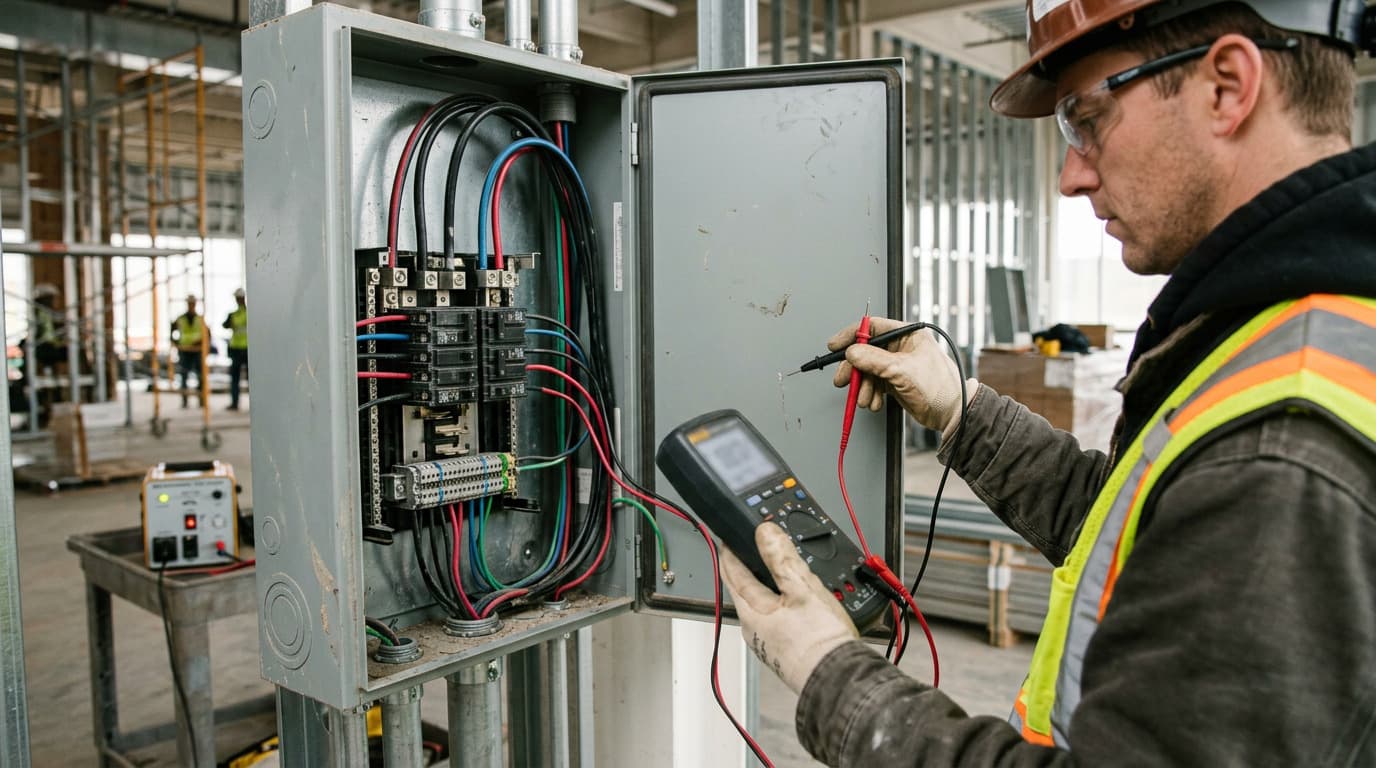
Where live work genuinely is justified: a qualified person, an arc flash risk assessment, arc-rated clothing selected on incident energy, insulated tools, a defined boundary, and a second person present.
Check for every source of supply, including generators, second feeds, UPS and PV.
Give people the standing to say no. The commercial pressure is real; the answer to it is that the decision belongs to a named competent person, not to whoever is holding the screwdriver.
Before you start#
- Confirm whether this task genuinely requires the circuit to be live.
- If it does, name which of OSHA's justifications applies — and be able to say it out loud.
- Confirm the justification is recorded, with a name and date.
- Confirm the person doing the work is a qualified person for this equipment.
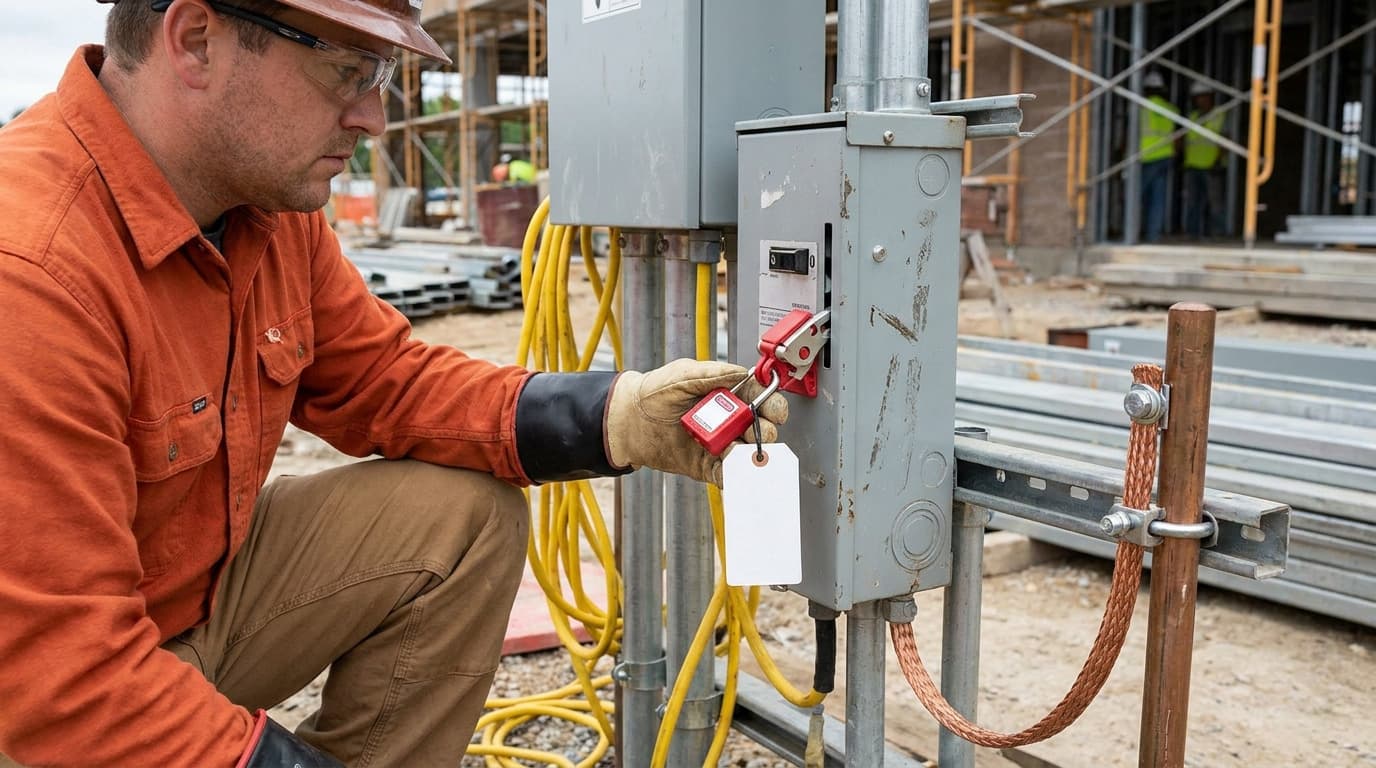
- If de-energising: isolate, lock, ground, and verify dead with a proved meter.
- Confirm every source is isolated, including generators, second feeds and UPS.
- If working live: confirm the arc flash risk assessment and the PPE it specifies.
- Confirm insulated tools, correct rating, in good condition.
- Confirm the boundary and who else is inside it.
- Agree in advance that testing live does not mean repairing live.
Talk it over#
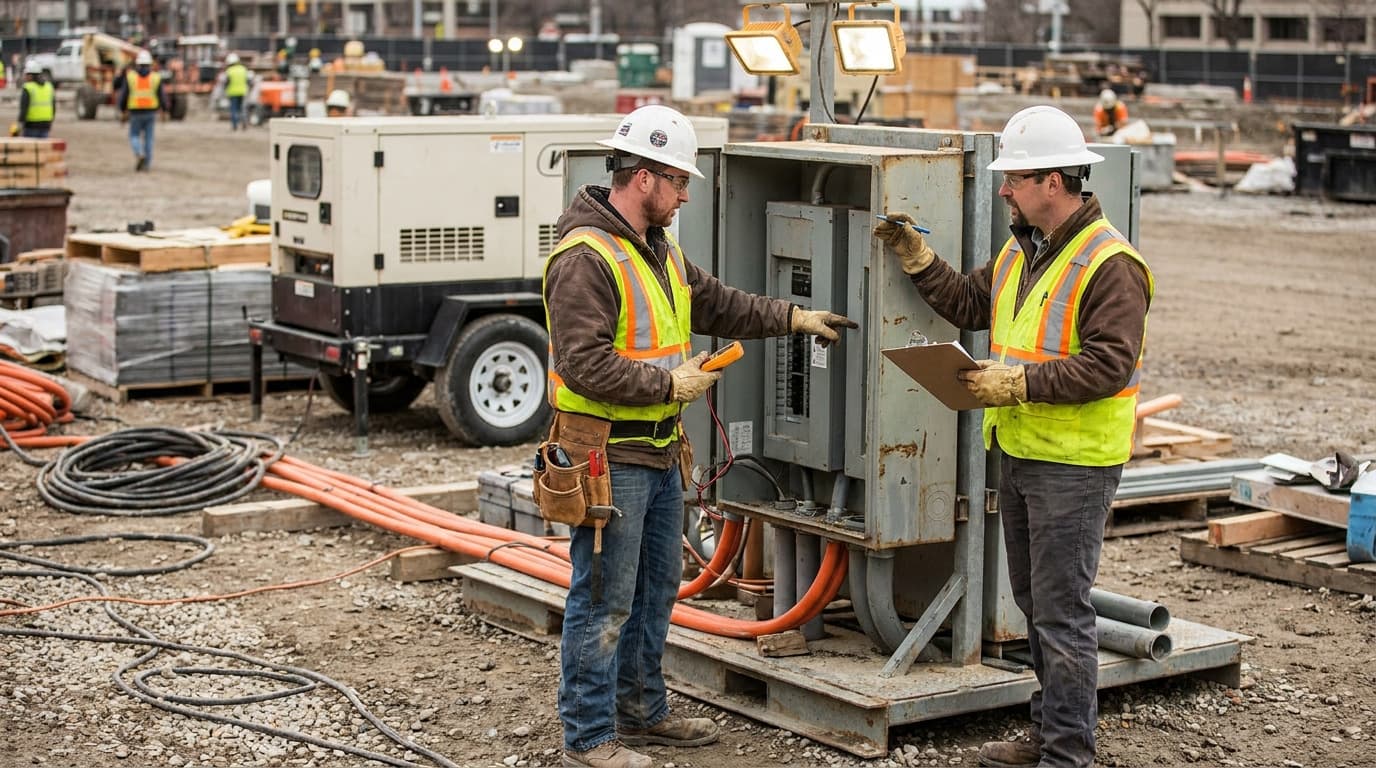
- What is the actual reason this circuit is staying live today?
- Does that reason appear on OSHA's list — or is it about the schedule?
- If you had to write your justification on a form with your name on it, would you still make the same call?
The bottom line#
De-energised is the default in both standards, and the exception is narrow. 1910.333(a)(1) permits live work only where de-energising introduces additional or increased hazards or is infeasible due to equipment design or operational limitations — and OSHA's own examples of the first are interruption of life support equipment, deactivation of emergency alarm systems, shutdown of hazardous location ventilation, or removal of illumination for an area. Every one is a hazard to somebody else; none is about the job being harder. Construction's 1926.416(a)(1) goes further in a different direction, requiring protection by de-energising and grounding, or effective guarding. And the under-50-volt exemption carries a condition — no increased exposure to electrical burns or to explosion due to electric arcs — that is quoted far less often than the number.
Frequently asked questions about energized work#
What does de-energized mean?
Disconnected from every source of electrical energy, not just switched off. In construction, 29 CFR 1926.416(a)(1) requires the circuit to be de-energised and grounded, or effectively guarded.
When does OSHA permit live electrical work?
Only in two circumstances. Under 29 CFR 1910.333(a)(1), live parts must be de-energised before an employee works on or near them unless the employer can demonstrate that de-energising introduces additional or increased hazards, or is infeasible due to equipment design or operational limitations. Both are exceptions the employer has to be able to demonstrate — the default is de-energised.
What counts as an "increased or additional hazard"?
OSHA gives four examples in a Note to the standard: interruption of life support equipment, deactivation of emergency alarm systems, shutdown of hazardous location ventilation equipment, or removal of illumination for an area. Each describes a hazard created for other people by the power going off. Schedule pressure, cost, and client reluctance to authorise a shutdown are not on the list.
Is troubleshooting live work permitted?
Generally yes, as an infeasibility case. OSHA's Note 2 gives testing of electric circuits that can only be performed with the circuit energized as an example of work that may be done energised because of infeasibility. That justifies the circuit being live for the diagnosis — it does not remove the need for a qualified person, a risk assessment, arc-rated PPE and insulated tools, and it does not extend to carrying on and repairing the fault live.
What does the construction standard say?
29 CFR 1926.416(a)(1) provides that no employer shall permit an employee to work in such proximity to any part of an electric power circuit that they could contact it in the course of work, unless the employee is protected against electric shock by de-energising the circuit and grounding it, or by guarding it effectively by insulation or other means. Note that construction requires de-energising and grounding, not simply switching off.
Is 50 volts always safe to work on live?
No, and the rule is conditional. The standard says live parts operating at less than 50 volts to ground need not be de-energised — if there will be no increased exposure to electrical burns or to explosion due to electric arcs. Low voltage does not mean low energy: systems with high available fault current, including battery banks and large DC installations, can produce a serious arc below 50 volts.
Is an energized work permit required by OSHA?
Not by name in the construction standard. The energised electrical work permit, the arc flash risk assessment and the approach boundaries come from NFPA 70E, a consensus standard rather than an OSHA regulation. It is nonetheless widely adopted through contract and insurance requirements, and represents the recognised industry practice against which employers may be measured under the General Duty Clause.
Who is allowed to perform energized work?
A qualified person — someone who has demonstrated skills and knowledge related to the construction and operation of the equipment and installations, and has received safety training to recognise and avoid the hazards involved. Having done the task before is not the same thing. Where live work is justified, the qualified person also needs the arc flash risk assessment, correctly rated arc protection, insulated tools and a defined boundary.
Download the energized work toolbox talk PDF#
Get this energized vs de-energized work toolbox talk as a print-ready PDF — available in English, Spanish, Portuguese, and Turkish. Print it, hand it to the crew, and collect signatures on the included attendance sheet.
Download the PDF — free account required. New members get 3 free downloads.
Related toolbox talks#
Sources#
- OSHA, 29 CFR 1926.416 — General requirements (electrical safety-related work practices): https://www.osha.gov/laws-regs/regulations/standardnumber/1926/1926.416
- OSHA, 29 CFR 1910.333 — Selection and use of work practices: https://www.osha.gov/laws-regs/regulations/standardnumber/1910/1910.333
- OSHA, 29 CFR 1926.417 — Lockout and tagging of circuits: https://www.osha.gov/laws-regs/regulations/standardnumber/1926/1926.417