Electrical Safety
Updated 2026-07-23
In this bundle Electrical Safety
Working in Washington? See the WA DOSH edition → Washington (WA DOSH)
Print-ready PDF
Download this talk as a print-ready PDF, available in 4 languages.
Electricity does not give you a second chance and it does not give you a warning. There is no smell, no sound, and no visible difference between a dead conductor and one that will stop your heart. This electrical safety talk is about the discipline that stands between your crew and that invisible line: proving a circuit is dead before you touch it, and keeping it dead while you work.
Here is the distinction that carries this whole talk: with almost every other hazard on this site, you can see the danger. You can see the edge, the trench wall, the swinging load. Electrical energy is the one hazard that looks exactly the same whether it is going to kill you or not. So electrical safety is never about judgment or care in the moment — it is about verification. You do not assume a circuit is de-energized. You do not trust a label, a breaker position, or someone's word. You test it, with a meter you proved works, and you lock it so nobody can bring it back while your hands are inside.
How dangerous is electrical work in construction?#
Electricity kills a consistent number of workers every year, and the pattern in the data is the part crews get wrong. According to the Electrical Safety Foundation International, which compiles BLS and OSHA data, there were 1,940 workplace fatalities involving electricity between 2011 and 2023 — an average of roughly 150 electrical deaths per year (ESFI, 2011–2023 dataset).
Here is the figure that should change how this talk lands: 74 percent of workplace electrical fatalities occurred in non-electrical occupations (ESFI). The people dying are overwhelmingly not electricians. They are labourers, operators, carpenters, and painters who contacted energized equipment while doing something else.
Non-fatal injuries are rising. BLS biennial data shows 5,180 electrical injuries involving days away from work across 2023 and 2024 combined — a 59 percent increase over the previous two-year period — with a median of 10 days away from work (ESFI, citing BLS). The construction industry records the highest number of electrical fatalities of any sector, at a rate of 0.73 per 100,000 workers (ESFI, 2011–2024).
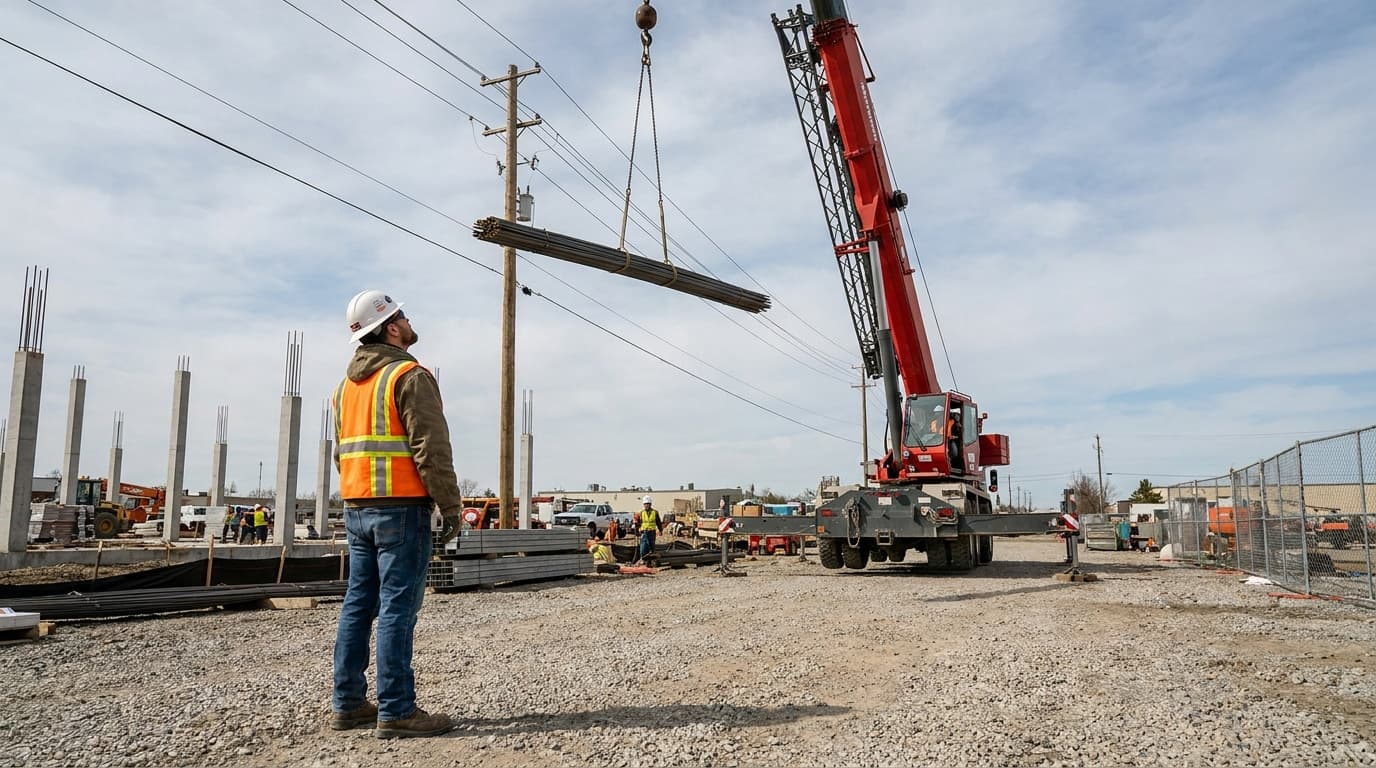
And the leading cause is not what most crews expect. According to ESFI, most workplace electrical fatalities result from accidental contact with overhead power lines — not from panels, not from tools.
OSHA electrical safety requirements (29 CFR 1926 Subpart K)#
Construction electrical safety is governed by 29 CFR 1926 Subpart K, sections 1926.400 through 1926.449, supported by consensus standard NFPA 70E for arc flash and energized work practice.
Work practices — 1926.416:
- No employee may work near any part of an electric power circuit unless protected by de-energizing and grounding, or by effective insulation.
- The employer must determine the location of energized lines and circuits before work begins.
- Employees may not work in such proximity that they could contact energized parts in the course of their work or with any tool or material they are handling.
Equipment and cords — 1926.416(e) and 1926.405:
- Worn or frayed cords must not be used. Flexible cords must be protected from damage and not run through doors, windows, or holes.
- Cords may not be fastened with staples or hung in a way that damages the outer jacket.
Ground-fault protection — 1926.404(b)(1):
- Employers must provide either GFCI protection on all 120-volt, single-phase, 15- and 20-ampere receptacle outlets not part of the permanent wiring, or an assured equipment grounding conductor program. In practice, GFCI is simpler and used almost universally.
Lockout and tagout — 1926.417:
- Controls that are to be deactivated during work must be tagged.
- Equipment or circuits that are de-energized must be rendered inoperative and tagged at all points where they can be energized.
Personal protective equipment — 1926.95 and 1926.416(a):
- Employees working where there is potential electrical hazard must be provided with and use PPE appropriate for the specific parts of the body to be protected and for the work performed.
On USACE and NAVFAC projects, EM 385-1-1 applies and is more restrictive in several places. In Brazil, NR-10 governs electrical work. Where multiple standards apply, the stricter requirement governs.
What can go wrong?#
The path matters more than the voltage. It takes far less current than most workers think — well under one amp across the chest can stop a heart. Hand to hand or hand to foot runs the current straight through your torso. The same contact that would be a nuisance shock on a dry day becomes fatal when you are sweating, standing in water, or gripping a grounded steel frame.
Mislabeled panels and second sources. Somebody opens a panel, flips the breaker they believe feeds the circuit, and starts working — but the panel was mislabeled, or the circuit was fed from a second source, and the conductor is still live.
Trusting a disconnect without testing. Somebody locks out a disconnect but never tests the conductors, so they never learn it did not open all the poles.
A dead meter reading zero. Somebody uses a meter without proving it first on a known live source, gets a zero reading from a dead meter, and treats a hot bus as safe.
Arc flash without contact. A fault inside energized gear releases an explosive burst of heat and pressure — temperatures far hotter than the surface of the sun, molten metal, a pressure wave that throws people across a room. Dropping a tool into a live panel can trigger it. Cotton and polyester clothing ignites and keeps burning against the skin, which is why arc-rated clothing exists and synthetics are prohibited near energized work.
Everyday exposures that get no respect:
- Damaged extension cords with the ground pin snapped off
- Temporary power without GFCI, in wet conditions, feeding two-handed tools
- Cords run through doorways, across traffic paths, or through standing water
- Overhead power line contact from a crane boom, scaffold section, ladder, or dump bed
- Buried lines struck during excavation
- Unqualified workers doing electrical work because they were available
How do we prevent electrical injuries?#
Work de-energized. This is the governing rule. Under 1926.416 and NFPA 70E, live work is the rare exception — permitted only when de-energizing introduces a greater hazard or is genuinely infeasible, and it requires an energized work permit, a qualified person, and full arc-flash protection. "It is faster" is not a justification.
De-energizing properly means the full sequence, not part of it:
- Identify every source — including backfeeds, secondary feeds, generators, UPS systems, and stored energy in capacitors.
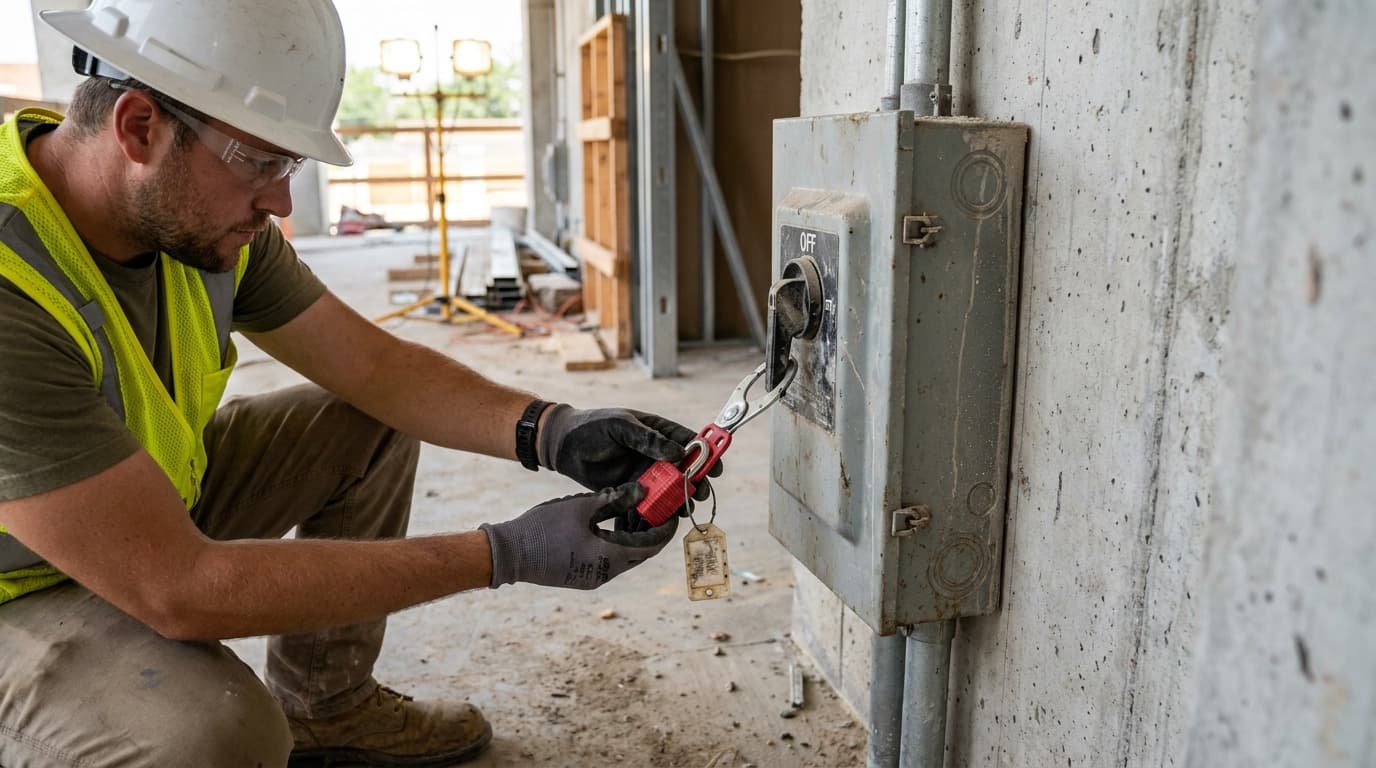
- Open the disconnects and visually confirm the blades are open where required.
- Lock and tag each disconnecting means per 1926.417. Every person working applies their own personal lock.
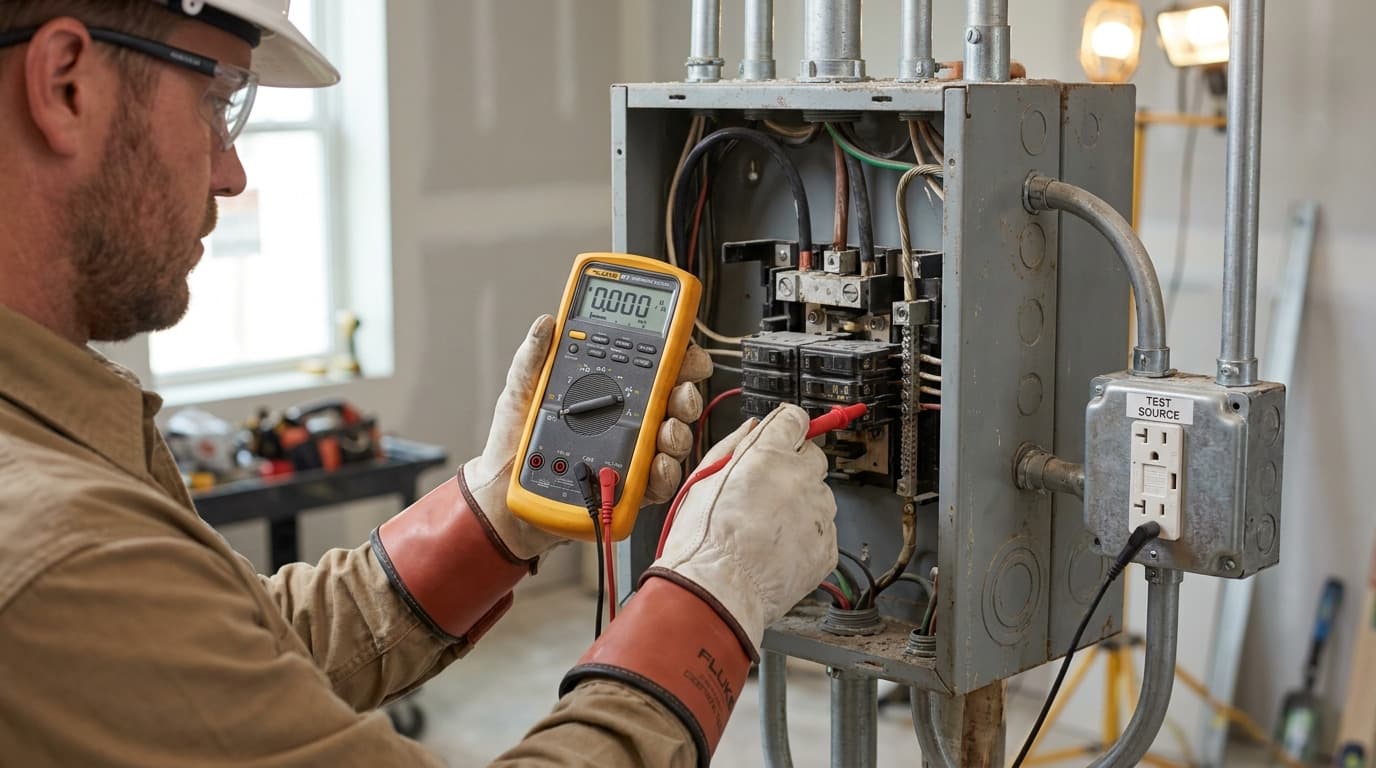
- Test for absence of voltage using the live-dead-live method: prove your meter on a known live source, test the conductors you are about to touch, then prove the meter again. If it died between checks, you find out before trusting a false zero.
- Ground where required on higher-voltage systems.
Qualified persons only. If you are not qualified for the task in front of you, say so and stop. Unqualified workers stay outside the approach boundaries.
Arc-rated PPE matched to the hazard. Selected from the arc-flash risk assessment or the equipment label — arc-rated clothing and hood, voltage-rated gloves with leather protectors within test date, face and hearing protection. No synthetics underneath.
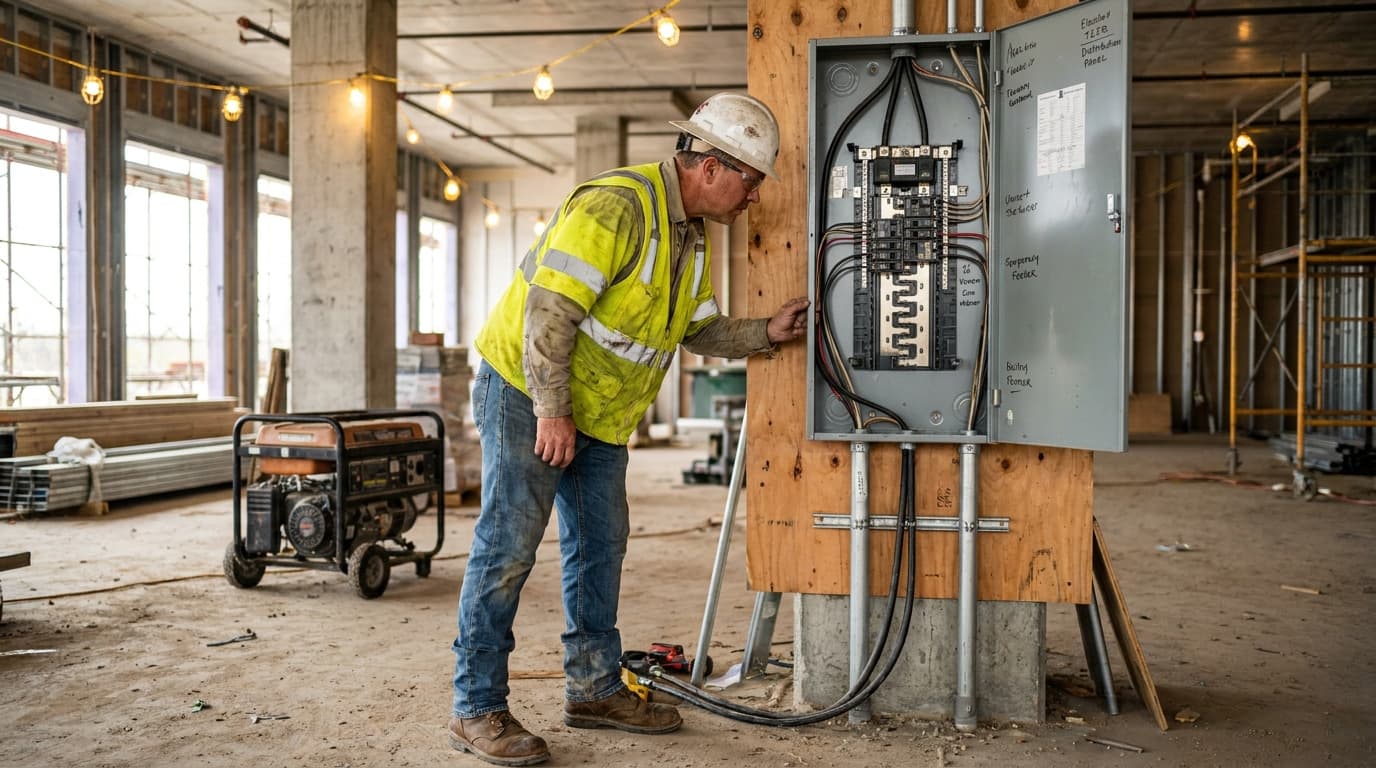
GFCI on all temporary power, plus cord inspection before every use. GFCI catches the damaged cord, the wet tool, and the pinched conductor before the current finds a worker.
Maintain clearance from overhead lines. Treat every line as energized. Use a spotter for equipment working near lines, and where work must happen close, get the line de-energized, relocated, or insulated by the utility in writing before you start.
Have a rescue plan that does not create a second victim. If someone is in contact with an energized conductor, do not grab them. De-energize the source first, then call for medical response and start CPR.
Before you start#
- Identify every energy source feeding this equipment, including backfeeds and stored energy.
- Confirm the work is authorized to be de-energized, and that a qualified person is doing it.
- Apply your own personal lock and tag to every disconnecting means.
- Test for absence of voltage using live-dead-live: prove the meter, test the conductor, prove the meter again.
- Inspect your PPE: voltage-rated gloves within test date, arc-rated clothing appropriate to the hazard, no synthetics underneath.
- Scan the area for overhead lines and confirm clearance for every piece of equipment, ladder, and length of material you will move.
- Confirm GFCI protection on all temporary power feeding your tools, and inspect every cord.
- Know who is CPR trained on this crew and where the nearest AED is.
Talk it over#
- Walk me through how you would prove the circuit in front of us is dead. What exactly would you test, and how would you know your meter is telling the truth?
- Look up right now — where are the overhead lines in this area, and what is the tallest thing we will be moving today?
- If one of us went down in contact with a live conductor, what is the first thing you do? What is the thing you must not do?
The bottom line#
Electrical energy is the one hazard on this site you cannot see, hear, or smell, so it is the one hazard where care is worthless and verification is everything. Work de-energized, lock it out with your own lock, and test with live-dead-live before you touch anything. Treat every overhead line as live, keep GFCI on all temporary power, and never let an unqualified worker inside the boundary. If you have not proved it is dead, it is live.
Frequently asked questions about electrical safety#
How much current does it take to kill a person?
Far less than most workers assume. Well under one amp across the chest can stop a heart, and current in the tens of milliamps can lock muscles so you cannot let go. The path matters more than the voltage — hand to hand or hand to foot drives current directly through the torso.
What is the live-dead-live test method?
You prove your meter on a known live source, test the conductors you are about to touch, then prove the meter on the known live source again. The second check catches a meter that died between readings. Without it, a dead meter produces a false zero that looks exactly like a safely de-energized circuit.
Who is most at risk of electrical fatalities on a construction site?
Not electricians. According to ESFI's analysis of BLS and OSHA data, 74 percent of workplace electrical fatalities occur in non-electrical occupations — labourers, operators, and other trades who contact energized equipment while doing something else. The most common cause is accidental contact with overhead power lines.
When is energized electrical work permitted?
Only when de-energizing introduces a greater hazard or is genuinely infeasible — not because it is faster or more convenient. Under 29 CFR 1926 Subpart K and NFPA 70E, it requires an energized work permit, a qualified person, an arc-flash risk assessment, and full arc-rated protection.
Why is arc flash dangerous if I never touch anything?
An arcing fault releases an explosive burst of heat, light, and pressure. Temperatures far exceed the surface of the sun, molten metal is ejected, and the pressure wave can throw a worker across a room and rupture eardrums. Dropping a tool into a live panel is enough to trigger it.
Does OSHA require GFCI on construction sites?
Under 29 CFR 1926.404(b)(1), employers must provide either GFCI protection on all 120-volt, single-phase, 15- and 20-ampere receptacle outlets not part of the permanent wiring, or an assured equipment grounding conductor program. GFCI is simpler, more reliable, and used almost universally.
What should I do if a coworker is in contact with a live conductor?
Do not touch them — you will become the second victim. De-energize the source first, or use a properly rated insulated means to separate them if de-energizing is impossible. Then call for medical response and begin CPR, which electrocution victims frequently need immediately.
Download the electrical safety toolbox talk PDF#
Get this electrical safety toolbox talk as a print-ready PDF — available in English, Spanish, Portuguese, and Turkish. Print it, hand it to the crew, and collect signatures on the included attendance sheet.
Download the PDF — free account required. New members get 3 free downloads.
Related toolbox talks#
Sources#
- OSHA, 29 CFR 1926 Subpart K — Electrical: https://www.osha.gov/laws-regs/regulations/standardnumber/1926
- Electrical Safety Foundation International, Workplace Injury & Fatality Statistics: https://www.esfi.org/workplace-safety/workplace-injury-fatality-statistics/
- Electrical Safety Foundation International, Workplace Electrical Fatalities 2011–2024: https://www.esfi.org/workplace-electrical-fatalities-2011-2024/
- Bureau of Labor Statistics, Census of Fatal Occupational Injuries: https://www.bls.gov/iif/